
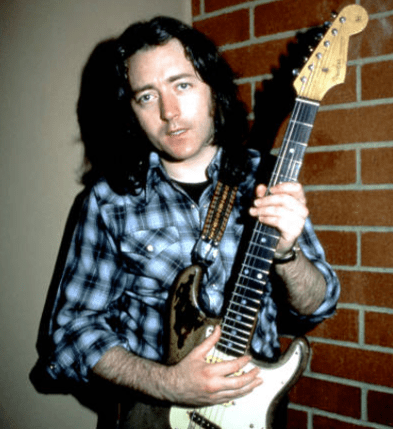
This blog post comes at the request of a follower who asked for a closer look at Rory’s 1982 US tour supporting Rush. The tour is discussed briefly in Rory Gallagher: The Later Years, where it appears primarily as context for the familiar “rise and fall” narrative that often shapes biographies of his life, and as background to the muted reception of Jinx. However, having the space here allows me to flesh out that story in much greater detail.
As the tour spanned 70 dates across four months, I won’t cover it on a show-by-show basis, as I have done in previous posts of other tours. Instead, I want to capture the general mood and explore the striking mismatch between expectations, audience reception, press responses and Rory’s own artistic identity. Taken together, these tensions understandably explain why he later described the tour, with painful honesty, as a “soul-destroying” experience.
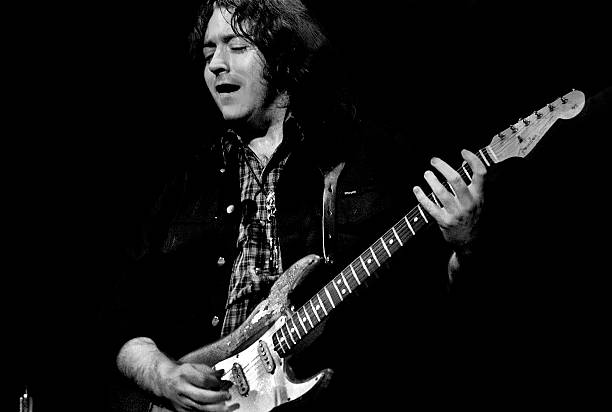
Photo by Paul Natkin
Frustrations, Frictions and Friendships
While Rory was a regular face on the US touring circuit throughout the 1970s, his presence begin to dwindle as he entered the new decade. A major factor was, of course, his growing fear of flying, which made even short trips across Europe an immense struggle, but his difficulties were compounded by previous negative experiences on the road.
As arenas, flashy stageshows, lights, theatrics and pyrotechnics became standard, Rory found the idea of having to “compete on a circus level” with other acts deeply frustrating. He also endured poor treatment and a lack of respect from other bands on package tours, most notably when opening for Jefferson Starship in 1979. The band restricted his sound check and rehearsal time, limited his stage space and curtailed his set lengths, in a jealous response to the strong audience reaction he received each night. When Dónal protested, manager Paul Kantner gave him a condescending lecture on how Rory should be “grateful” and learn how to behave better!
After another show on the same tour, monitor engineer Owsley had the audacity to tell Rory that he didn’t know how to use his monitors properly. That proved the final straw: the normally mild-mannered Rory lost his temper, even dropping an F-bomb – the only time roadie Phil McDonnell ever heard him swear. He decided to leave the tour midway through, understandably reluctant to return to the US unless it was on his own terms.
But in early 1982, an offer came for him to undertake a four-month tour of the US later that year with Canadian rockers Rush. Rush had, in fact, opened for Rory back in the autumn of 1974 on a North American tour that followed the release of their self-titled debut album. In the years since, Rush’s status had grown dramatically and, by 1982, they were riding high with Signals – an album that marked another shift in the band’s direction, incorporating synthesisers into their main melodic lines with minimalistic guitar chords and solos. Rory’s blues-based music seemed an odd fit for this progressive band. So, when Dónal told him of the opportunity, it’s easy to see why he was so hesitant.
Speaking to Dan Muise in 2002, Dónal made clear that Rory “really didn’t want to do it” and wasn’t “happy about it at all.” At the time, he had just released Jinx across Europe and was nearing the end of his Chrysalis contract. Rory had expressed unhappiness at remaining with a label increasingly focused on pop acts, providing him with no promotional support, no radio spots and not even ensuring that his record was in stores. He felt very much taken for granted, expected to build his own reputation through relentless touring. The company was particularly faltering in the US, so when Dónal learnt that Dan Young (who had previously worked for Chrysalis in Germany) was now head of Mercury International in New York, he managed to secure a free release of Jinx in North America through him.
With no time to organise a proper tour to promote the album, the opportunity to go on the road with Rush seemed like a no brainer. From a managerial perspective, Dónal knew that it was a “good package”: the venues would be full, everything was prebooked in advance and it would help promote the new album. In hindsight, however, he recognises that the arrangement was a “bad move”. Dan Young was soon removed from his post, leaving Rory in “limbo” with no signed deal. The tour, therefore, became one of “convenience” – or perhaps better described as inconvenience. Dónal tried to soften the blow for his brother by arranging a few small club dates between the ostentatious stadium shows, but Rory’s spirits were low as they set out across the Atlantic.
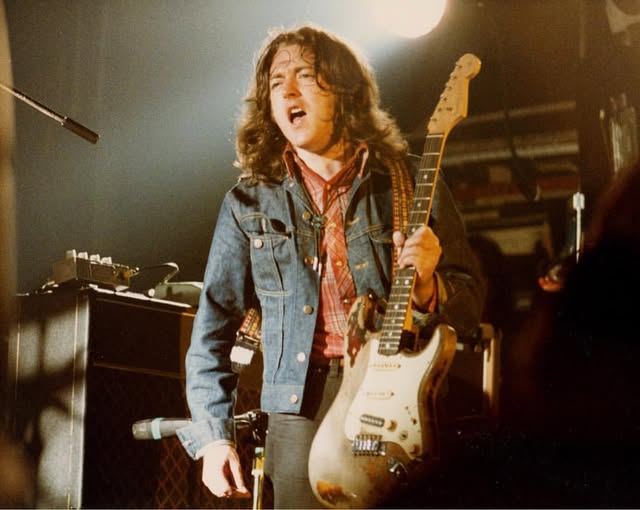
Photographer unknown
Bassist Gerry McAvoy admits in his autobiography Riding Shotgun that “everything about the tour just felt wrong,” particularly as Rush fans were partisan, making it “difficult to get any sort of reaction” from the audience, which greatly upset Rory. Another challenge was the addition of keyboardist John Cooke to the band. “I couldn’t stand the guy; he was a public schoolboy and very arrogant,” Gerry recalled. His dislike of John created tension with Rory. While Gerry acknowledges that John was a talented keyboard player, he struggled to adjust to him and felt that he simply wasn’t the right fit.
Gerry also notes that Rory’s fear of flying had become so severe at this stage that they had to travel around the US by bus. “There was no time to unwind or have any space to yourself,” he notes, which further contributed to the generally negative atmosphere of the tour. The stress led Gerry to develop a skin condition that required fortnightly cortisone injections. His hands even swelled to the point that it became difficult to play.
With nerves already frayed, even minor offstage incidents had the potential to escalate. While staying at the Hyatt in Ohio on 4 November, for example, Gerry and drummer Brendan O’Neill were reprimanded by a security guard for being in the hotel’s sports complex late at night. “This is a hotel, not a prison. Don’t fucking tell me what to do!” Gerry snapped, making the guard even more irate, his hand hovering near his holster. Gerry and Brendan went to get tour manager Phil McDonald who intervened – in his own irreverent style – dropping his trousers in protest and mooning the guard, before running away. Soon after, a loud thump at their door signalled the guard (who actually turned out to be the County Sheriff standing in!) calling for police backup over his walkie-talkie. Thankfully, the hotel manager was able to defuse the situation and ensure that all charges were dropped. Rory, exhausted and withdrawn at this point in the tour, was unaware of the incident – perhaps for the best, given the already fragile mood surrounding the run.
The tour was not without logistical difficulties either. One solo show at the Student Union Ballroom in San Jose on 24 September nearly faced cancellation due to a dispute over the venue’s lighting system, which allowed only in-house audiovisual staff to operate the controls. Rory insisted on using his own lighting director, and the gig was saved only when a “single exception” was made to policy, allowing Rory’s team to take responsibility for the lights.
Despite the tensions and difficulties of the tour, all agreed that they had no issues with Rush themselves, who were extremely friendly and respectful. In a 2020 interview, recorded to promote the forthcoming Rory Blues album, Rush guitarist Alex Lifeson spoke enthusiastically about his memories of both the 1974 and 1982 tours. The 1974 tour supporting Rory was Rush’s first ever tour; they were just 20 years old. Right from the start, Rory was “so hospitable and accommodating,” even letting them do an encore. Alex recalled watching Rory play every night, then returning to his dressing room inspired to practice. “Honest to god, his soul was just amazing, and to see him close his eyes and just get lost in his playing was truly, truly remarkable,” he stated.
When it came to Rush’s own 1982 stadium tour and choosing a support act, Alex immediately thought of Rory. He humbly described it as an “honour” that Rory accepted and was determined to make sure that he had everything he needed on stage and complete freedom to do as he pleased – just as Rory had done for them eight years before. It was during this tour that Alex felt he got to know Rory better, spending hours off stage together, chatting about everything and nothing over a beer.
One of his fondest memories is of Rory buying him a copy of Flann O’Brien’s The Third Policeman, encouraging him to read it to get an eye for the Irish sense of humour. Alex read the book and told Rory how much he enjoyed it. At the end of October, a short one-week break in the schedule gave Rory the chance to return home to Cork to see his mother. When he came back to the US, he gifted Alex the entire series of Flann O’Brien books, saying, “If you liked that one so much, read these.” Alex was deeply touched by the gesture:
That was the kind of guy he was. It wasn’t just about the music in the band and his guitar and all of that stuff. It was his personality and his soul. He was so thoughtful and considerate to other people, so polite. Honestly, he was such a wonderful person, never mind his talents and skills.
Drummer Brendan O’Neill also has slightly more positive memories, this being his first US tour. “Frightening! Exhausting! Exhilarating! Rewarding!” he stated in a 2002 interview with Dan Muise. For Brendan, a particular highlight was being in Chicago, checking out the local blues clubs and having his first “proper American hamburger” at Arnie’s.
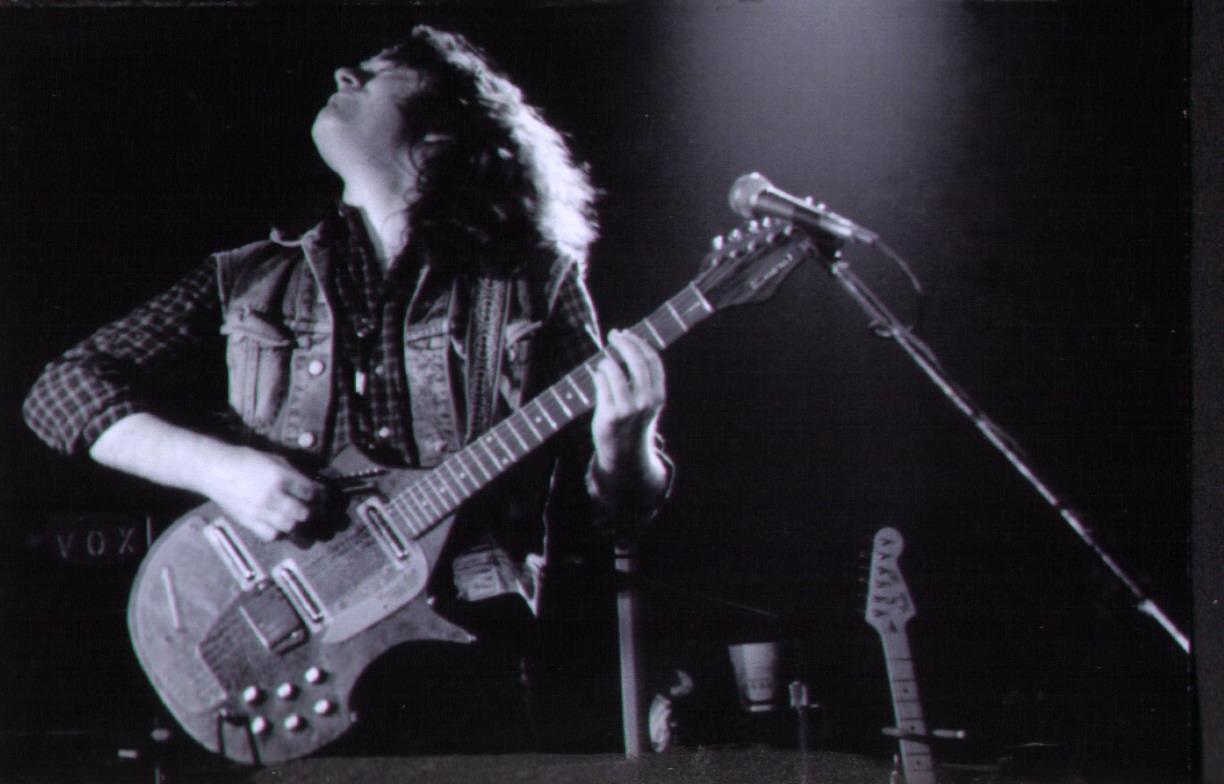
Photographer unknown
Cheap Shots and Critical Blindness
Being such a lengthy tour with a high-profile band, Rory’s 1982 Rush support run attracted a considerable amount of press coverage. Unfortunately, as was so often the case at this stage of Rory’s career, much of that coverage was distinctly negative, positioning him as a musician out of step with contemporary rock and stubbornly clinging to the aesthetics and values of the 1960s and 1970s. Unable to meaningfully criticise the performances themselves (as discussed further in Rory Gallagher: The Later Years), critics instead resorted to cheap shots on his clothing, his appearance or his perceived lack of modernity or progression.
This stood in stark contrast to the reception Rory had received when touring with Rush in 1974. Bill Mann’s particularly pun-heavy piece for The Gazette, for example, described how “fans get off on Rory” at the Forum and noted that, by the end of his set, “everybody in the place was erect and stompin’ along.” Brian Knutsen’s review for The Columbian similarly observed that Rory “pulled all stops out,” praising his high energy, well-executed solos and Chuck Berry duckwalk, “playing his guitar like a machine gun aimed at a frenzied audience.”
Ahead of his solo date at Park West, Chicago, Rory gave a telephone interview with Larry Rhodes of the Daily Press. As usual, the focus quickly turned to his age. Even in the written word, there’s a discernible hint of weariness in Rory’s voice as he insists that rock and roll “is not just youth music anymore” and that he doesn’t “see anything wrong with playing as long as you feel like it.” He goes on to make the point that most musicians need time to reach their potential, citing Keith Richards and Pete Townshend as playing far better now than they did in the 1960s. Rhodes then goes on to address Rory’s limited commercial fame in the US, at least acknowledging that this stems from the fact that he “breaks too many music industry rules” and “responds very little to trends,” which makes him seem “old-fashioned” in an era increasingly driven by flash and technology.
When pressed on how it must feel to open for an act that once supported him, Rory admits frankly that he needed the exposure, having been absent from the US for two years. “This is probably not my crowd that we’re playing to on this tour, but they seem to like us,” he conceded. Rory is asked a similar question in his interview with Bill E. Burks of the Memphis Press, to which he responds:
I don’t mind opening for them now. Some bands don’t give you adequate sound, lighting or respect when you open, but Rush are obviously nice people, and they treat me first class. That’s the way the cookie crumbles. I find myself opening for a lot of people who once opened for me.
Similar diplomatic views were reiterated by Rory in interviews with the Illinois Entertainer (“when you find yourself in a huge arena in the middle of Boise, Idaho, you can’t sit back on your past accomplishments or rest on your laurels”), The Tennessean (“even though it’s not exactly my crowd, my fans are out there among them, I know) and Plain Dealer (“I prefer to be close to the audience [but] the compensation is that you do get to play for a lot of people, including teenagers who wouldn’t hear you if you played only in clubs”). However, a more uncharacteristic bluntness emerged when Rory spoke to Terry Lawson of The Journal Herald:
I had two choices: I could stay at home and not deal with the fact that I was no longer a headliner in the States and would have to open shows for more popular bands, or I could come back here and work hard and keep going. And here I am.
In the same interview, Lawson asks Rory about his standing in the US music industry. Again, Rory cannot entirely suppress his frustration with its gatekeeping structures:
It’s like one guy in New York dictating what the rest of the country will hear, and his ears have become so neutered that he can’t be objective. If it doesn’t fit the Journey-Foreigner mold, it’s simply ignored, isn’t it? I mean, it sort of gets your back up.
Lawson notes that Rory could probably have added Rush to that list too, but was “far too polite” to criticise them. He further observes that Rory has effectively been “exiled,” along with many other musicians from his generation, but that he appears outwardly undisturbed by this. Beneath the pragmatism, however, it is easy to detect a sensitive hurt in Rory’s words:
You have to have that turnover. It’s healthy for the music. But inevitably, people will get hurt because they don’t fit in with the trend that’s taking over. I mean, so much of the last thing was looks, all short hair and dark glasses, and me with my long hair and flannel shirts didn’t exactly look the part. On the other hand, if I had tried to do that, I would have been ridiculed, would I have? So, really, my only choice was to keep doing what I was doing. It wasn’t the first fad I’ve lived through. [I believe in] silly old values: feeling, emotion…
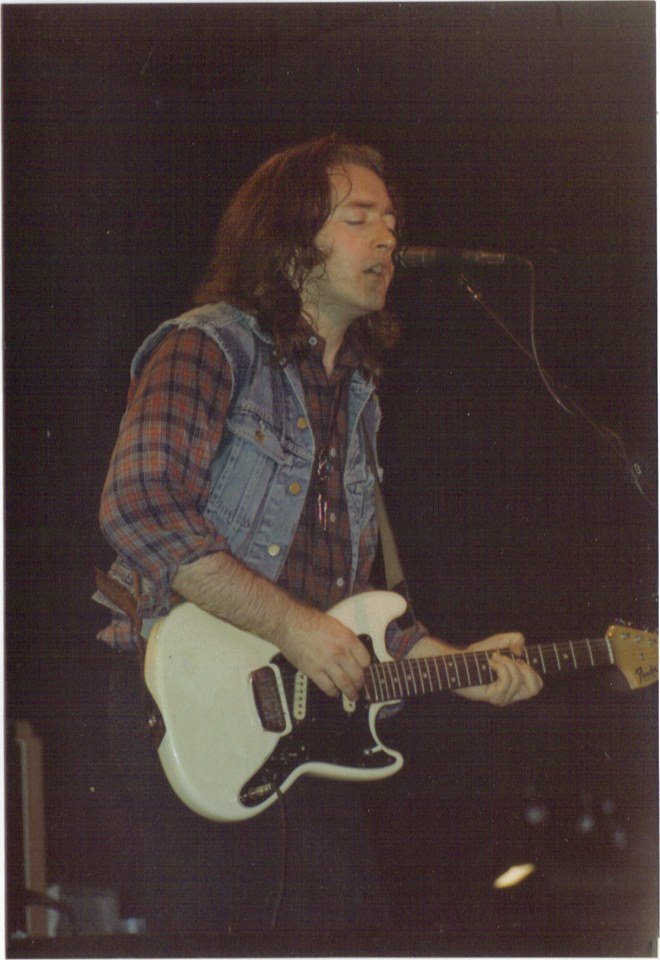
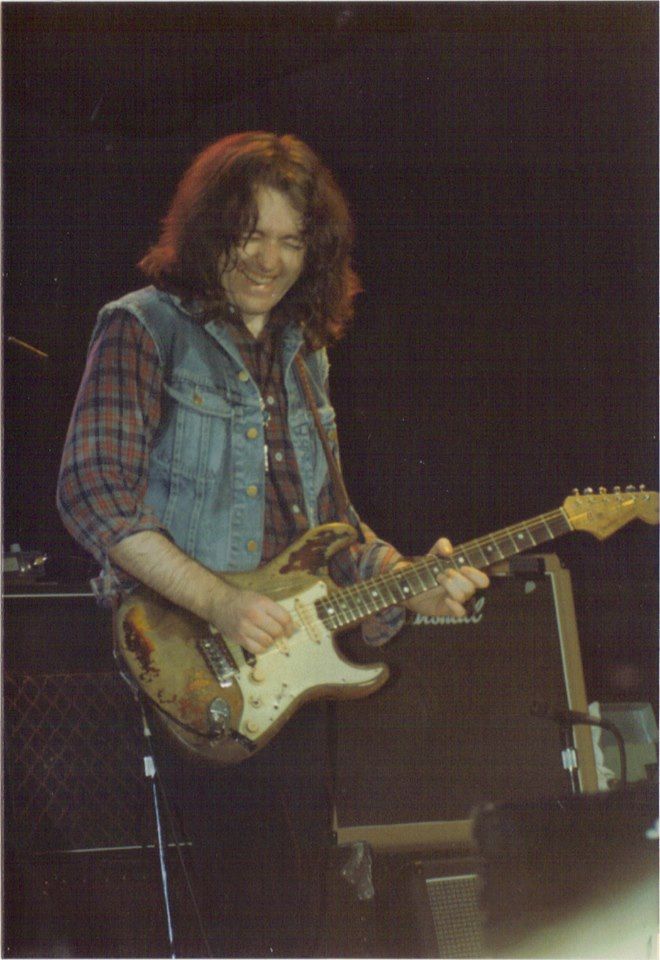
Rory at the Royal Oak Music Theatre (5 October 1982)
Photographer unknown
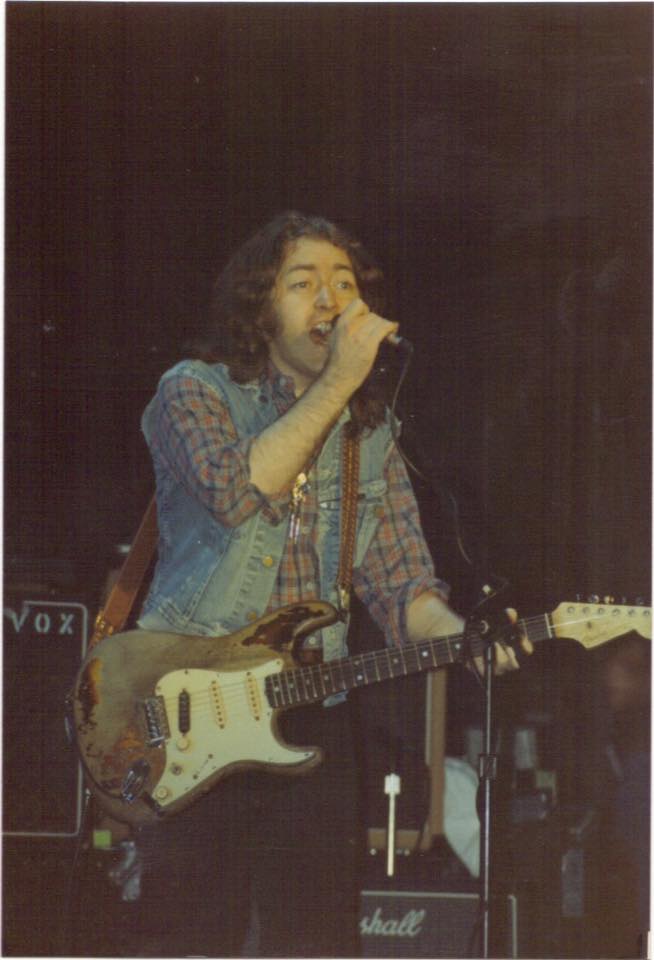
In the aforementioned interview with the Memphis Press, Rory similarly touches on the “double-edge sword” of remaining true to himself and refusing to compromise:
My music comes from my heart, from my head. It is emotional music. I want to hang on to my blues and rock roots. If you compromise, it eventually burns you out. You become a Frankenstein monster, you wind up someone else’s creation and not your own self.
Reviews of the tour are equally unsympathetic, with many tending to focus on a supposed generational divide. Reviewing the Dane County Coliseum gig (10 October) for the Wisconsin State Journal, Michael St John claimed that “Gallagher teaches, Rush entertains,” drawing a strong contrast between the two acts and casting Rory as a “durable survivor” who has weathered numerous trends. Somewhat contradictorily, he went on to acknowledge that Rory received a “hearty reception” by the end of his set and introduced many young Rush fans to his music. Barney Parker of the Kansas City Times was less generous about the Kansas Coliseum concert (17 October), reducing Rory’s performance to little more than “a lesson in culture by playing the blues.”
Patrice Smith’s review of the show at Roberts Municipal Stadium (31 October) for the Evansville Courier and Press devoted only a few lines to Rory in an otherwise lengthy account of Rush, noting that he “pulled a strong crowd response” but “hinted at his own comeuppance on the party-rock scene.” In other words, she reinforces the familiar narrative that Rory was increasingly out of step with the modern rock landscape – an absurd framing, given that he was just 34 years old at the time, not 134!
Other critics were harsher still. Marshall Fine of the Argus Leader, reviewing the Sioux Falls Arena gig (7 September), described Rory’s music disparagingly as “overblown, bluesy rock” and suggested that he was merely “holding action” until Rush took the stage. He even went so far as to label Rory a “limited” guitarist! Maury Ewart of the Kalamazoo Gazette struck a similar note, describing Rory’s performance at the Wings Stadium (11 November) as “acceptable” and claiming that the audience was “marking time” until Rush appeared. Curt Rallo of the South Bend Tribune was particularly scathing, claiming that Rory “didn’t turn in that exciting of a performance” at the Morris Civic Center (5 November) and that his impressive guitar work barely compensated for “vocals that couldn’t be understood.”
A Daily Press review of the Hampton Coliseum show (30 November) at least acknowledged that Rory and his band were a “fine blues-rock group,” though journalist Larry Rhodes felt that they would have been better suited to a nightclub setting. The Philadelphia Inquirer remarked that Rory had been “kicking around for years with little recognition,” noting how he was forced to adjust his style to fill the cavernous Spectrum (13 December), while conceding that even when cranking up the volume, he maintained remarkable clarity of tone.
Speaking to fans, I was saddened to hear directly about the rough reception Rory sometimes faced from Rush audiences. At several concerts, chants of “We want Rush! We want Rush!” broke out during his set. On some occasions, it became so intense that Alex Lifeson had to step out and urge the crowd to cool it, insisting that Rory was “one of the best.” It must have been so demoralising for him, especially at a time when his self-esteem was already so low. Yet, Rory did what Rory always did – he threw himself into his performance, working harder than ever to prove his worth in the 45 minutes he had on stage.
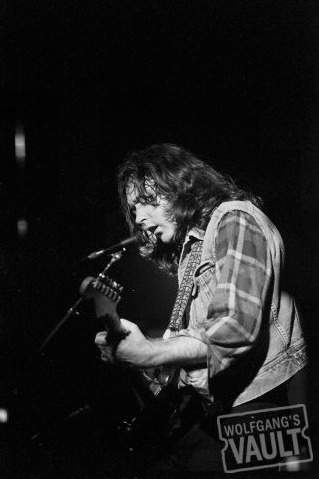
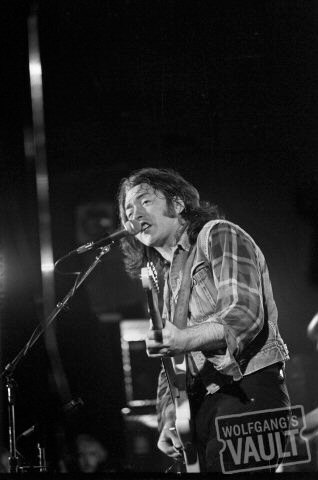
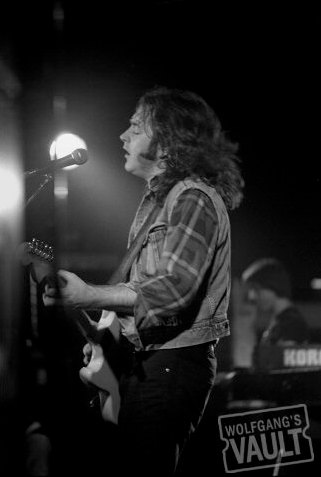
Photos by Joe Sia
Against the Rush
Thankfully, not all journalists were out to get Rory, and some used their platforms to encourage readers to take him seriously. In fact, several writers actively challenged the dismissive attitudes circulating around the tour and reframed Rory as an artist of depth and enduring relevance.
Ahead of his support show in Champaign (14 October), the Daily Illini urged young music fans to forget about the latest Bruce Springsteen release and buy a ticket to see Rory instead. They promised that Rory was a “remarkably giving performer” guaranteed to deliver “a hell of a show” and even “blow Rush off the stage and back to Manitoba.” A follow-up review in the same paper by Jack Rundle was equally emphatic, arguing that anyone who skipped the support act to arrive late for Rush had made a serious mistake. Rundle went on to state that, despite the stylistic mismatch and a sparsely populated AA section, Rory “definitely gained some new fans that night,” igniting the small crowd with “the trademarks of a headliner rather than a support act.”
Elsewhere, Steve Morse’s interview in the Boston Globe offered one of the most thoughtful correctives to the lazy “dinosaur” label attached to Rory. Morse argued that he occupied a “very special niche”:
Unlike the standard boogie maniacs, Gallagher does not shout forever about mindless hedonism. Instead his music intelligently addresses relationships in all of their subtle complexity. He is, in short, a heavy rocker with a heart: not just a groin.
Reviewing Rory’s two-hour solo set at Boston’s Paradise club (28 September), Morse describes a “galvanizing” performance – even better than Rory’s previous appearance there in 1979. He paints a vivid picture of an atmosphere shaped by “razor-edged” slide guitar, an incendiary version of the Beatles’ ‘Slow Down’ and an enthusiastic fan climbing up on stage to give Rory a Massachusetts licence plate reading RORY. Notably, Morse also praises John Cooke’s synthesiser textures as working effectively within the “ageless boogie,” concluding with the hope that Rory might yet receive the stardom that had unfairly eluded him.
Similar sentiments appeared across the Midwest. An interview in the Detroit Free Press framed Rory as “a bit of fresh air in the rock world”: unpretentious and proudly resistant to the “flash, unoriginal rock guitarist of the day.” Here, Rory’s age was positioned as an asset rather than a liability, with the paper suggesting that his view of music as a “lifetime affair” placed him in the lineage of his heroes Muddy Waters and Jerry Lee Lewis. The paper also praised the recently released Jinx album, arguing that it displayed Rory’s constantly evolving style. A subsequent review in the same paper of the Joe Louis Arena show (7 November) acknowledged that Rush fans were “not exactly the right audience” for Rory’s blues-based music, but praised his ability to feed off the crowd’s reaction and play songs that connected more readily with them, such as ‘Double Vision and ‘Big Guns’.
Other reviews echoed this pattern of surprise and reassessment. Tom McCarthy, writing about the Salt Palace concert (21 September), noted that the largely teenage audience seemed “pleasantly surprised” by Rory’s performance, highlighting the “interesting tint” of his music and its unmistakably Irish quality. Mike Faris, reviewing the Richfield Coliseum gig (3 November) for the Akron Beacon Journal, pointed out Rory’s lack of elaborate lighting or projections, but concluded that his “45 minutes of blazing guitar” more than compensated.
Even where initial scepticism surfaced – as in Evelyn Erskine’s Ottawa Citizen review, which opened by remarking on how Rory had “survived” and is “as oblivious of clothing fashion as music fashion” – it was ultimately framed as evidence of his down-to-earth authenticity. Rory, she argued, was “solid, honest and doing it for real,” delivering a performance at Barrymore’s (18 November) that:
… drew music from 11 years as a recording artist and offered some invigorating and outright heartstopping guitar work. His solos seems to breathe a magnetic life of their own. The crowd were brought to their feet in awe on numerous occasions during his consistently energetic performance. Gallagher is an impressive guitar player who does not intend to impress but rather to express. In an era where guitar virtuosos are not in vogue, Gallagher’s music remains vital.
Anastasia Pantsios’s review of the Richfield Coliseum gig (3 November) in Plain Dealer struck a similarly generous note. While acknowledging that Rory’s blues-based style was less prevalent than it had been a decade earlier, she argued that, in his capable hands, it could still carry “the same steamy urgency” that had once made it so compelling. Pantsios also emphasised how Rory updated the approach through harder-edged material such as ‘Big Guns’, which flirted with contemporary heavy-metal sounds without sacrificing his core identity. Though she described Rory as something of an “anachronism,” he was, she concluded, a “refreshing” one, capable of evoking powerful musical memories while still sounding essential in the present.
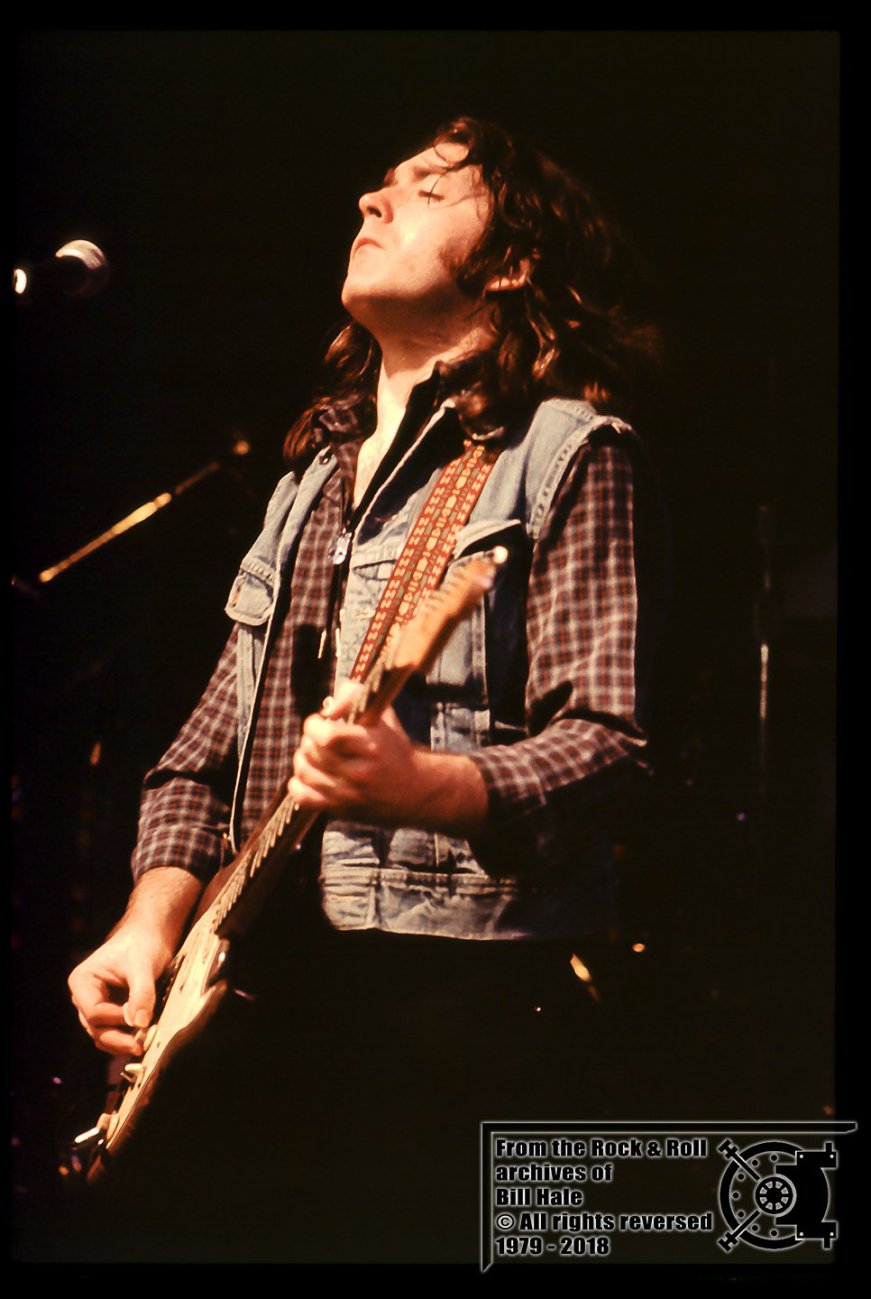
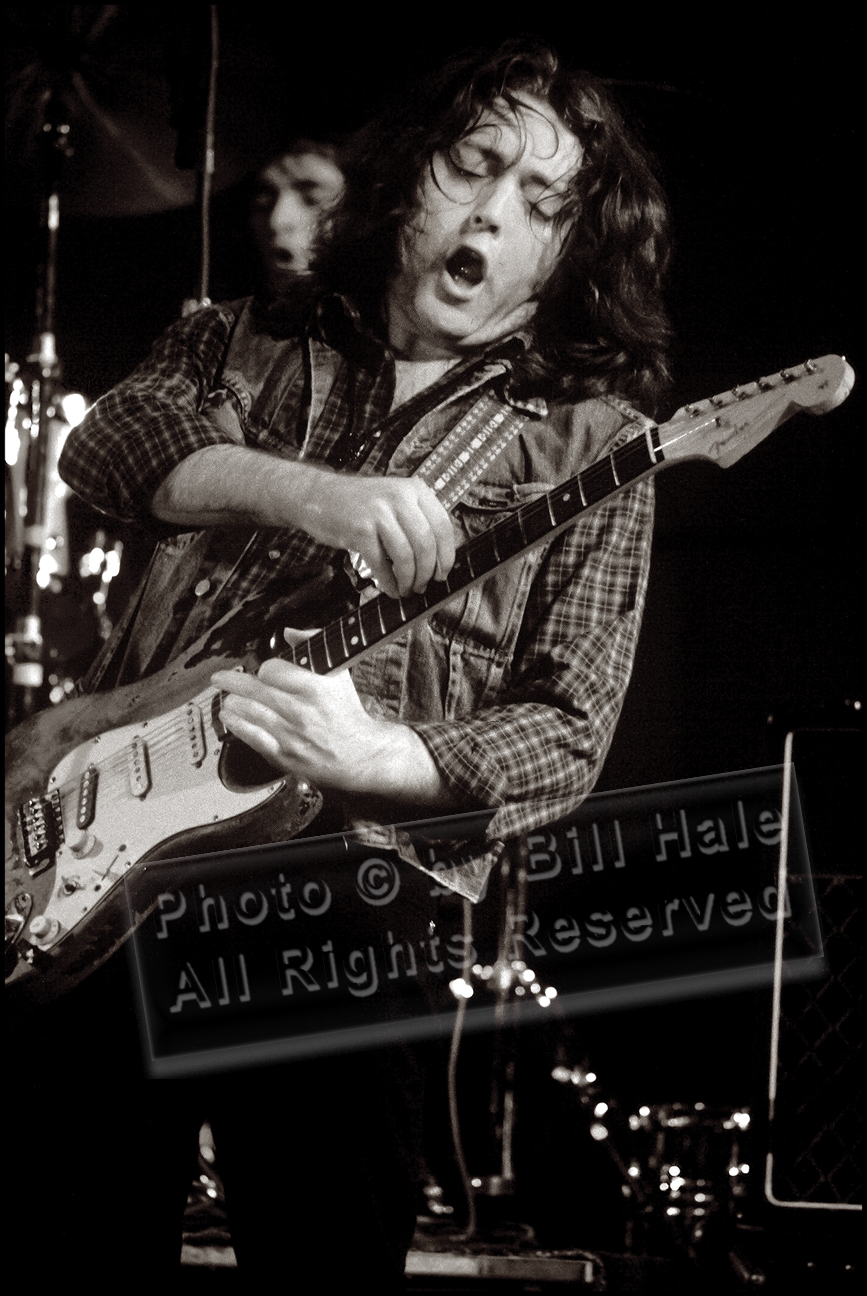
Photos by Bill Hale
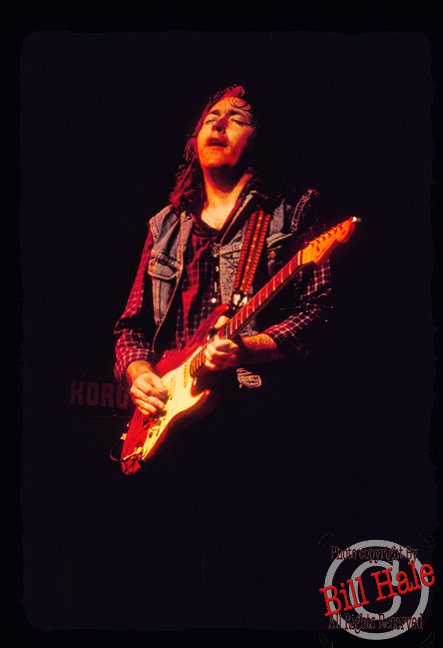
While these press responses provide an objective critical counter-narrative to much of the negativity Rory faced, they can only convey so much. Fan testimonies, by contrast, reveal the personal and emotional impact of his performances – details that rarely make it into reviews. Many attendees came specifically to see Rory, leaving before Rush, while others arrived for Rush but left the show converted into new Rory fans by the end of his set.
Fan Ben Eicher falls into the first camp, deliberately attending Rory’s opening set at the Omaha Civic Auditorium on 9 September and skipping Rush entirely in the hopes of meeting him. Ben had arranged for a Native American friend to make an ornate Sioux/Cheyenne bolo tie as a gift for Rory and he was hoping to present it to him. As Ben recalled:
I left the Civic Center immediately after [Rory’s] set and hung out in the alley where Rory’s bus was. Eventually, a security guard asked me why I was hanging around. I told him and showed him the bolo tie and letter about it. I wanted to give to Rory. He took the bolo tie and letter to Rory. About five minutes later, the security guard came back to get me and led me and my buddy backstage to Rory’s dressing room. We talked and he thanked me for the bolo tie. He was so very nice. I told him my brother Chris and his friends had tickets for his show in Rapid City, South Dakota in a few days, and I asked him if he would dedicate a song to my brother. A few days later, he appeared on stage in Rapid City wearing the bolo tie. When he played ‘Moonchild’, he dedicated it to “Ben Eicher and all of his friends here tonight.” My brother about fainted!”
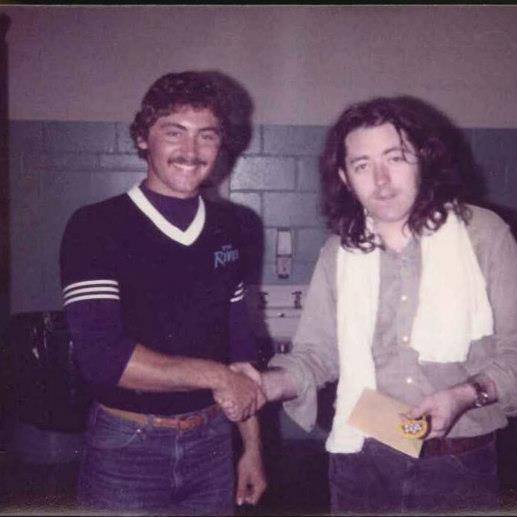
Photo by Ben Eicher
I’m sure the gift gave Rory a much-needed pick-me-up at a difficult time.
Adam Patrick, also at the Omaha show to see Rory, remembers how he and his friends worked their way to the front of the stage, telling other Rush fans that they would give them back the spot once Rory had finished his set. According to Adam, the crowd seemed unaware of Rory, but they certainly weren’t by the time he finished!
Another memorable fan story comes from Todd Stair, who met Rory after his show at the Brown County Arena in Green Bay on 3 September. Like Ben, Todd had gone to see Rory deliberately and left before Rush came on. He headed to a bar across the street from his hotel and, to his surprise, spotted Rory and his band inside. Todd bought Rory a drink (he chose a shot of tequila), took a photo and got an autograph. He then returned to his own table to give Rory some privacy and was amazed that nobody else approached him. Rory blended in so effortlessly, looking like any other guy quietly enjoying a drink with friends.
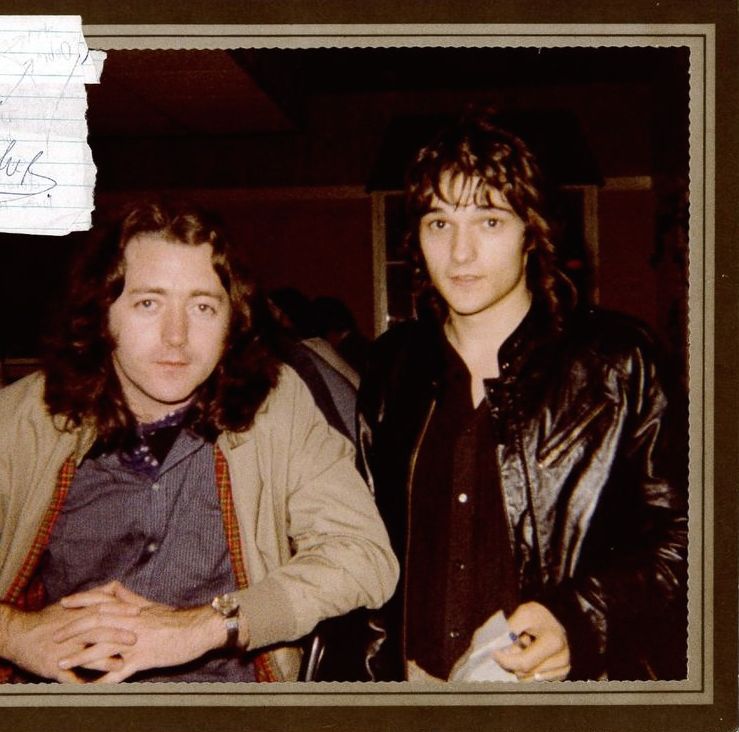
Photo by Todd Stair
Roy King also met Rory in the Green Bay bar. Like Todd, he offered to buy Rory a drink; Rory chose a beer, and they sat down to chat. Roy described Rory as “one of the nicest men” he ever met. “He was kind, courteous and seemed genuinely interested in what we had to say.”
Darilyn Raye-Love Holt also met Rory after the Toledo Sports Arena gig on 12 November. She had driven all over Michigan and Ohio to catch his performances and told him that she would bring a case of his favourite beer, Harp (brewed by Guinness) if he ever played in Toledo, which she did! After the gig, she and her friends ended up in the hotel bar with Rory and the band – a truly memorable night.
Kevin Hewitt attended the 12 October show at The Checkerdome in St. Louis, again going just to see Rory. He recalled the striking contrast between Rush’s state-of-the-art laser light show and Rory’s four coloured lights. He “didn’t need a stage show – he said it all with his guitar, flannel shirt and blue jeans,” Kevin mused.
Mark Stevens also caught Rory on this tour at McNichols Arena in Denver on 17 September. “[What] a consummate performer. Judging by his energy level alone,” he recalled, “he played with the same gut energy and enthusiasm for a crowd of 200 as he did for 16,000.” Having interviewed Rory several times before, Mark was invited backstage by Dónal to say hi. “If being a musician was Rory’s best talent, being host was a close second. Never anything but humble, kind, and earnest to his guests,” he reflects.
Michael Feis falls into the camp of a Rush fan who didn’t know who Rory was at the time. He was just 16 years old and attended the Madison Square Garden concert on 2 December. Like many first-time viewers, he was converted by Rory’s performance, describing the set as “amazing.” The same happened to Rik Collamati, who saw Rory at the Civic Center in Providence on 5 December and admits that he “kicked serious ass that night.” Steve McManus who was at the Omaha Civic Auditorium (9 September) similarly had his first exposure to Rory on this Rush tour and became a convert for life. Curtis Brown, who saw Rory at the Rosemont Horizon (19 November), also concedes that he “totally blew Rush off the stage that night.”
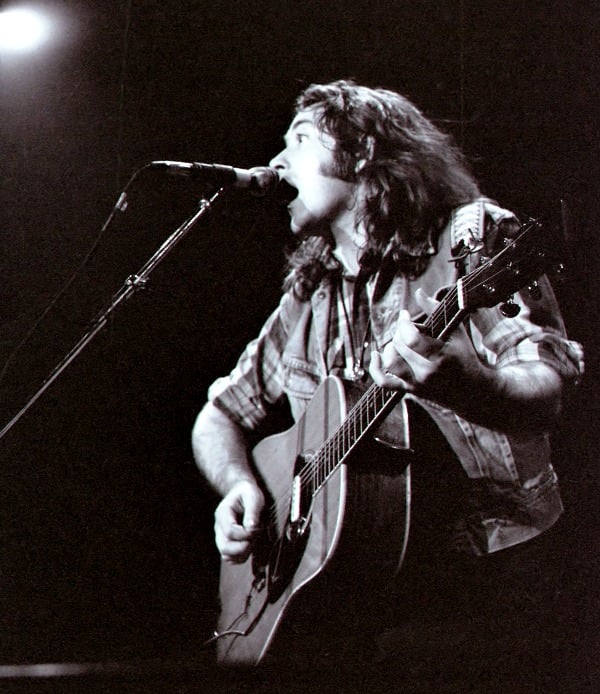
Photographer unknown
Jon Hahn attended one of Rory’s solo shows at Ripley’s Music Hall in Philadelphia on 29 September. He remembers that Rory got so into his performance that he stuck the headstock of his Strat into the low ceiling near the end of the show, “literally bringing the house down in more ways than one!” William Stark, also at that gig, felt blessed to witness such an intimate performance. His personal highlight was ‘A Million Miles Away’, when Rory pointed to the actual bartender when he sang the line, “The old bartender just collapsed in the corner.”
Vanessa McDonald caught Rory’s solo show at the El Mocambo in Toronto on 16 November, describing it as “absolutely magic – the best show ever.” After, she waited outside the dressing room with eight other fans, before being let in. Rory offered her a Guinness and signed her tour poster. Her lasting memory is what a kind, respectful man he was.
Richard Pusateri was at the Reseda Country Club gig on 23 September. He recalls going by the venue that afternoon and standing in the alley, listening to the soundcheck through the open loading door. Rory played ‘The Devil Made Me Do It’, although it wasn’t performed during the actual show. After the soundcheck, Richard went inside and managed to meet Rory and exchange a few pleasantries. According to Richard, Rory seemed weary from the road but was as kind and approachable as ever.
Luckily, a range of bootlegs from the tour have survived, although only a few have made it to YouTube, unfortunately. Here’s a selection, which I hope will help you make up your own minds about the quality of Rory’s performances:
Solo tour:
Reseda – absolutely stunning versions of ‘What in the World’ and ‘I Could’ve Had Religion’
Montreal – particularly incredible renditions of ‘Moonchild’ and ‘Secret Agent’
Boston – Signals and Slow Down only. It’s wonderful to hear a rare live version of ‘Signals’ (one of my favourite Rory songs) and ‘Slow Down’ gives a little nod to his showband days
Cleveland – Signals and Dizzy Miss Lizzy only
San Francisco – Rory is absolutely on fire here! This is probably my favourite bootleg from the tour, with excellent recording quality. Highlights include ‘Jinxed’ and ‘Oh Carol’ blended into ‘Bourbon’
Columbus – 15-min Bo Diddley medley only
Rush support:
Providence – particularly awesome ‘Philby’ to close set
Dayton – gorgeous version of ‘Shadow Play’
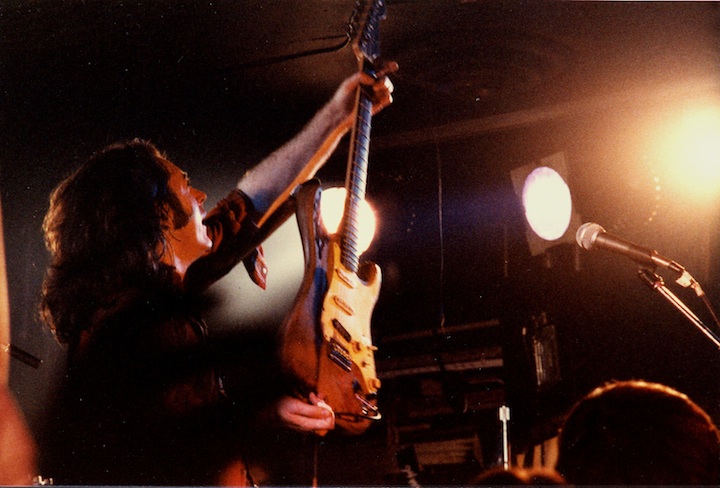
For me, there’s a real energy to Rory’s headlining sets, almost as if he’s been let off a leash and can really enjoy himself among a crowd that’s clearly there just for him and equally enthusiastic. Freed from the need to negotiate larger audiences or play a support role, the performances are fast-paced and hard-hitting, with Rory able to stretch out, take risks and show off his full range.
Photographer unknown
Against the Grain
The Rush tour – and Rory’s broader US package tour experiences – reveal a complex portrait of an artist navigating the tension between personal preference, musical integrity and commercial expectation. As he tactfully explained in an interview with Ireland’s Eye a few months later, the tour “wasn’t really our picture.” While the big stadium support gigs helped cover costs and offered exposure, the smaller solo shows were the ones that truly mattered to Rory – for the “basharoo, down-home, nose-to-nose” feeling and the audiences that understood and appreciated what he did. “But you have to spread your gospel wherever you can” he recognised.
By 1991, speaking to Shiv Cariappa, he was even more candid: touring the US in support of other huge rock acts or playing for audiences indifferent to blues and rock and roll simply didn’t appeal. True to his self-deprecating nature, he admitted that he “did okay on them” and would “rough it” if needed, but his heart lay always in clubs and small theatres. Indeed, after 1982, Rory only played the US twice more (1985 and 1991), always in intimate venues and never as a supporting act.
Looking back at the Rush tour, we see an artist caught between the realities of the 1980s US rock landscape – where the zeitgeist favoured flashy, stadium-ready acts –and his own preferences and temperament. Despite his immense skill and charisma, Rory often faced partisan audiences who were impatient, uninterested in his style or simply there for the headliner, although the crowd was also peppered with loyal fans willing him on. Likewise, press responses were mixed, with some critics framing him as an outmoded “survivor” and others celebrating him as a timeless artist occupying a unique niche in a changing rock landscape. The result was a strain that went beyond professional frustration. As I’ve covered elsewhere (see 1983-84 Santa Tour post), Rory became increasingly reclusive from this period onwards, his sensitive nature bruised by the pressures of the music industry and its values, which often clashed with him. He would also only play a handful of live dates in 1983.
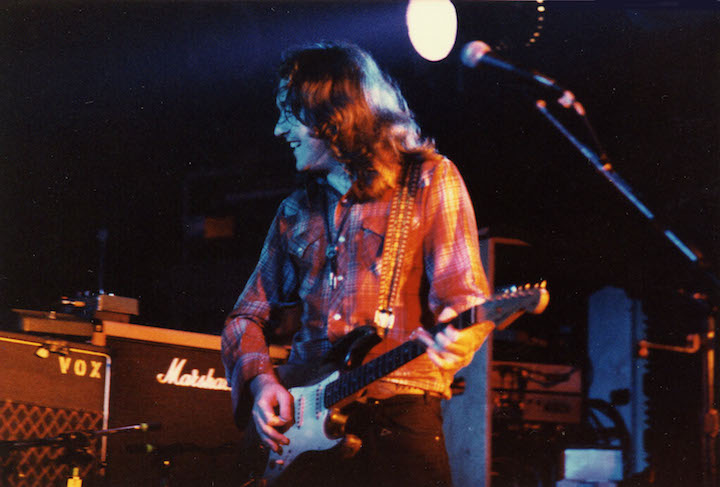
But while for Rory, the tour may have been “soul-destroying”, to view it as an unmitigated disaster would be to oversimplify. It exposed him to new audiences, generating some memorable fan conversions and consolidating the devotion of those who were already fans. It also reinforced his understanding of where he thrived most – intimate venues, loyal crowds and musical freedom – and shaped the way he approached the US thereafter. In that sense, the tour was both a challenge and a lesson: a reminder of the gulf between commercial expectation and artistic preference, and a defining moment in the trajectory of his career. Despite Rory’s inner turmoil, his outward kindness, generosity and warmth left a lasting impression on all who met or worked with him during that tour. Alex Lifeson, for one, still speaks with fondness of Rory and how much he learnt from his gentle presence.
So, if there’s one overarching message to take away from the Rush tour, it’s that Rory’s humanity always shone through, reminding everyone around him that true artistry is inseparable from integrity, heart and the capacity to connect with others.
Photographer unknown


 REWRITING RORY
Leave a reply to rlkiley2 Cancel reply