
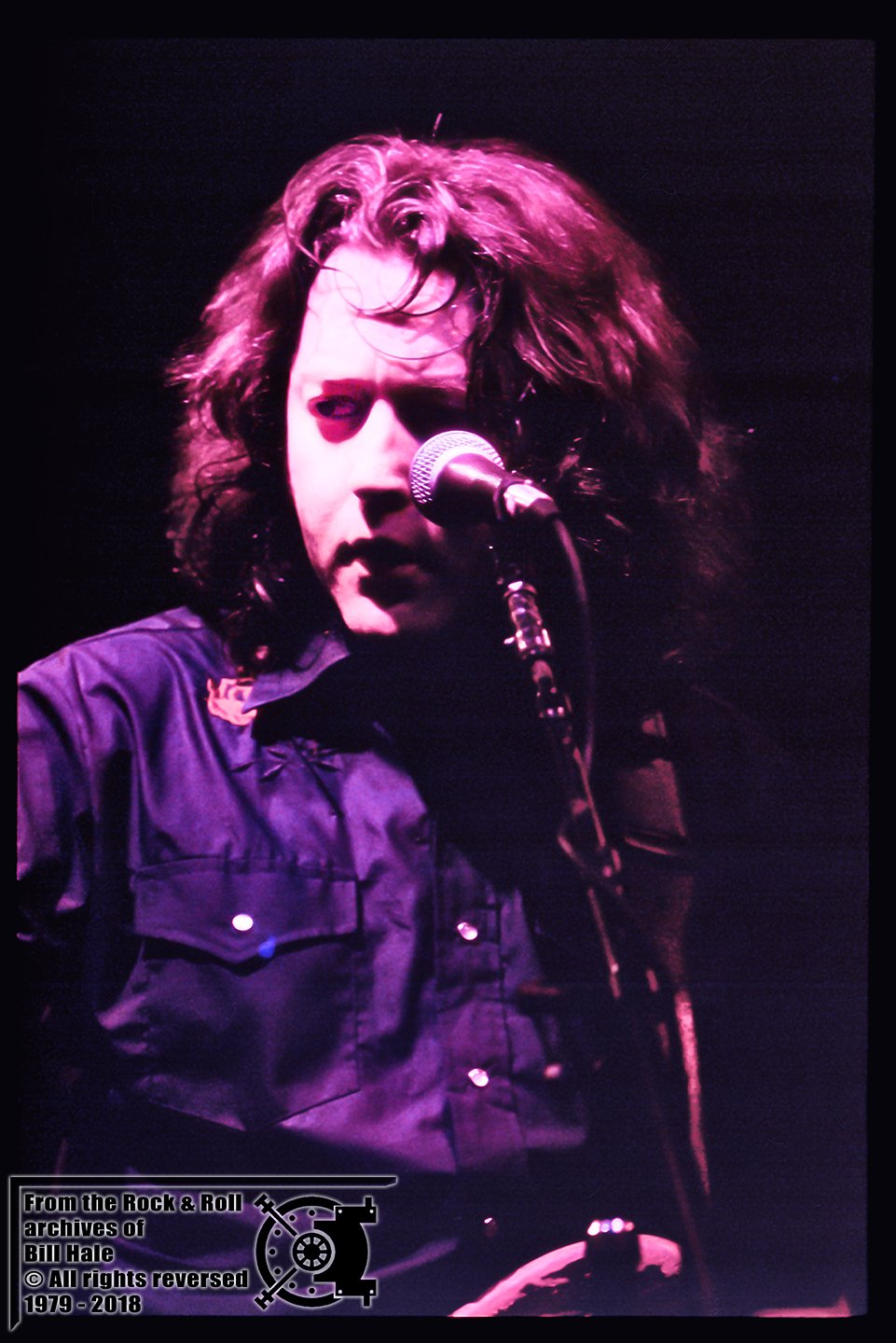
This is Part Two of my deep dive into Rory’s 1985 North American tour. If you haven’t yet read Part One, you might want to catch up here first.
Here, we pick up with Rory and the band in Ottawa for a very special evening with Canadian guitarist Paul Fenton and his friend and CKCU DJ/producer Tony McLean.
—–
6 and 7 June 1985 – Barrymore’s Club, Ottawa and Coronet Motor Hotel, Kitchener
We are incredibly fortunate to have such rich first-hand testimony from Rory’s next night at Barrymore’s Club in Ottawa, thanks to Paul Fenton and Tony McLean. What follows is one of my favourite Rory stories.
Paul first discovered Rory back in 1972 while living in the UK. After reading a glowing Melody Maker review of Live! in Europe, he bought the album and was instantly blown away, especially by Rory’s slide playing. When he returned to Canada in 1973, he jumped at the chance to see Rory live during his six-night residency at Toronto’s Colonial Tavern. He was struck not only by Rory’s commanding stage presence but also by how approachable and genuine he was. After the gig, Paul had a beer with him at the bar, got his Taste album signed and left with the feeling that he’d met someone truly special.
Flash forward to 1982 and Paul’s band, Number One, had the good fortune of opening for Rory at Le Spectrum in Montreal. They reconnected during soundcheck and Paul was thrilled when Rory picked up his old pink Stratocaster and played a few licks. What impressed him even more was that when Number One performed later that evening, Rory stood at the side of the stage and watched their entire set.
Three years later, on learning that Rory would be in Ottawa, Paul and Tony headed to Barrymore’s on 6 June, hoping to catch his soundcheck. Their plan was to persuade Rory to come back to Paul’s house for dinner, drinks and guitar talk. Paul remembers Rory glancing at him from the stage, trying to place his face. Then, the recognition clicked and he asked, “Are you still playing? Have you still got the pink Strat?” Although Tony was a little concerned by how pale and tired Rory looked, the soundcheck stretched on for a remarkable three hours!
Afterwards, Rory invited them to his dressing room, where Paul showed him his prized 1962 Supro guitar. Rory was enthralled and invited them back to his hotel at the Beacon Arms before the show. Unfortunately, unresolved monitor issues meant the plan had to be scrapped. But Paul and Tony had another trick up their sleeve instead. They returned with eleven National guitars and an amp, and it was decided to try them out with Rory after the show instead.
Paul remembers a light-hearted moment when Rory was shaving at the sink. He caught Paul’s eye in the mirror, winked and joked, “Ah… now that you’ve seen me like this, all the mystery’s gone, hasn’t it?” He also recalls Rory admiring his Marilyn Monroe t-shirt, but when Paul took it off to give to him, Rory said it wouldn’t fit him. The group then headed to the Royal Oak pub across the street. Paul had hoped Rory would play his 1932 Duolian on stage, but Rory politely declined due to the unresolved monitor issues. Nevertheless, he thanked Paul warmly for the kind offer.
The show itself, according to Tony, was incredible: “Three hours long, including breakneck rock ’n’ roll, soulful blues, and an amazing solo acoustic set. Rory was in incredible form.” Brian Shields, who worked at Barrymore’s, later said it was one of the best performances he’d ever seen in nearly a decade at the venue, with Rory full of energy.
After the gig, Paul and Tony found Rory backstage, laughing and joking with some local Irish friends. Once the crowd eventually dispersed, they all headed back to his hotel, guitars in tow, and began loading them into the lift. Gerry and Brendan excused themselves, and that’s when the real magic of the night began!
As Tony remembers:
It was Paul’s show. Guitars started appearing left, right and center—Supros, Airliners, Nationals, Silvertones… Rory was overwhelmed. ‘Have you ever seen a National collection like this, Rory?’ Paul asked. ‘No, no I haven’t! It’s a beauty, isn’t it? ‘Yes, indeed it is!’’’
The three of them played well into the early hours, until around 7 or 8 a.m., with Rory moving excitedly between guitars. At one point, a member of the road crew brought Rory his ‘dinner’, but he barely noticed it, completely absorbed in the music. Paul cherishes the memory of playing his own slide version of ‘Shadow Play’ for Rory, who tapped his toes, smiled and said he’d never thought of adding slide to that song—but he liked it. Rory was particularly taken by Paul’s white Supro and, in the end, Paul insisted Rory keep it along with some glass slides. Although Rory initially protested, he was deeply moved by the gesture and accepted.
When it was finally time to say goodbye, they asked:
“You’ve never had an evening like this, have you Rory?”
“No… I’ve never had a night like this before.”
It remained one of the most memorable nights of Rory’s life.
Paul remembers Rory as an intelligent, humble and fiercely proud man with a great sense of humour. For example, when he told Rory that he’d had his name inlaid in mother-of-pearl on the fingerboard of his guitar, Rory brushed it off as “too flashy.” Similarly, when Paul tried to coax him into a fun photo “mugging it up” with the guitars, Rory declined: “Not professional.” And when Paul’s wife asked for a photo with him, Rory smiled and teased, “Are you sure your husband won’t be jealous?”
Years later when Rory was living at the Conrad Hotel, Paul wrote him a letter. He treasures the reply Rory sent back, which arrived exactly one year to the day before he passed. In the letter, Rory reflected on the Ottawa gig, remarked that Paul’s new CD was “very fine,” talked about his recent sessions for the Peter Green tribute album, plans for two new records and his new band. “It’s been a period of transition,” he wrote, “but it’s coming together nicely. I’ve almost beaten the flying bug—so you may see me in the next number of months.” Sadly, that wasn’t to be.
From Ottawa, Rory continued on to the Coronet Motor Hotel in Kitchener before crossing back into the US for a show at Harpos in Detroit.
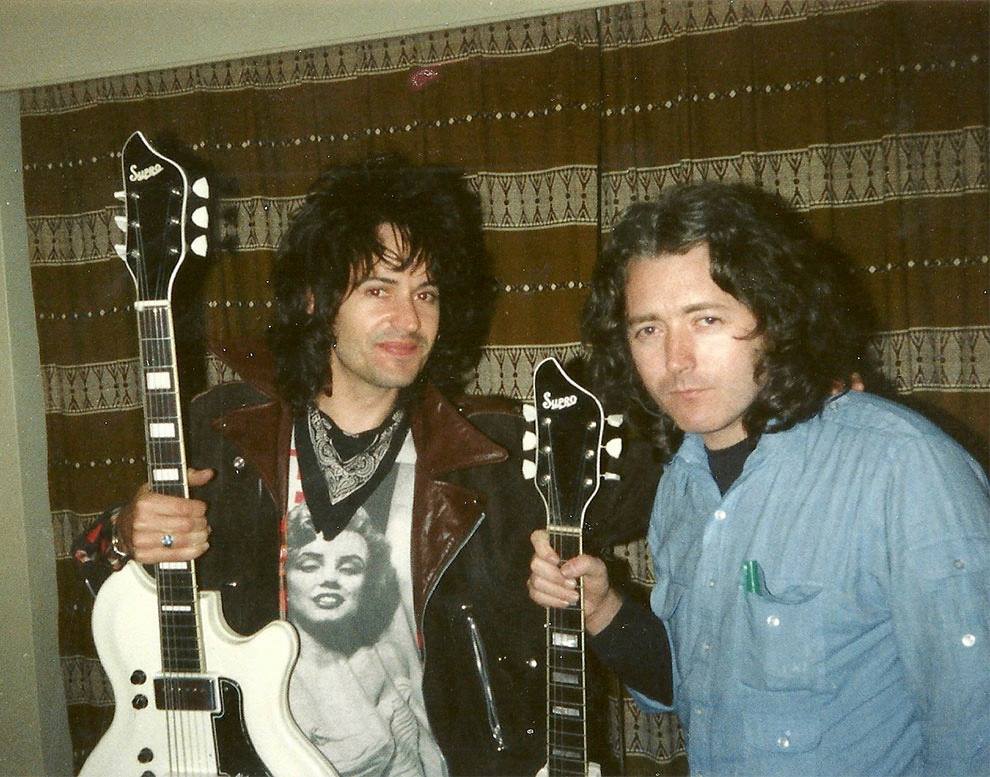

Rory with Paul, Ottawa, 1985
Photos: Tony McLean
8 June 1985 – Harpos, Detroit
Built in 1939 as the Harper Theater, the venue was converted and renamed Harpos in 1976 when it reopened. Initially, it played both rock ‘n’ roll and disco, but quickly shifted focus to rock and metal under new ownership in 1979. Situated in a rough part of Detroit, Harpo’s soon gained a reputation for violence both inside the club and in the parking lot outside. Despite this, Rory always had a strong following in Detroit, and his shows were highly anticipated.
At the gig was Tim Lamb, who borrowed money from his mother for the ticket and pooled funds from a friend to travel down from Flint. Tim positioned himself at a table at the back of the venue and watched the opening band, DC Hawks, who were unfortunately booed and drowned out by the constant chants of “Rory! Rory! Rory!” According to Tim, from the moment Rory burst onto the stage, he was “on fire” and delivered a very long, intense set. At one point, he reached behind his fretting hand with his picking hand and yanked a string on the Strat, creating a wild vibrato, which made the string break! After that, he switched to Paul Fenton’s Supro for the rest of the evening.
Tim then moved to the front of the room, just before Rory’s feet. At one point, Rory leaned over to adjust his effects pedal and Tim thought he was trying to shake his hand, so he reached out. Before he knew it, security rushed in from both sides and pushed Tim back into the crowd. Rory played on and on, but Tim’s friend insisted they had to leave to start the drive home. Reluctantly, they left while Rory was still performing. As they drove away, a huge bolt of lightning lit up the sky and lingered—a chilling moment for Tim, who had a strange premonition: “He won’t be here ten years from now.” Sadly, that proved true.
Rick De Luca was also at the show and remembers that Rory just wouldn’t stop playing. In fact, management had to kill the power around 2:25 a.m., but the crowd was still demanding more, so Rory was allowed one final extended song that lasted at least 20 minutes.
Also there was Marianne Maud Murphy, who first saw Rory at the Royal Oak Music Theater in Michigan in 1976. She made him an Irish flag painted with “Erin Go Bragh” and an Irish harp, which Rory draped over one of his amps. She remembers the atmosphere as “supercharged, like an electric switch of pure energy was turned on from the very first note.” She waited after the show to meet him and remembers that he was very gracious and patient.
For the Harpos gig, Marianne made Rory a cross-stitched picture of his guitar in a frame. When they met after the gig, she slipped a note into his shirt pocket, telling him not to worry—it wasn’t her phone number, but rather she had written ‘Blues from the Lowlands’ on it. She met him again in 1991 at the Keystone, where she and her husband were the only fans waiting after the show. Despite being exhausted, Rory kindly autographed her Defender album.
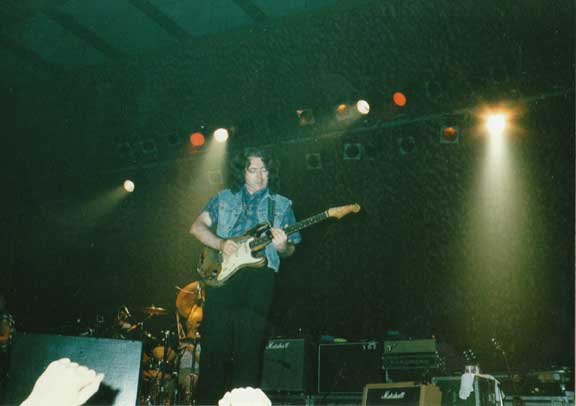
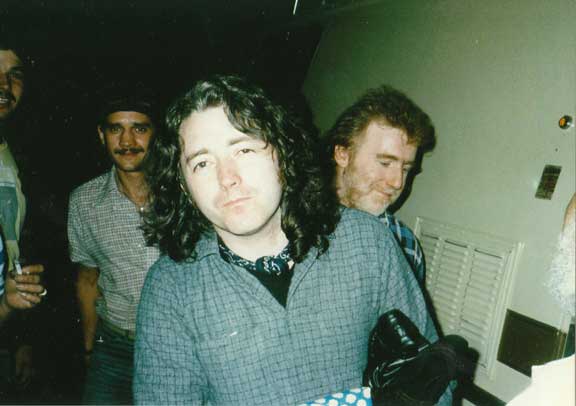
Rory at Harpo’s, 1985
Photos: Maud Marianne Murphy
10 June and 12 June 1985 – Peabody’s Downunder, Cleveland and Lupo’s Heartbreak, Providence
The next night saw Rory play Peabody’s Downunder in Cleveland—a venue renowned as a key hub for punk and metal bands in the area. After that, he travelled some 350 miles to Lupo’s Heartbreak in Providence. Opened in 1975, Lupo’s was a cozy, 300-seat space that combined the intimacy of a bar with the energy of a concert venue—exactly the kind of place Rory loved and thrived in. The club was owned by Rich Lupo, who had long dreamed of running a venue where legends like Bo Diddley would perform (and indeed he did in 1977!).
It’s clear from the bootleg recording that Rory felt right at home in Lupo’s. He is firing on all cylinders from the opening note of ‘Double Vision’ blended seamlessly with ‘Knock on Wood’. His versions of ‘Moonchild’ and ‘Tattoo’d Lady’ are particularly blistering here, with only a brief moment of calm during the acoustic ‘Walkin’ Blues’. It’s truly remarkable how he maintained such intensity night after night.
Fan John Sands, who attended the concert with his friend George Doyle, remembers the venue was “rocking” as Rory and the band played until 2:30 a.m., despite the PA system blowing out at one point. After the gig, they met Rory, who invited them to the Biltmore Hotel just down the street where the band was staying. Since Rory and the band hadn’t checked in yet, they went upstairs to drop off their bags and promised to join them in the bar shortly. John and George headed to the bar, and when the barman asked who they were with they replied, “We’re with the band.” The barman told them the band was over in the alcove. Surprised, as they had just left them, John looked around the corner and, to his astonishment, Jerry Garcia and some members of the Grateful Dead were seated there! He was completely gobsmacked. On hearing that Rory was in town, Jerry asked to be introduced to him. What followed was a “mindblowing night and early morning” with the two bands together. John was just 22 years old at the time and considers himself incredibly lucky to have had that experience and shared Rory and Jerry’s company.
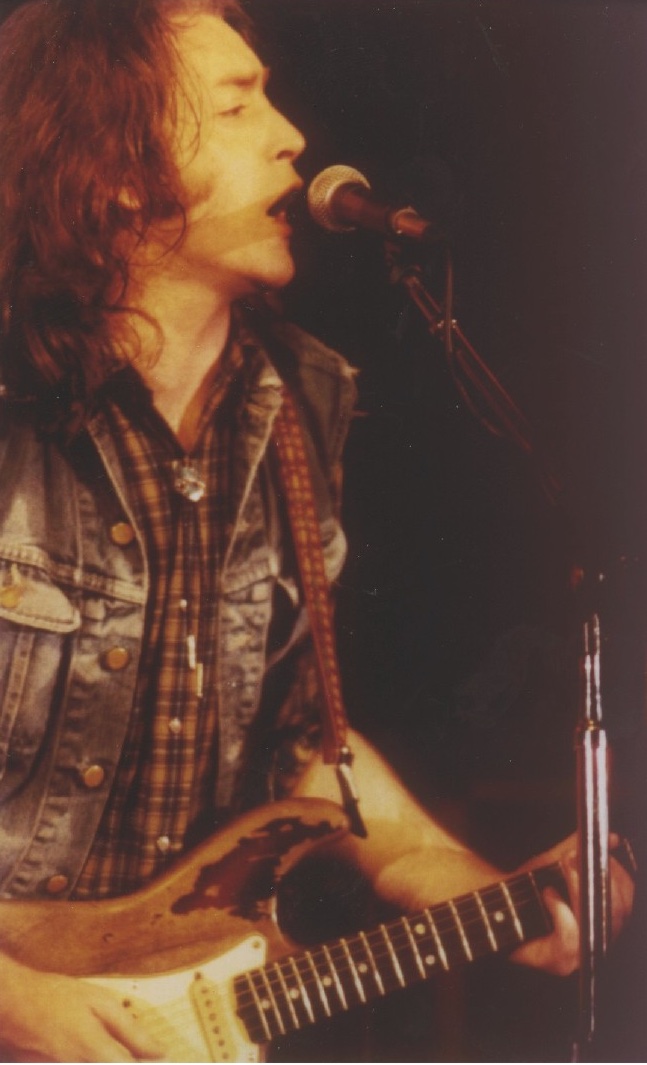
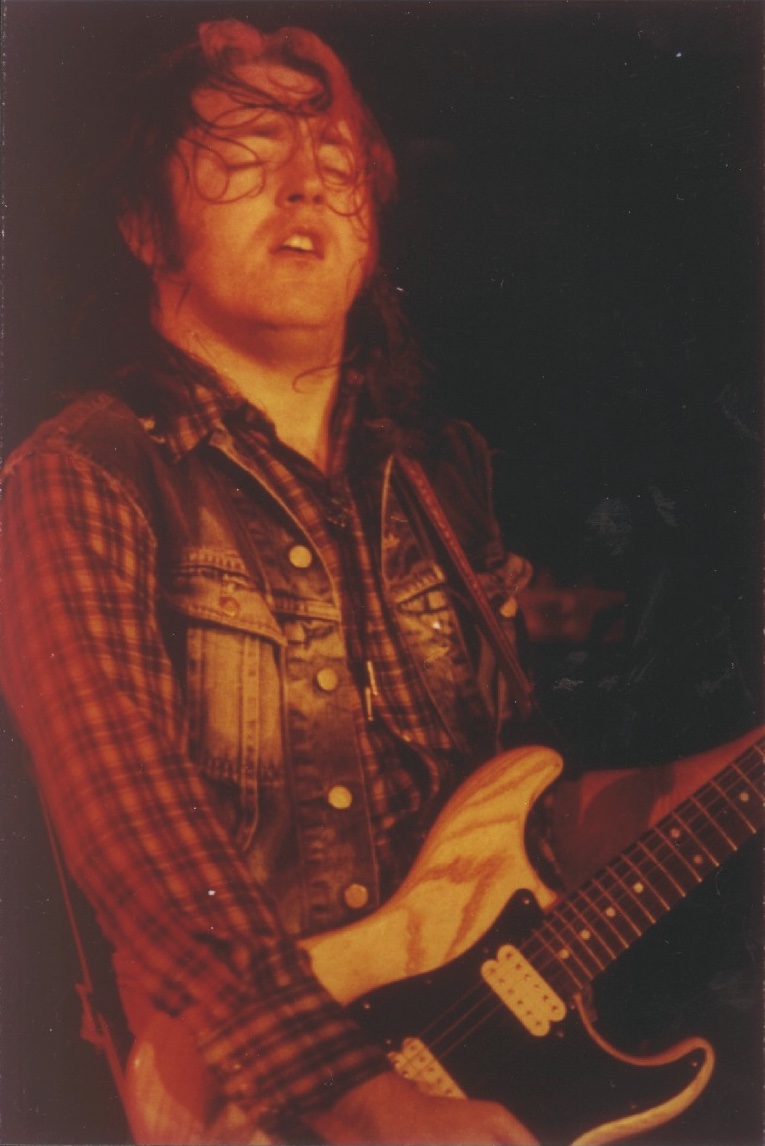

Rory in Providence, 1985
Photographer unknown
13 and 14 June 1985 – Boston, Paradise Theatre and L’Amour’s, Brooklyn
Boston came next on the tour with a gig at the city’s Paradise Theatre—a 900-capacity venue located on the edge of Boston University’s campus, opened in 1977 by The Don Law Company.
A rare piece of coverage in The Boston Globe ahead of the show featured some illuminating quotes from Rory. Reflecting on his sound, he explained, “I try to keep my music unsophisticated. For me, blues and rock ‘n’ roll are things you shouldn’t mess around with too much—you need that organic, rootsy sound.” He admitted to experimenting with new gear, including guitar synthesisers, but found that they “just messed up the sound,” preferring instead to push boundaries with “new tunings, acoustic guitars, 12-strings, mandolins… there’s plenty there to explore.” Rory also discussed the forthcoming Torch album and his recent session work with Box of Frogs, describing their new release Strange Land as “less bluesy this time around, more progressive and a little strange.” Speaking about his place in the evolving music scene, he expressed quiet optimism: “For a while there was a critical backlash; they wanted to put people like me into a museum. But they always start coming back… People are getting thirsty for that raw edge.”
He also touched on his formative years, noting: “In Ireland you had to hunger to find everything you could. I really savoured all I heard”—something he felt wouldn’t have happened had he grown up in the US, where access to music would have been too readily available. When the conversation then turned to Ireland’s political troubles, he remained characteristically principled: “People have told me that it’s my duty to write about the Irish situation, but I think the problem is too complex. I don’t want to take a cheap shot just because I’m Irish. There’s too many people locked up in prison. You can’t wipe that away with a song about brotherly love. We need fewer songs and a little more justice. It’s not that I’m apolitical – let’s just say that I’m a little more touchy about the subject.”
The Boston Globe feature helped build anticipation—and Rory, of course, delivered. Writing later in the Concord Monitor about the concert, H. Schultz recalled:
[…] Rory was at the top of his game. With just a drummer and a bassist, Rory put on a blistering guitar concert for more than three hours. Laughing, giving handshakes and sharing drinks with everyone during and between songs, Rory was his usual down-to-earth self. And during his songs (I’m not making this up), Rory was hitting power chords and holding his guitar out to the audience in the front row; we would take turns playing the fret bar on his guitar. He even started laughing when one guy was twisting on his volume and tone knobs while he was playing.
A bootleg of around 80 minutes captures the electricity of the night. As one fan reflected on YouTube, “In the eighties it seemed like Rory was determined to show the hair metal poseurs who really had the balls of steel, and his playing took on an almost violent edge.” That heavier, more aggressive style is unmistakable throughout the tour and particularly in this Boston show. It includes probably my favourite version of ‘Double Vision’ from the tour and a killer rendition of ‘Bad Penny’.
From Boston, the tour then rolled into New York with a show at L’Amour’s in Brooklyn on 14 June—a legendary rock club that became known as the “cradle of thrash,” helping launch acts like Anthrax, Metallica and Slayer.

Photographer unknown
18 and 19 June 1985 – Saba Club, Washington DC
Next on the tour was Washington DC, where Rory played two consecutive nights at the city’s Saba Club. Opened in February 1984 in the former space of the LA Café, the Saba quickly gained a reputation as a rock and reggae dance hall. It was a decent-sized venue—“small enough to be intimate, big enough to fit a nice crowd,” as fan Richard Day Gore recalls, making it a perfect fit for Rory’s raw, high-energy set. On both nights, Rory was supported by local blues guitarist Linwood Taylor, a respected figure in the DC music scene.
Richard attended both shows and has vivid memories of the occasion. He’d previously seen Rory at the Bayou Club in Georgetown in 1978 and again opening for Rush in 1982. Familiar with the venue layout, he positioned himself near the staircase at the back of the club where performers typically entered. Gerry and Brendan arrived first, followed shortly by Rory—just as the rest of the crowd had surged to the front of the stage. What happened next left a lasting impression:
I was immediately struck by how his face was a mask of anxiety until he saw me. At that point, he smiled a greeting and we shook hands. I remember feeling rather like I’d invaded his moment of concentration, as if he suddenly felt self-conscious to be seen by a fan while steeling himself for his show. But he immediately put on a happy face for this fan and tarried for a moment as I gushed a greeting and welcome. Then he excused himself and walked through the chanting crowd to the stage. It was great fun watching fans realize the guy who had just gently elbowed past them was the man they’d come to see!
Richard remembers the set as “incendiary.” Although Rory had visibly aged since their last encounter, the performance was “no less sensational.”
On both nights, Richard wore a colourful shirt with brass buttons. When he returned for the second night, Rory not only remembered him but made a typically warm gesture: smiling, tilting his head to the side, wagging his forefingers at Richard’s shirt and thanking him for coming back.
Also in attendance was George Tsamoutales, who remembers it as “quite a night of music.” At one point, Rory broke a string and quickly signalled to Gerry for a bass solo. George watched in awe as Rory changed the string and was back in tune and wailing in under a minute. For him, it was “one of the finest performances I can ever remember.” Another fan, Howard Heing, was pressed up against the stage and managed to snag that very broken string! He remembers it as an “amazing night,” with Rory playing for over three hours straight with no break. The speed of that string change left such an impression that Howard made it a signature move when he later performed in the ‘90s with his band Fokwulfe.
Fortunately, both nights at the Saba Club were captured on bootleg (first and second). Although Rory never used a setlist, the shows followed a similar arc, albeit with some variation in song order. The first night features a stunning version of ‘A Million Miles Away’, while ‘Seven Days’ stands out for its beautiful slide work and improvised lyrics, this time Rory weaving in playful references to Muhammad Ali and John McEnroe. I was really excited to hear Sonny Boy Williamson’s ‘When My Baby She Left Me’ as an encore on the second night. Though it sounds quite different without Mark Feltham’s trusty harmonica, it is no less spectacular. ‘Wayward Child’ also makes a surprise appearance—a longtime favourite of mine.

21 and 22 June 1985– Chestnut Cabaret, Philadelphia
On 21 and 22 June 1985, Rory brought his relentless energy to Philadelphia’s Chestnut Cabaret, located at 38th and Ludlow Streets. Opened in 1978, the venue had long been a hub for jazz, blues, soul and funk legends. Among the crowd was fan Jim Grace, who created a large ‘Rory Rules #1’ poster and presented it to Rory during the encore. Rory propped it up on a drum mic stand, where it remained for the rest of the show.
Jim attended with a group of friends and remembers that the crowd’s enthusiasm for Rory made it tough for the opening act—John Eddie & the Front Street Runners— with many calling out “Rory! Rory!” and urging him off the stage. Another attendee, John Beck, instead recalls Tommy Conwell and the Young Rumblers as the openers (confirmed by listing below). It was his first time seeing Rory live, and he described the experience as “AMAZING.”
Fortunately, bootlegs survive from both nights (first and second), capturing Rory’s brilliance in full. It’s always tough to pick favourites as Rory was consistently outstanding, but the first night features a particularly gorgeous ‘Off the Handle’ and the intense ‘Brute Force and Ignorance’. Highlights from the second night include a stunning ‘I Wonder Who’, a lively ‘Messin’ with the Kid’ midway through the set and one of my favourite versions of ‘I Ain’t No Saint’. There’s also a cool take on ‘Nadine’ and a medley of ‘Bullfrog Blues’/‘I’m Talking About You’/‘Brown Eyed Handsome Man’, with some beautiful slide guitar and excellent bass work from Gerry.
Even after the show ended, Rory’s passion didn’t fade. Some lucky fans stuck around backstage where a piano sparked an impromptu jam session. Rory and the band played on until 6:30 in the morning!

23 and 24 June 1985 – Lone Star Café, New York
The Lone Star Café was always a guaranteed spot for a great rock show. Located at 61 Fifth Avenue, on the corner of Fifth Avenue and 13th Street, it opened in 1976 with a distinctive Texas theme and quickly became New York’s premier country music venue—though it attracted a wide range of rock and blues acts as well. The venue was famous not just for its music but also for its controversial 40-foot iguana perched on the roof. Inside, it was an intimate space with a small, low stage on the main level, and a unique ¾-around rotunda on the second floor, where tables and chairs lined the front for great views.
The Lone Star Café’s charged atmosphere was the ideal backdrop for Rory’s fiery performances. Following an opening set by Nashville country singer Karen Kraft, Rory exploded onto the stage, instantly captivating the packed room. Charlie Gili, who saw Rory 28 times over his career, was at both Lone Star gigs and remembers them as “mind-blowing, ass-kicking, rock your socks off” performances. The shows were packed to the brim, and Charlie chose to stand on the base of the stairs, right next to Rory’s amps, where his Stratocaster was well within reach.
The night kicked off with the classic “Rory! Rory!” chant, and then Rory came running out onto the stage, grabbed his Strat, tuned up, tossed back his hair and let out that iconic Rory scream, followed by: “Good evening, New York! It’s good to be back! Yeahhhhh!” Charlie vividly remembers halfway through ‘Shinkicker’ when Rory leapt up to the stair landing, ran almost to the top and stopped directly in front of him and his girlfriend. Rory leaned back, pinning them against the wall, hair obscuring their view. Trying not to move, Charlie felt Rory step forward, turn his head towards him, give a quick wink and nod—a clear sign of thanks and approval for their patience—before leaping back on stage. Charlie’s girlfriend, who was seeing Rory for the first time, couldn’t help but shout “Holy shit!” five times in amazement. For Charlie, Rory “totally blew the roof off the place that night.” Like a man possessed, he even busted through the front door to play for the large crowd that had gathered outside on the street! It was well after 2 a.m. when they finally left, shaken by over three hours of pure blues rock.
Others also have fond memories of those Lone Star nights. Eilis Boland recalls it as the loudest gig he’d ever attended but “absolutely amazing,” while Mike Herlihy also remembers the relentless energy Rory brought to the stage. Tony Tothe, who saw Rory every time he was in New York from 1979 to 1991, remembers that Rory arrived nearly two hours late on one of the nights, but “the place went nuts” as soon as his bus pulled up and he walked in. As Tony describes it:
Rory made it to the stage and took off as usual! People were running on the stage and jumping down. It was almost like a punk show with a mosh pit! It was the typical balls to wall Rory show.
Luckily, both nights are captured on bootleg (although not on YouTube yet, unfortunately), showcasing Rory as a tireless dynamo from start to finish. I honestly don’t know how he did it! The setlist was packed with gems, including an incredible version of ‘When My Baby She Left Me’ from the first night and a really nice ‘Walking the Dog’ to close it out. The second night brings a raw, foot-tapping ‘Pistol Slapper Blues’ and a sprawling 12-minute ‘All Around Man’, filled with gorgeous slide guitar. There’s a beautiful call and response between Rory and the crowd at one point in the song, stretching out with infectious energy and mutual delight.
By the time the lights came up, Rory had given everything—and the crowd knew they’d witnessed something unforgettable. That’s why I love bootlegs so much; they bottle the magic for those of us who couldn’t be there.
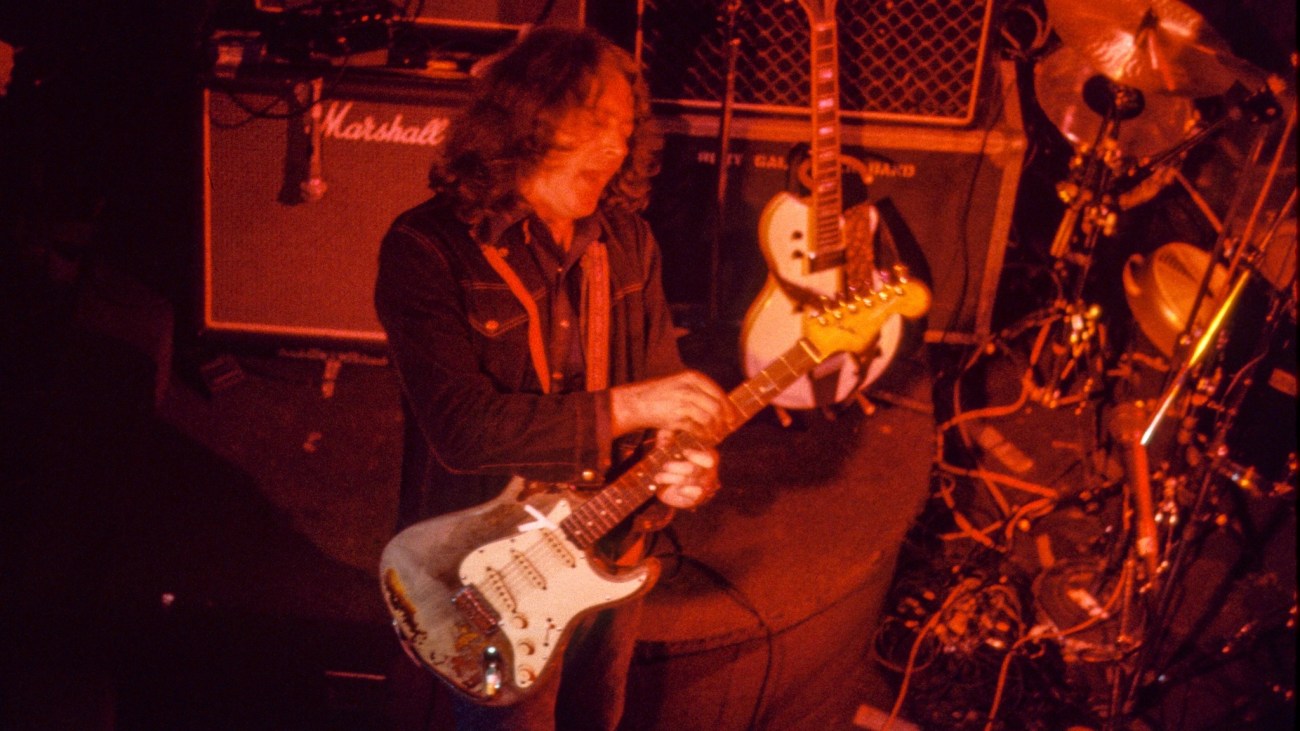
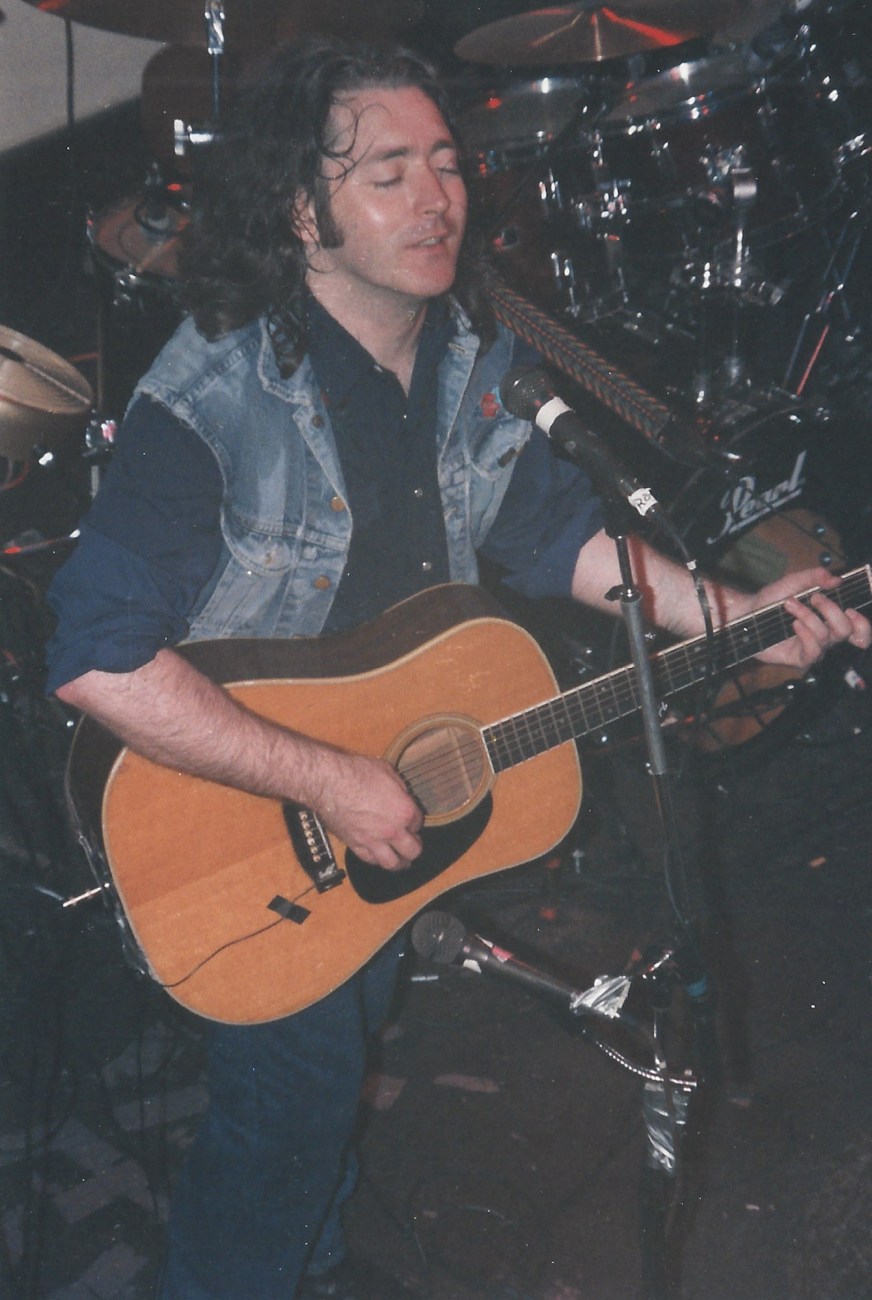
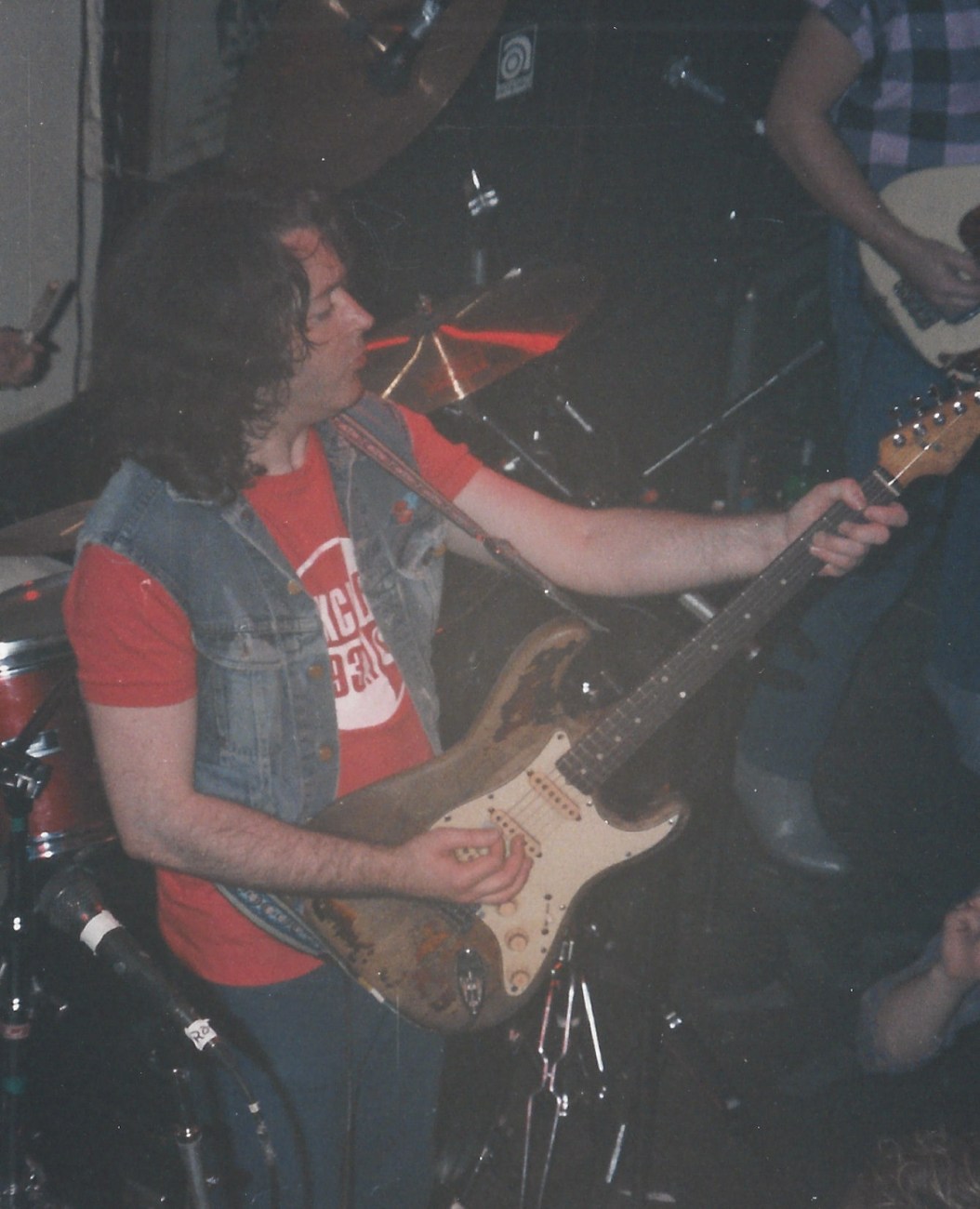
Rory in New York, 1985
Photos: Charlie Gili
27 June 1985 – Toad’s Place, New Haven
Next on the tour was a stop at Toad’s Place in New Haven—a venue Rory had first played in 1979 to thunderous applause. Located on York Street and opened in 1975, Toad’s Place began as a restaurant but quickly transformed into a live music hotspot. Inspired by the Volos Municipal Theater, it aimed to revive the local music scene and quickly attracted legendary performers like Willie Dixon, Muddy Waters, John Lee Hooker and Koko Taylor. Not too shabby!
Rory’s 1985 performance also left a strong impression on those in attendance. Among them was Michael Cerrina, who, thanks to a friend’s connections, managed to get in for free. It was the only time Michael ever saw Rory live, and he described the experience as “as good as it gets.” Tony Henry, also present that night, even shared a beer with Rory in his dressing room afterwards, recalling him as “a class act and pure gentleman.”

28 and 29 June 1985 – Sundance Club, West Islip and Mean Mr Mustard’s Club, Reading
After almost six weeks on the road, Rory’s tour drew to a close with two consecutive shows. On 28 June, he headed out to Long Island for a gig at the Sundance Club in West Islip—another revered stop on the East Coast rock circuit. To my delight, this is captured on bootleg. Still a powerhouse of energy, Rory delivered particularly explosive performances of ‘Shinkicker’ and ‘Shadow Play’, driven on by the tight rhythm section of Gerry and Brendan. ‘Secret Agent’ packed its signature punch perfectly, while ‘Out on the Western Plain’ offered a rare, laid-back moment of calm amid the intensity.
The tour came to an end the next night at Mean Mr Mustard’s Club in Reading—a favourite haunt for alternative college crowds and pre-goths since 1979. Jim Grace, who had seen Rory earlier on the tour in Philadelphia, caught the set after a long drive from Bensalem, arriving mid-way through ‘Mississippi Sheiks’. Once again, he made a poster for Rory, but this time it was sadly prised out of his hands by a drunk fan. Jim remembers that Rory played Paul Fenton’s Supro for much of his set. The surviving bootleg shows Rory delivering yet another top-tier performance, with some exquisite slide work on ‘Mississippi Sheiks’ and a pummelling encore medley of ‘Nadine’, ‘Little Queenie’ and ‘Route 66’. There’s also a particularly epic 12-minute ‘I Wonder Who’, a high-octane ‘Shinkicker’ and the warm, acoustic charm of ‘Bankers Blues’. It was the perfect end to an unforgettable tour that seared itself into the memory of every fan lucky enough to be there.
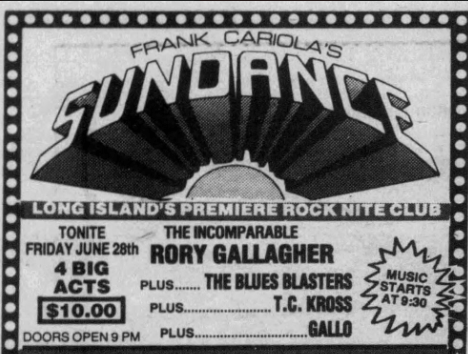
Far from Sheep-Farming!
You’d be forgiven for assuming that Rory would finally take well-earnt rest after his intense six-week tour of North America, but nothing could be further from the truth! Instead, he returned to London, dove straight into finishing his session work with Box of Frogs, then headed off to Montreux for his fifth performance at the legendary Jazz Festival. Though Rory does seem a little tired and occasionally subdued during that Montreux performance, he still delivers a blistering set—proof that the rigours of the road hadn’t slowed him down one bit. Exhausted though he was, he also graciously gave several interviews, as I shared last year on the Rewriting Rory YouTube channel. And from there, he went right back to London to continue working on Torch.
So, it’s clear that Rory’s so-called ‘hiatus’ was anything but! Hopefully, this account of his 1985 North American tour helps challenge the idea of this period as ‘lost’ or ‘fallow’ and instead reveals just how active, vibrant and determined he truly was, offering a richer, more honest picture of his career during this complex and often misunderstood chapter.
When asked in a later Hot Press interview what he’d been doing between 1982 and 1987, Rory cheekily quipped, “Maybe people thought I was sheep-farming.” His sarcasm captures the frustration he felt having to constantly justify that he hadn’t been idle. In reality, he was pushing himself hard and maintaining a busy schedule, filling his days with writing, recording and touring.
And yet, as some have suggested, this unrelenting drive to stay constantly in motion may have been about more than just music—perhaps a way to outrun his own demons too. Looking back now, knowing what we do, it’s hard not to wish he’d allowed himself a little more rest, a little more care. But Rory gave everything—not just to his audiences, but to the principle that the show must go on.
And rightly or wrongly, it did—brilliantly, night after night.

Photographer unknown


 REWRITING RORY
Leave a reply to rewritingrory Cancel reply