

The five-year stretch between Jinx (1982) and Defender (1987) has always fascinated me. Often wrongly dismissed as a hiatus or seen as a creatively fallow period for Rory, it was, in fact, a time of deep exploration, growth and development as he tried to carve out his own niche in the musical landscape of the 1980s. And he did so without the backing of a record label, all while grappling with mounting mental and physical health challenges.
This ongoing creativity is perhaps most evident in the case of the Torch album. Although it was ultimately scrapped—like the earlier San Francisco sessions—due to Rory’s growing dissatisfaction with its tone and direction, it nevertheless stands as a powerful example of how actively he was working to push his sound forward and explore new musical terrain.
In a 1985 interview with Bob Hewitt of Guitarist magazine, Rory mentioned that he was working on around 15 tracks for the album, with saxophone featuring prominently throughout. He described Torch as “innovative” in terms of sound, saying that he was experimenting with rhythms and melodies in ways that he felt would “break new ground.” It was clearly a bold and exploratory project—arguably more adventurous than anything he’d recorded before.
While a few songs survived, reworked for Defender in “different keys [and] different tempos,” I still live in hope that the original will get an official release one day. Even in rough or incomplete form, it would offer a fascinating window into Rory’s evolving sound and mindset during the mid-1980s.
But it wasn’t just studio work that kept Rory busy in this so-called ‘lull’ in his career. He was still regularly touring across Europe, even charting new territory with concerts in Hungary and Yugoslavia. While he was no longer playing at the punishing 300-shows-a-year pace of the 1970s, he remained a consistent and committed live performer, continuing to captivate loyal audiences and win over new fans along the way.
This was also the period when he finally returned to North America after a three-year absence due partly to his growing fear of flying and partly to the fallout from his 1982 tour supporting Rush—a tour that was, in his own words, “soul-destroying.” Rory struggled to connect with the large stadium crowds and was unfairly criticised by the music press for being outdated. In addition, his aerophobia had become so severe that the band had to travel around the US and Canada by bus, adding even more stress to an already joyless experience.
Still, in 1985, he picked himself up, brushed himself off and headed back to North America—this time on his own terms, embarking on a stripped-down club tour across the continent between May and June.
When writing Rory Gallagher: The Later Years, this tour was considered for inclusion but was ultimately left out due to space restrictions. Plus, there simply wasn’t much of a ‘story’ to tell here compared to other chapters. This tour received minimal press coverage, few reviews and little promotion or supporting interviews. Nothing out of the ordinary or especially eventful took place. The story, in essence, is just Rory going out every night and playing his ass off—as he always did.
But ever since the book was published, I haven’t been able to let go of this tour for some reason. Even without any major events, I still feel that it deserves its own spotlight—if only through the memories of fans alone gathered through interviews, Facebook commentary and various Rory fan sites. This was Rory’s penultimate North American tour (his final tour in 1991 is covered extensively in the book) and it speaks volumes about his unwavering dedication to live performance in the face of personal challenges. So, I thought that I’d put together this blog post instead – in the style of the original Rewriting Rory monthly posts – to bring these stories to light and celebrate yet another often-overlooked chapter of Rory’s career.
Here’s Part 1. Stay tuned for Part 2 next weekend!

Photographer unknown
15 May 1985 – Golden Bear, Huntington Beach
Rory’s tour kicked off on 15 May 1985 at the Golden Bear in Huntington Beach. Located on Pacific Coast Highway, just south of Main Street, the Golden Bear was a legendary nightclub that hosted a wide range of artists over the years, including Jimi Hendrix, Janis Joplin, Bonnie Raitt and Jerry Garcia.
Local musician Fredie Vinson met Rory before the show, finding him sitting on the front edge of the venue’s stage. They got to talking, and Rory mentioned that his acoustic guitar had a broken string and he wasn’t sure if he’d be able to find replacement strings in time. Fredie had brought along his own Gibson Mark 35 acoustic, and when Rory spotted it, he asked if he could borrow it just in case. Fredie agreed under one condition: that Rory sign the back of it. Rory gladly obliged.
Fredie remembers Rory’s beloved Strat sitting next to him on a stand and cheekily asked if he could take a closer look. To his surprise, Rory went over, turned on the amp and handed him the Strat plugged in. Fredie was, in his own words, “terrified” to hold it. He strummed a few open chords and the opening riff to ‘Shadow Play’, but quickly became “too overwhelmed,” turned the volume down and gave it back. What struck him most was how “incredibly lightweight” the guitar felt. In the end, Tom O’Driscoll managed to find some acoustic strings, so while Fredie’s guitar sat side-stage all night, it wasn’t used during Rory’s performance. Still, Rory strummed it and played a few licks before the show—a moment Fredie understandably holds very dear.
As for the show itself, the opening acts were Californian rock band Fishbone and folk-rock singer-songwriter Kenny Rankin. Then came Rory, delivering what fan Steve Aragon remembers as “an amazing performance.” A highlight for him was when Rory grabbed a bottle of beer off a passing server’s tray—without missing a note on his guitar—only to find it was empty!
The Golden Bear closed its doors permanently just seven months later, on 29 January 1986, due to the high costs of retrofitting the building to meet new seismic safety requirements. A similar fate befell several of the venues Rory performed or recorded in over the years, leading Dónal to once joke that his brother practically specialised in playing places that were on the verge of falling down!

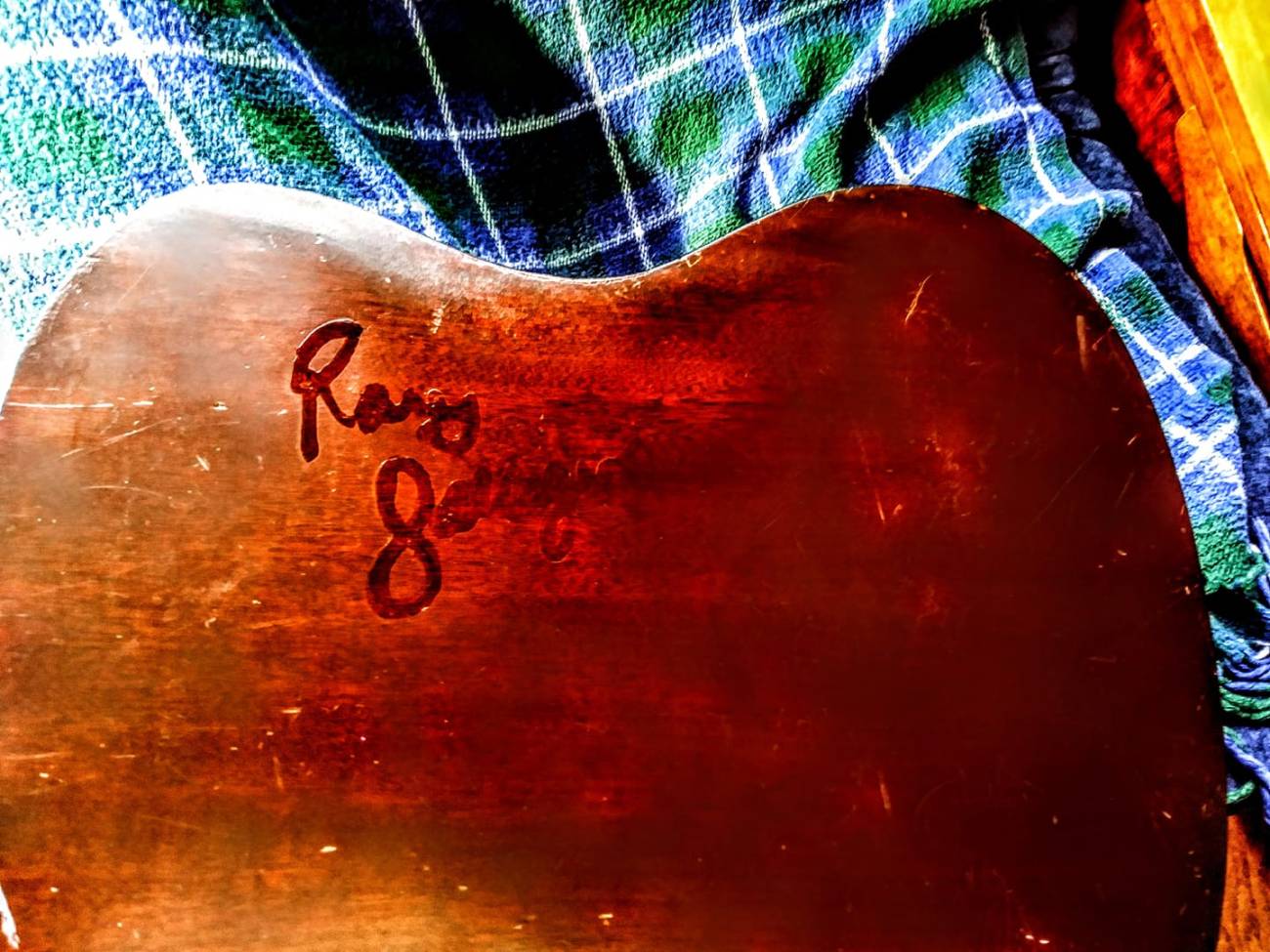
Rory with Fredie Vinson
Photo: Fredie Vinson
16 May 1985 – The Stone, San Francisco
The next night, Rory played The Stone at 412 Broadway in San Francisco. The venue was established in 1980 by Freddie Herrera and Bobby Corona, taking over the former Hippodrome nightclub. The owners were also behind Keystone Berkeley and Keystone Palo Alto, making them major figures in the Bay Area live music scene of the time. The club opened with a bang, featuring Muddy Waters and John Lee Hooker on the bill, followed by two sold-out nights with the Jerry Garcia Band.
When Rory took the stage in 1985, he more than held his own among such legendary company. The bootleg recording of the gig captures him in fine form, kicking things off with the driving energy of ‘Double Vision’. My own personal highlight is what comes next: an early version of ‘Seems to Me’, which would later appear on Defender. This rendition has a swampy, Slim Harpo feel that shows Rory tapping into his deep blues roots with effortless style. Rory also introduced the audience to another future Defender track—‘Seven Days’—albeit in a radically different form. This version is electric and more up tempo and has the crowd clapping and stomping along in no time.
Among those in the crowd that night was longtime fan Denyse Anger. Her journey with Rory’s music began back in late 1969, when she and a friend moved from the US to England in search of adventure. They worked and lived in a hotel in London’s South Kensington district, before moving to a bedsit in Philbeach Gardens in September 1970—the very same street where Rory and Taste lived at the time. Through mutual acquaintances who knew Rory, Denyse first heard stories about him. These friends had spare keys to his bedsit and even let her take a sneak peek inside while he was away. Not long after, she spotted Rory on the cover of Melody Maker in a feature about the Isle of Wight gig—and from that point on, she was hooked. She recalls seeing him around Earl’s Court several times in the years that followed.
On returning to the US, Denyse saw Rory in concert for the first time in 1972 when he opened for Mountain at the Northern Virginia Community Centre. Thirteen years would pass before she caught another of his live performances.
In 1985, Denyse was waiting in line outside The Stone when a car with Nevada plates pulled up to the curb. Inside were Rory, Gerry McAvoy and others. Looking back, she remembers that Rory appeared to be wearing yellow-tinted aviator sunglasses. As he opened the door, she handed him a book of poems she had been writing and asked if she could stop by and visit after the show. Rory smiled and replied, “We’ll see how it goes.”
Denyse admits to being “in a bit of a state of shock” throughout Rory’s performance, having just met him and knowing she would be going backstage afterwards. For this reason, it is difficult for her to remember specifics of the concert, but certain sensations remain vivid:
There’s always the first stunning blasts of Rory’s guitar. Your senses are overwhelmed, a body slam wave. I think that’s what I remember most about the 1985 show, and all of the times I saw Rory, suddenly he’s there and you hear him giving everything within that ‘barrage’ of treasured songs – revealed! – holding everyone in the room close inside that wave.
She was accompanied by two friends—one familiar with Rory’s music, the other there for support. That friend was “knocked back” by the sheer force of Rory’s performance.
Later that night, after the show, Denyse joined the small crowd waiting to speak with Rory. She remembers Gerry offering a warm smile as he chatted with a woman nearby. Rory, towel around his neck, was every bit the gracious host—chatting casually, answering questions and making time for each person. She also recalls a small interaction between Rory and an older woman asking about t-shirts, with Rory telling her that he preferred the colour red. Then, gesturing to the refreshments, he casually mentioned Gatorade. Someone else asked if he’d ever consider a Las Vegas residency. Rory grinned and said, “Las Vegas would be tough.”
That evening remains a treasured memory for Denyse.

Photo: Tony Alves
17 May 1985 – The Keystone, Palo Alto
With no break, Rory performed again the next night at The Stone’s sister venue: the Keystone on 260 California Ave in Palo Alto. Supporting him were guitarists Mark Castro and Jimmy Lyon. Again, a surviving bootleg of the show exists, and it’s of excellent quality. It really captures the atmosphere and energy in the room that night. The crowd is buzzing with excitement, erupting as Rory hits the stage and greets them with an enthusiastic “hello!” before launching into the set.
The set includes a fantastic cover of Bo Diddley’s ‘Mama Keep Your Big Mouth Shut’, a sultry take on Willie Dixon’s ‘My Babe’ and a blistering version of Bo Carter’s ‘All Around Man’. The only acoustic number of the night is ‘Out on the Western Plain’, keeping the overall pace high throughout the performance. Rory’s performance of ‘Shadow Play’ is a masterclass in dynamic control and expressive technique, weaving in a series of searing pinch harmonics during the solo as he slows the tempo to a simmer before building it back up again. There’s also great audience interaction during ‘Tattoo’d Lady’. The show closes with a powerful medley: ‘Bullfrog Blues’, blended seamlessly with ‘Roll Over Beethoven’ and ‘Route 66’. This performance is a definite contender for a live release from this period in his career.
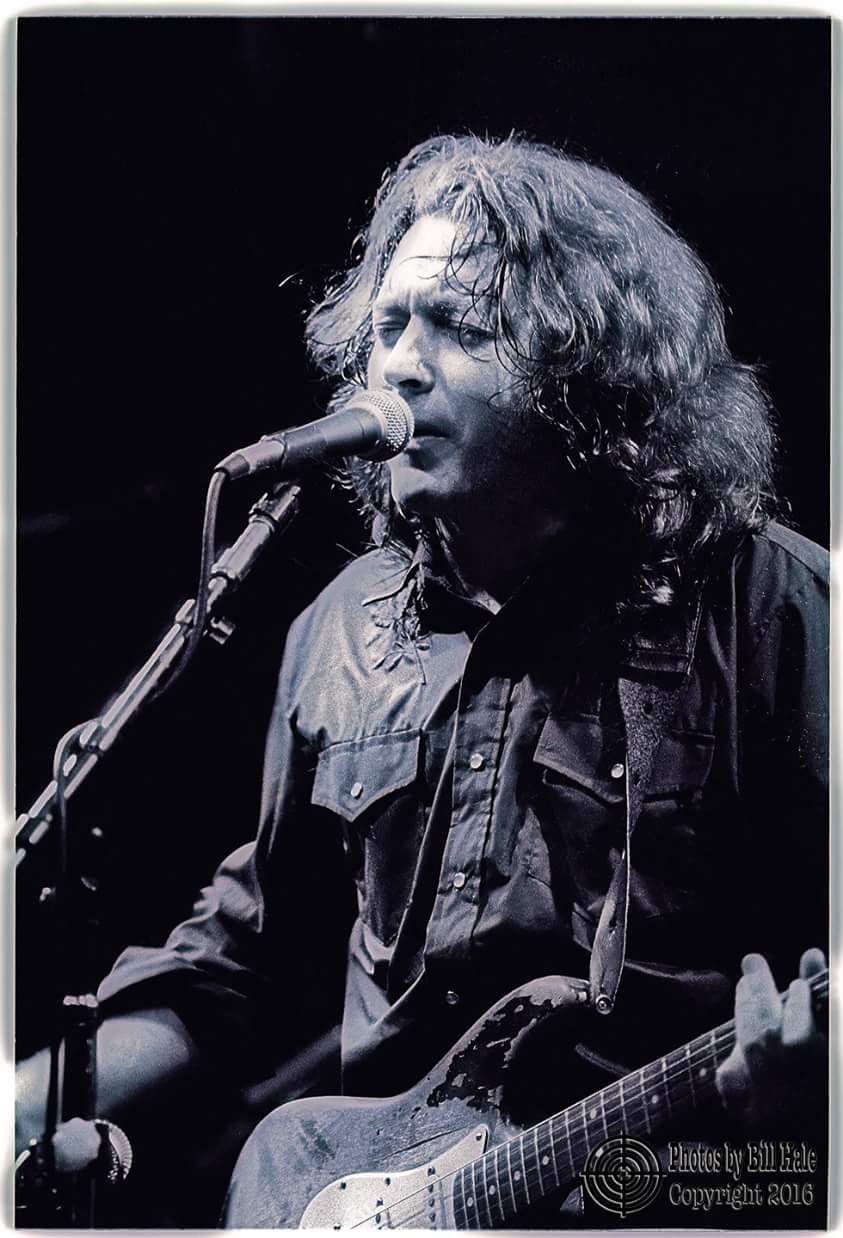
Photo: Bill Hale
18 May 1985 – Beverly Theatre, Los Angeles
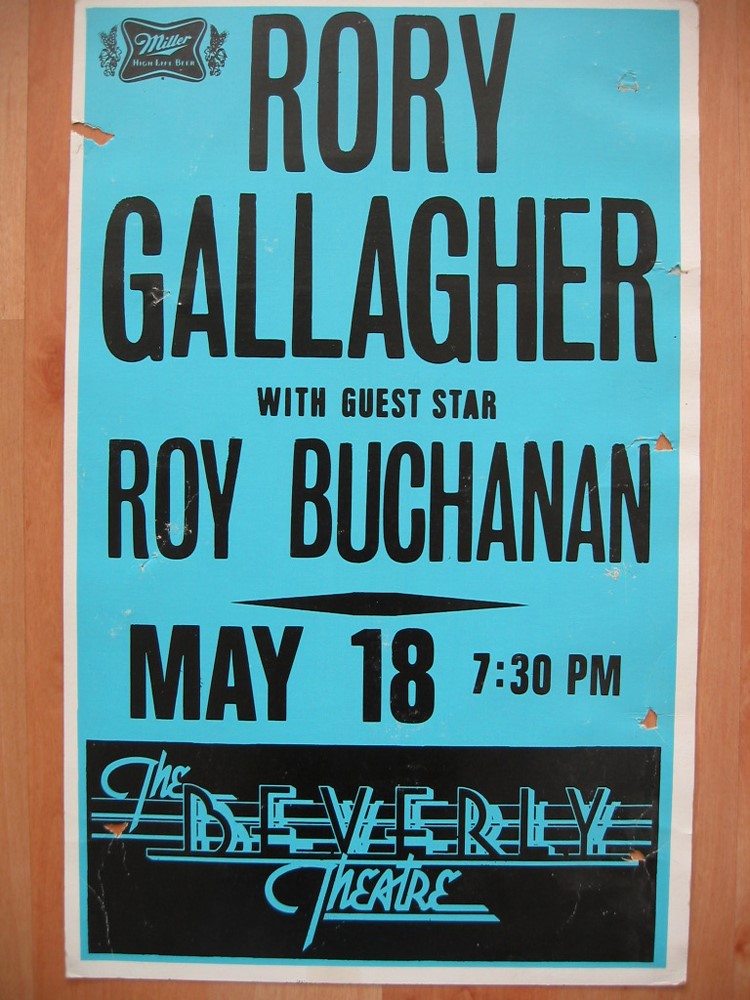
The following night, Rory took the stage at the Beverly Theatre in Los Angeles, sharing the bill with the acclaimed American blues-rock guitarist Roy Buchanan. Although fans had hoped for a spontaneous jam between the two guitar legends, that moment never materialised—much to their disappointment. Richard A. Pusateri, who attended the concert, initially wondered whether Roy might upstage Rory, but confidently concluded afterwards that he did not, even while acknowledging that it wasn’t one of Rory’s most exceptional performances. Robert Turner was working for McCune at the time, the sound company that provided support to the theatre. Due to this connection, he was able to attend the show for free and managed to get his copy of Jinx signed by Rory and the band. He remembers it as “a magical night.”
20 and 21 May 1985 – Roxy, Tucson and After the Gold Rush, Tempe
After a rare night off, Rory returned to the road, playing the Roxy in Tucson—the former Outlaw Nightclub, recently reopened by Mark Newman with a renewed focus on rock music. The next day, he moved on to After the Gold Rush in Tempe, located at 1216 East Apache Boulevard. Formerly known as Dooley’s, the venue was a well-known stop on the Arizona live circuit.
Fan Roger Wrobel attended the gig and recalls a remarkable encounter the morning before the show. Hoping to catch a glimpse of the band’s equipment, he wandered to the back of the venue and walked up the loading ramp into the backstage area. To his surprise, he spotted someone with long hair. It was Rory himself! Starstruck, Roger simply blurted out, “Rory!” Rory greeted him casually and immediately struck up a conversation, asking about Arizona, the Wild West and Native American heritage. He expressed disappointment at not having time to visit Tombstone, as he had to head straight to Albuquerque after the show.
Their chat soon moved into deeper territory: politics, Reagan and Thatcher, the US mining of Nicaragua’s harbours and the one-sided portrayal of the Troubles in the media. They also talked about the music industry. Rory shared his thoughts on Michael Jackson, Bruce Springsteen and his dislike of heavy metal. He also spoke candidly about U2, adding with a rare eye-roll, “I remember them when they were kids who’d come and see me—now they’re rock stars, you know, too busy for me.”
Rory signed Roger’s copy of Jinx, and soon Dónal joined them, launching into a conversation about Neil Young and how he liked to meet up with Rory whenever he was in LA. Rory spotted a bottle of Mexican brandy in the bar, said he’d never seen it before and suggested they give it a try. As they drank, their discussion turned to production, with Rory speaking about Top Priority and the making of Jinx. When Roger admitted that he didn’t like the production on Jinx, Rory simply shrugged and said, “You’re entitled to your opinion,” though he seemed slightly hurt by the comment.
As for the show itself, Roger remembers that Rory “brought the house down.” The place was packed, and “he played as if he was determined to give every single person in the audience the show of their life.” Standout songs for him included ‘Off the Handle’, ‘Bullfrog Blues’ and ‘Banker’s Blues’. Kathy Anderson, another fan at the concert, agrees completely. She and her friend were right at the front of the stage the entire time, and she calls it “the best show [she] ever went to.” Decades later, Roger still recalls the night vividly, noting that although he’s met many musicians, none had Rory’s grace or lack of pretension.

22 May 1985 – Graham Central Station, Albuquerque
22 May saw Rory at the Graham Central Station in Albuquerque—one of the few gigs on this tour to receive press coverage. Notably, The Albuquerque Journal published a glowing review by Eric Niles that’s worth reprinting in full:
Regarded as one of the most influential purveys of the blues guitar, Ireland’s Rory Gallagher proved without a doubt that he has the stuff great shows are made of.
Gallagher was exuberant, pulsating, loud and dynamic.
Utilizing a powderkeg of raw-boned blues/rock compositions, Gallagher treated a receptive Graham Central Station gathering Wednesday night to number after number of riveting music.
There was something for everyone: a bit of slow blues on numbers like ‘Jinxed’, some slide guitar on the old-fashioned ‘Shadow Play’, a novel sitar demonstration toward the end of the set, and some textbook acoustic guitar playing on ‘When I Was a Cowboy’.
‘Double Vision’ provided a capable opener, kicking off the lengthy 20-song set in hard-rocking fashion, then flowing fluidly into ‘Moonchild’, a number highlighted by a note-for-note guitar cat fight between Gallagher and bassist Gerry McAvoy.
The ruddy-faced Gallagher was a veritable whirligig as he pushed his battered old Stratocaster to the limit; drenching it in sweat, yanking its strings, and bending its neck.
Gallagher switched to the acoustic guitar for ‘When I Was a Cowboy’, a heartfelt sing-along which featured some dexterous fingerpicking and juicy intonation.
Driven along by a punchy rhythm section – McAvoy and drummer Brendan O’Neill – Gallagher never let visual effects overshadow his music.
The band’s rendition of Chuck Berry’s ‘Roll Over Beethoven’ brought the house down, Gallagher’s ardent slide guitar solo giving the classic ‘50s tune a powerful shot in the arm.
‘Nadine’ allowed McAvoy a brief moment in the spotlight. He responded with a flurrying solo comprised of patched-together electric blues licks and contemporary rock rhythms.
Both McAvoy and O’Neill provided a strong, if not spectacular, backdrop for Gallagher to splatter licks.
The real barn burners, though, were the ‘old’ tunes like ‘Brute Force and Ignorance’ and ‘Ride on Red, Ride On’, which raised the energy level into the red and incited Gallagher to clamor like a rock ‘n’ roll dictator. His versions of the Chuck Berry duck walk were met with thunderous applause.
This reviewer thought the show was excessively long – it was more than 2.5 hours – but it was hardly noticeable in light of the captivating performance.
If that review makes you wish you had been there, then fear not because it’s all preserved on a spectacular bootleg that proves Eric Niles didn’t exaggerate a bit. In fact, if anything, he undersold it! What he doesn’t mention and what stands out for me is ‘Garbage Man’, which is so great to see back in the set at this point in Rory’s career. Also remarkable is ‘Secret Agent’, performed with intense slide work, and a brilliant version of Broonzy’s ‘Banker’s Blues’. There is also a nice surprise at the end of the show when Rory returns to play ‘Follow Me’ blended with The Zombies’ ‘She’s Not There’. It fits together unexpectedly well and closes the set on a creative high.
All in all, it was a night that reaffirmed Rory’s reputation as one of the most electrifying live performers of his era and is yet another strong contender for an official release from this period.

25 and 26 May 1985 – Austin Opera House, Austin and Cardi’s Club, Houston
After a well-deserved two days off, Rory returned to the stage with a performance at the Austin Opera House in Texas, followed by a show at Cardi’s Club in Houston. Cardi’s was an iconic venue at the heart of the early ’80s metal scene. Curiously, it closed without warning shortly after Rory played there. Perhaps he tore the house down with his performance, if the surviving audio and video footage are anything to go by!
The video footage captures ‘Philby’, ‘Seven Days’ and ‘Banker’s Blues’, while the bootleg audio includes ‘Sweet Little Sixteen’, ‘Rain’, ‘Double Vision’, ‘I Wonder Who’ and ‘Nadine’. I absolutely love this performance of ‘Seven Days’ in particular, with its improvised lyrics and exuberant audience:
I put some whiskey on my left and my right
It was 636354, I was out of sight
He took the big razor and put it to his wrist
He said, ‘Rory, I think I curse the Day that you exist’
And when I die, bury me deep
Put some whiskey and bourbon and gin at my head and feet
Tell everybody I’ve gone to sleep
I’ll come back and haunt you in my midnight creep
It’s nothing personal what you’ve done to me
I think I’ll hide away in the deep blue sea
I was on the stage with BB King
You wanna see that man work those strings
Now I’m a modest man, I won’t like to boast
I said, ‘Riley, bend the string you like the most’
While in Houston, Rory was also interviewed in his trailer by a local television reporter. As always, the conversation offers a fascinating insight into Rory’s musical philosophy and career outlook. When asked about his time with Taste and why they broke up, Rory replies with his usual grace, saying that he looks back with a “certain amount of affection,” but prefers to focus on the future rather than dwell on the past. Echoing a trend throughout his career, he doesn’t cast blame or speak badly of John Wilson or Richard McCracken, even if he is clearly uncomfortable with the question.
Rory is also asked about his musical chemistry with Gerry McAvoy. He explains that they share a certain “ESP,” which he attributes in part to his long association with Belfast—his “second home”—and to the city’s unique approach to the blues. On his decision to stop using keyboards, Rory explains that he wanted a more “free-form and rhythmic” approach and enjoys the “openness” of a trio, as well as the responsibility of handling the chords, rhythm and lead parts himself.
Rory also speaks thoughtfully about what the blues means to him, who he admires and how he remains true to the genre in an industry increasingly driven by fashion and trends. On the subject of record labels and radio play, he makes it clear that he isn’t interested in compromising for commercial success: “you have to believe in yourself, even if you’re slightly wrong. It’s better to do your own thing.” Asked where he sees himself fitting into the contemporary music scene, Rory replies that he prefers working day to day rather than following any long-term strategy, even if “that’s not the Dale Carnegie way of living.” “I play with my heart and my soul, and I keep a respect for the roots of the music that I play. But I would also like to be contemporary and valid today,” he adds.
Finally, when asked about how it feels to get a strong crowd reaction at a gig, Rory responds pragmatically. While he agrees that it’s “great,” he doesn’t want the blues to be treated as a highbrow or academic exercise. For him, it is always about honesty and emotional truth: playing from the heart and truly communicating with the audience, which I’m sure we can all agree he always did.
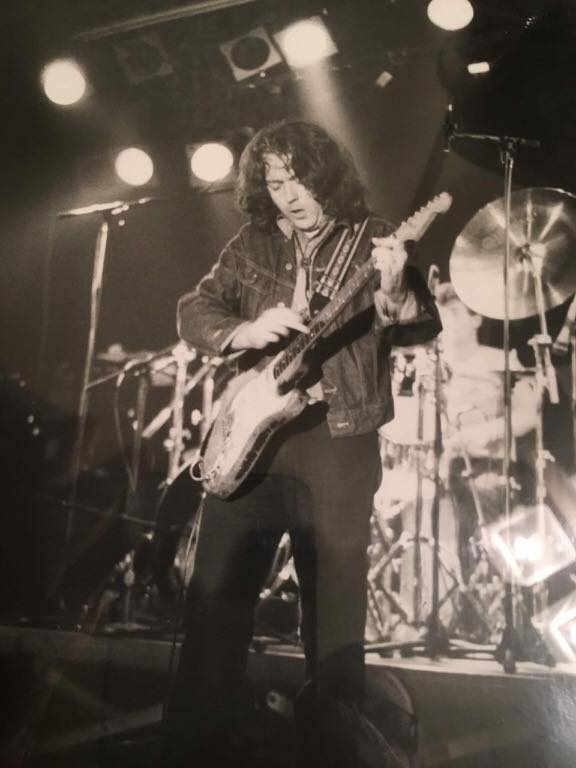
Photographer unknown
29 May 1985 – Mississippi Nights, St Louis
After two days off, Rory travelled 780 miles to play the Mississippi Nights in St Louis. The club, which opened in 1976, was located on the western bank of the Mississippi River in a vast warehouse space that could hold up to 2,000 people. One of the few known pieces of press coverage from this tour comes from that concert: a vivid and thoughtful review by David Surkamp for the St. Louis Post-Dispatch. As he wrote:
Irish guitar ace Rory Gallagher played to a standing-room-only crowd Wednesday evening at the Mississippi Nights. He is on his 21st tour of the United States. Although it had been over two years since Gallagher performed in St Louis, his concert was sold out hours in advance.
Gallagher first appeared here in 1969 as a member of Taste, an Irish power trio from Belfast [sic] that was circulating at the time as an opening act for the British supergroup Blind Faith. Although Blind Faith included virtuoso guitarists Eric Clapton and Steve Winwood as part of its line-up, it was 19-year-old [sic] Gallagher who wound up stealing the show.
Twelve solo albums and countless performances later, Gallagher still commands the stage with the vigor of a teenager. Few guitarists are able to match either the flawless technique or the emotional content of Gallagher’s solo style. Even fewer have the stamina to endure the two-hour performances that are standard Gallagher fare.
Wednesday’s show was exceptional even by Gallagher’s lofty standards. The guitarist took the stage at 9:30 and finished his last encore after 12:30. During this program the guitarist touched on most of the familiar blues styles and even seemed to have invented a few more for good measure.
He seems to have perfected the use of false harmonics, which is supposed to be previously uncharted territory for the electric guitar. Although these ‘false tones’ are commonly used by woodwind players, few guitarists are able to extract them from the instrument with the finesse of this fine performer.
Gallagher also included one of his rare acoustic guitar interludes during Wednesday’s show. Demonstrating a highly percussive plectrum style on the instrument, Gallagher showed his thorough knowledge of the primitive style of early delta bluesmen by including Leadbelly’s classic blues standard ‘Out on the Western Plain’.
Gallagher also acknowledged St Louis as the home base for rock-and-roll legend Chuck Berry by including Berry’s ‘Nadine’ as his first encore selection.
Without a surviving bootleg from this performance, it’s a rare treat to have a review this detailed from the tour. It gives us a valuable glimpse into how well Rory’s American shows were being received at the time, especially as much of the European press was unfairly critical of him during this period.

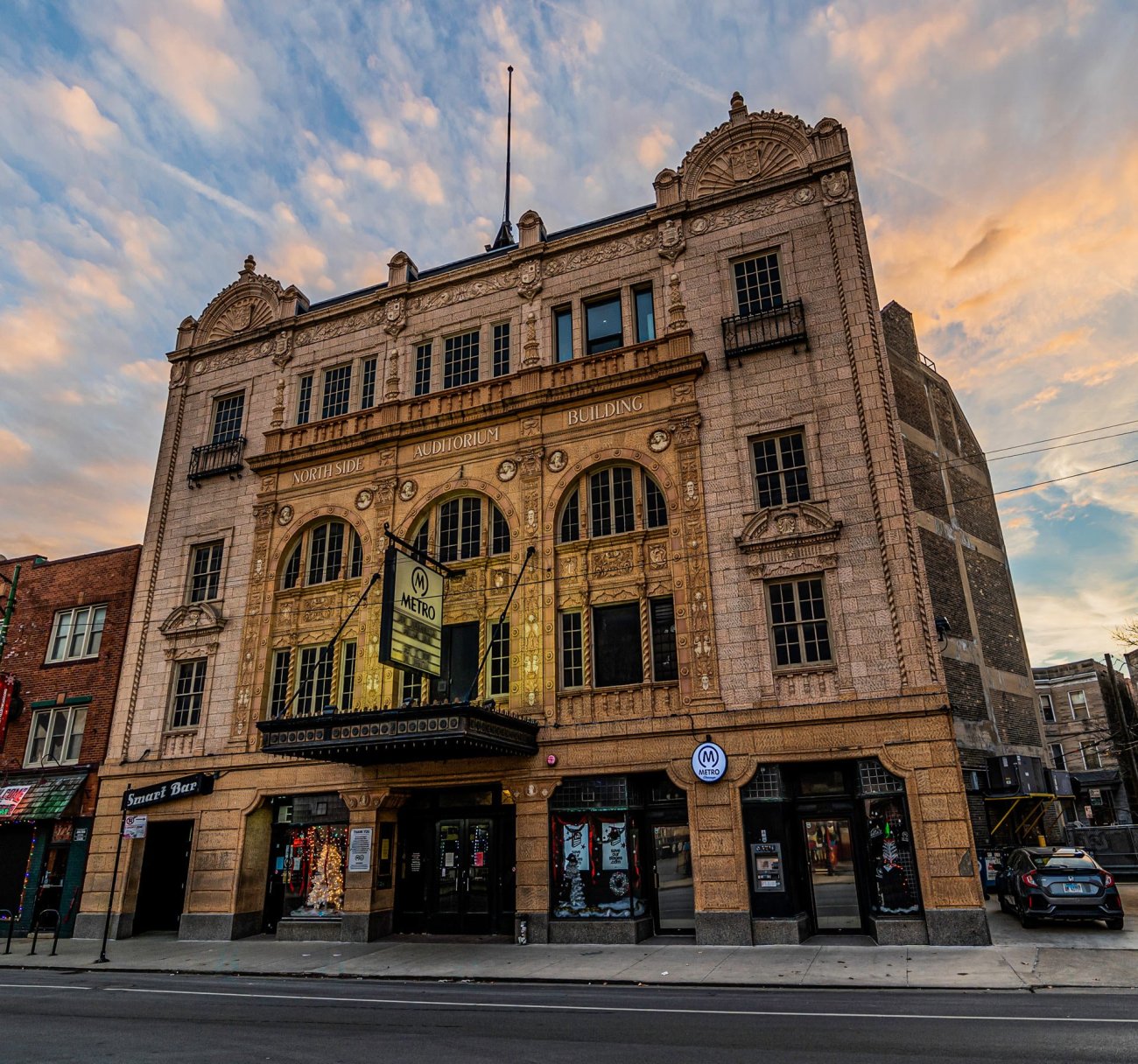
30 May, 1 and 2 June 1985 – Uptown Theater, Kansas City, Midway Ballroom, Cedar Lake and Cabaret Metro, Chicago
Rory’s tour next rolled into the Uptown Theater in Kansas City, followed by the historic Midway Ballroom in Cedar Lake. For over 50 years, the Midway had welcomed a wide range of artists, from the Beach Boys and the Everly Brothers to Steppenwolf and Fats Domino. In another strange coincidence, like many other venues Rory played during his career, it closed just a year later—brought down by a sudden fire!
In the crowd that night was fan Phil Thenstedt. He remembers that the show had virtually no publicity; he was simply driving by when he spotted ‘Rory Gallagher Tonight’ on the marquee and decided to buy a ticket. What followed was an unforgettable three-hour performance. At the end of the set, Rory dashed to the back of the bar to grab a beer, and Phil seized the moment for a quick chat. He walked away with a guitar pick and a signed cassette sleeve. Phil caught Rory again the following night at the Cabaret Metro in Chicago—a shorter, but no less powerful, set. Roughly 45 minutes of the Cedar Lake show survives on bootleg, consistent with the high standards of the rest of the tour. Captured in the recording are ‘Double Vision’, ‘Mississippi Sheiks’, ‘Off the Handle’, ‘Follow Me’ and ‘I Wonder Who’.
Photographer unknown
4 and 5 June 1985 – Nags Head North, Toronto
Following the Chicago show, Rory and the band headed north for four nights across the Canadian border. The run began with two nights at Nags Head North, a well-known bar and live music venue on Woodbine Avenue in Toronto (There was another Nags Head in the southern part of the city).
Garfield Dawes was there on the first night with some friends, seated right at the front table. He vividly recalls Rory jumping up onto his table during the encore of ‘Nadine’ and using his friend’s arm—watch and all—as a slide, which absolutely blew his mind. Garfield also spent time backstage with the band after the show and others during the tour, and remembers Rory as “the most humble, kindest superstar I’ve ever had the pleasure of meeting.”
Garfield recorded both the soundcheck and the full show, which I’m especially grateful for (take a listen here – note: it’s wrongly labelled Kitchener on YouTube). The soundcheck runs about 40 minutes and captures Rory casually working through various songs and jams, chatting, strumming and just playing around. There’s a really nice version of ‘I Ain’t No Saint’—a little faster than the take that later appeared on Defender—as well as a cool run through ‘Failsafe Day’, which would also find a home on the album.
The show recording itself is excellent quality, and the setlist includes some special additions not heard often elsewhere on the tour. There’s a soulful cover of Sam Cooke’s ‘Bring It on Home to Me’ and a barnstorming version of Chuck Berry’s ‘I’m Talking About You’, as well as an explosive dual encore of ‘I’m Ready’ and ‘My Baby’. Other standout moments include the spectacular slide solo in ‘I Wonder Who’ and a gorgeous rendition of ‘A Million Miles Away’. This might just be my favourite bootleg from the tour.

Photographer unknown
STAY TUNED FOR PART 2 NEXT WEEK!


Leave a Reply