
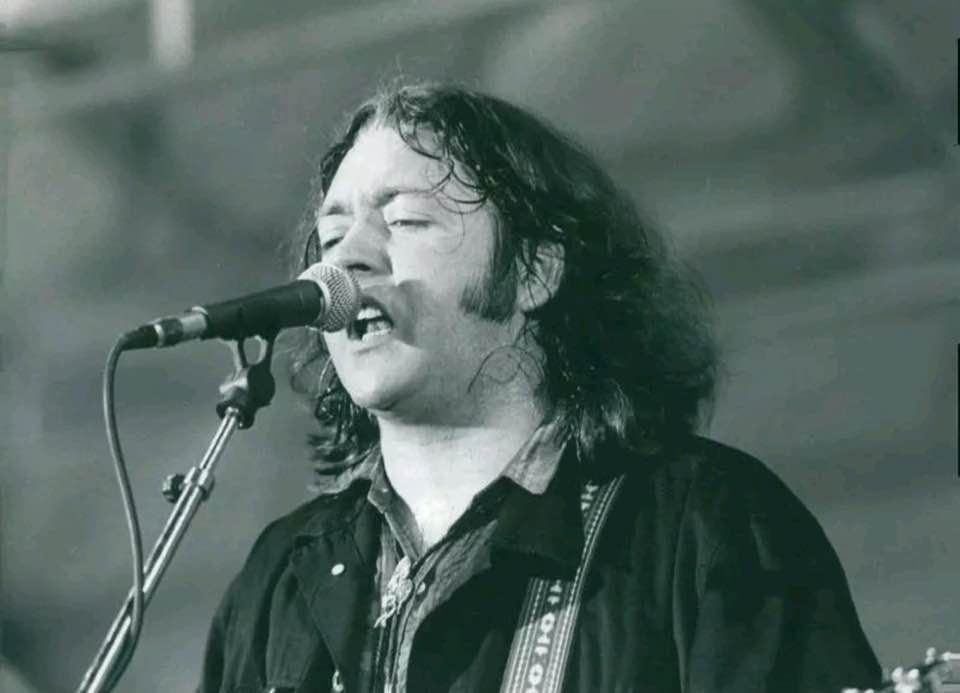
Rory Gallagher: Why the Guitarist Who Should Have Reigned Did Not Reign
The Irish musician, who died at the age of 47, never appears in lists of the top ten best rock guitarists – something that is unfair to fellow professionals. We analyse the reasons now that an album has just been released with a recording of his last tour [sic]
Isle of Wight Festival, August 1970. Taste, the band led by guitarist Rory Gallagher, performs on Friday 28th. Audience and specialists are impressed by the power, qualities and feeling displayed by the Irish musician. On Sunday 30th, Jimi Hendrix, already an established artist, performs at the festival. At the press conference someone asks him: “How does it feel to be the best guitarist in the world?” Hendrix shrugs and replies, “I don’t know, ask Rory Gallagher” [not this ‘quote’ again!] Hendrix dies 19 days later on September 18th. The response of the guitarist considered the best of all time remains part of history.
This episode is generally accepted by rock historians, although no sound document has been found to corroborate it. The important thing is that, real or not, it is a story that could fit perfectly. This is how the figure of Rory Gallagher is considered, a musician with a reputation for integrity, revered, mysterious and allergic to fame. “It seems that Hendrix told a journalist from Rolling Stone magazine, but I found no evidence of this. But it’s a great apocryphal quote, right?” Daniel Gallagher, 40, Rory’s nephew and guardian of his uncle’s legacy, who died in 1995 at only 47 years old, tells this newspaper. Daniel has been working lately on rescuing a live performance from the tour of Rory’s latest album. The result has just been put on sale, All Around Man. Live In London 1990.
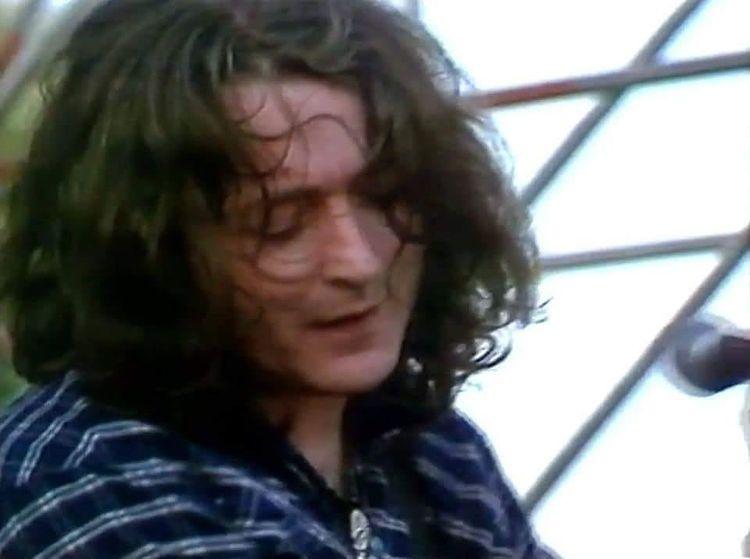
Rory Gallagher used to dress in a lumberjack shirt and jeans. Throughout his career he used the Fender Stratocaster that he bought as a teenager for 100 pounds. It took 15 years to pay it off. A worn out guitar for a guy with incorruptible ethics. He sang with his eyes closed and barely looked at the guitar while he performed his devilish solos. Rory devoted himself to Chicago blues and from there he branched out into folk, rock, jazz experimentation or the Irish tradition. He didn’t understand music if it wasn’t from the gut. When Rolling Stone magazine published the list of the 100 greatest guitarists of all time in 2003 and Gallagher did not appear, many musicians complained. One of the most contentious was Queen guitarist Brian May, who appeared at number 37. May even called the Rolling Stone editorial team to complain about Gallagher’s absence. In the review of the list, in 2015, the publication made a correction and placed Gallagher in position 57. Well below his quality, according to May, who has written for the edition of All Around Man. Live In London: “He was a magician, one of the few people of that time who could make his guitar do what he wanted. It seemed like magic. I remember looking at that battered Stratocaster and thinking, ‘Where is that sound coming from?’
The Argentine writer Marcelo Gobello is one of the great specialists in the Irish musician. Gobello has written Rory Gallagher: The Last Hero (Lenoir Editions). “Rory is among the four or five best in the world, with Jimi Hendrix, Eric Clapton and Jimmy Page. The latter adores him and Clapton always considered him a threat. “He has a unique integrity and passion, as well as a tremendous live delivery,” says Gobello by phone from Argentina.
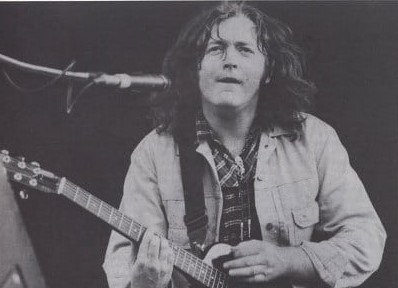
Rory Gallagher (born in Ballyshannon, Ireland, 1948) was bought a guitar by his parents when he was only eight years old because they detected certain musical aptitudes. “One day I heard Muddy Waters on the radio playing a Telecaster with a slide. It was night and the music came to me with great clarity from the ether. That changed my life,” he said in an interview included in The Last Hero.
Gallagher’s first relevant group was Taste, a trio in the style of Cream or The Jimi Hendrix Experience. They released two albums (Taste, 1969, and On the Boards, 1970) where they not only exploited their blues strength. Taste was a free entity that included jazz, folk and improvisation. But they only lasted four years: they fell apart due to mistrust between the three and the attitude of a shady and manipulative manager who took a large financial profit. There were lawsuits, albums released without Rory’s consent and a wound that never healed: the guitarist would never play Taste songs, even though the public demanded them.
Rory’s distrust of the music industry began there and since then the only one he trusted to manage his affairs was his brother Donal, Daniel’s father. “I didn’t know my uncle was a rock musician until I was five years old when my father took me to a Rory concert in London. When I was seven years old, my uncle bought me a guitar and taught me my first song, Frère Jacques. When I was older and Guns N’ Roses was my favorite band, my father showed me some photos of Rory playing with Slash. “I was impressed,” says Daniel, Rory’s nephew. Slash is another devoted fan of the Irishman. “Rory didn’t sound like anyone else… He had an individual, independent tone and approach. He has always been my hero,” says the Guns N’ Roses guitarist in the album notes.
After the traumatic breakup of Taste, in 1971 Gallagher began a solo career that elevated him as a virtuoso, raw and emotional performer. His songs were not just vehicles for his guitar playing, but true expressions of how he felt. The albums are there, and some with outstanding results: Deuce (1971), Tattoo (1973), Calling Card (1976)… But where he really stood out was in his live shows. There is unanimity about his best work: the incandescent Irish Tour ’74, recorded live. The interaction between the musician and the audience at his recitals was a spectacle in itself. They worked like batteries recharging. The vibe Rory was sending wasn’t just felt, you could almost see it. It was confirmed in the tours he did in Spain, where he performed 12 times. One of the first, in 1975 in Madrid, was the one in which Rosendo Mercado discovered his idol. “I have never stood in line to get a ticket to a concert in my life. Only on that occasion, for Rory,” the Madrid musician has said on some occasion.
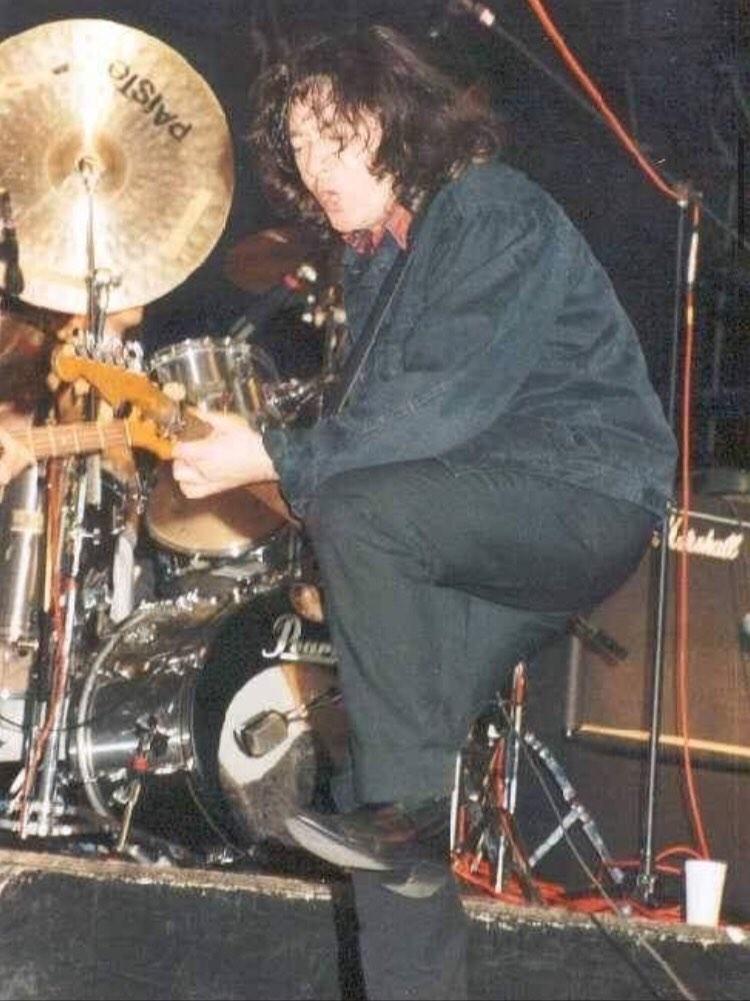
In 1974 Gallagher received a call from the Rolling Stones to replace Mick Taylor. Rory preferred to follow his own path. Deep Purple also knocked on his door to replace Ritchie Blackmore. He didn’t want to either. “I’d like to stay free for a while because you never know when they’re going to catch you,” he used to say. He met with many musicians, to learn and continue progressing as an instrumentalist: Muddy Waters, Jerry Lee Lewis, Béla Fleck, the Dubliners…
The general impression is that Gallagher is a musician who has not been valued enough. The question is why? Marcelo Gobello responds: “He never succeeded in the American market because he did not want to make concessions like, for example, Eric Clapton, who in the eighties put on a suit and clearly embraced pop; However, Rory continued his devotion to blues-rock. It was not sold. It was 100% pure.” The guitarist’s nephew, Daniel, goes into detail on this topic: “Rory avoided the mechanisms to achieve fame. He never released singles, which would have given him a lot of airplay on the radio, especially in the United States. He didn’t go to celebrity events, he didn’t work with big-name producers, he didn’t date actresses. He wasn’t looking for publicity. “He just wanted to be known for his music.”
Nor did he exercise the cliché of the partying rocker. He finished his concerts and went to the hotel to read or watch movies (he loved film noir). He had no children and no known partners. He had a powerful heartbreak in the late sixties and it affected him for the rest of his life. You just have to listen to the wonderful I Fall Apart from his first solo album, to get an idea of the heartbreak that the breakup caused him [Note: this song was actually about the Taste break-up; the ‘late 60s heartbreak’ is an urban legend]. Rory was a lonely drinker. Alcohol was deteriorating his health. “The last year of his life he was so sick that it was very difficult for him to go on stage. And without live music it was very difficult for him to live,” says Gobello [Again, no mention of his physical and mental health issues in this piece, just the usual claims about alcohol 🙄]
In mid-1995, he went to a London hospital to undergo a liver transplant, an organ devastated by the effects of drinking [No mention of the medication and how this was the major contributor!]. It was that difficult surgery or death. The operation was complicated and he died on June 14th. He was 47 years old. A voluminous bronze statue commemorates him in his town, Ballyshannon. He wears jeans, a lumberjack shirt and plays his battered Fender guitar.

 REWRITING RORY
Leave a reply to Posthumous Articles – REWRITING RORY Cancel reply