

When thinking about Rory’s session work, what first comes to mind? For many fans, it’s likely to be the Muddy Waters London Sessions, a personal highlight of Rory’s career and something that he often said it was one to “tell the grandchildren about,” if he ever had any. Or perhaps it’s the Jerry Lee Lewis sessions in 1973? Or even the 1978 Puttin’ on the Style sessions with Rory’s childhood hero Lonnie Donegan?
Although these three sessions are the most talked about, they, in fact, are just a very small cross-section of the many sessions that Rory did throughout his career. From 1971 to 1995, Rory contributed to 24 different albums – some with well-known artists and others with up-and-coming bands who he was very keen to support. Twelve of these contributions would come in the last ten years of his career, proving that his supposed “slow output” during this period (Defender in 1987 and Fresh Evidence in 1990) is yet another myth in the Rory Gallagher story that needs dispelling. Yes, even a week before his tragic collapse on stage in Holland, Rory was still working hard in the studio.
In the next two blog posts, we want to introduce you to Rory’s 1985-1995 sessions and tell some of the stories behind them. The albums on which Rory guested really show his versatility as an artist and the way he effortlessly drew upon his Celtic roots yet blended them and experimented with different styles. They also suggest directions that Rory could have taken if only things had turned out differently. So, please sit back, relax and enjoy Part 1 of our guide to the Rory sessions you’ve (probably) never heard of.
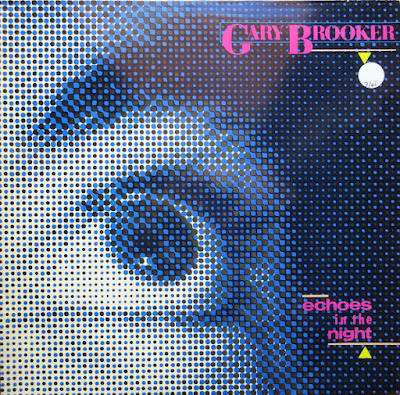
‘Trick of the Night’
(recorded for Echoes in the Night by Gary Brooker, 1985)
Throughout the days of Taste and his early solo career, Rory often passed Procol Harum frontman Gary Brooker like a ship in the night: they played within days of each other at Mothers in Birmingham in 1969 and at the Felt Forum in New York in 1973, they appeared on the German programme Beat Club one week apart in 1971 and they were both signed to Chrysalis Records.
Their first proper official meeting came in 1978 at the Lonnie Donegan sessions in London, where Gary played piano on ‘I Wanna Go Home’ and Rory played guitar on ‘Rock Island Line’, ‘Drop Down Baby’ and ‘Lost John’. Unfortunately, not much is known about their encounter, but Gary clearly saw something that he liked as Rory was top of his wishlist when putting together guest stars for his 1985 solo album Echoes in the Night.
Echoes in the Night is often described as the album for fans who had been waiting for a Procol Harum reunion, the band having broken up in 1977. Although a solo record by Gary, it featured the band’s organist Matthew Fisher, lyricist Keith Reid and drummer B.J. Wilson, leading many to call it the “lost Procol Harum album.” At the time of its release, Gary was keen to stress that it was not so much a “recapture” as “a meeting of new ideas that are just as meaningful yet much less complicated.”
The album brings together the AOR soft rock sound of the 1980s with traditional orchestral arrangements and gospel music, meaning that guest performers Eric Clapton and Ray Cooper (amongst others) are just as at home on the album as the National Philharmonic Orchestra and the London Gospel Community Choir. While this eclectic blend of music may seem far removed from Rory’s bread and butter (or should that be “meat and potatoes?”), he was always open to different musical genres and welcomed the opportunity to participate, guesting on the closing track ‘Trick of the Night’.
‘Trick of the Night’ is a quintessential power ballad with strong Mike and the Mechanics vibes. Gary’s stirring vocal performance gels perfectly throughout with the sax playing of Jamie Talbot, a former member of the National Jazz Youth Orchestra. It’s fair to say that Rory’s influence on the song is very subtle here, with Gary not making the most of the G-Man’s musical prowess: there are no grand guitar solos, just rhythm, and the emphasis is very much on the saxophone (which is nothing short of outstanding!). Nonetheless, even in Rory’s small moments of slide playing, he shows his proficiency, his guitar’s wails always taking place at the right moments to accentuate the song’s heartfelt lyrics (“found a picture of a friend of mine,” “caught me while I was dreaming of you”).
In short, a beautiful song that could perhaps have been made even more beautiful by the inclusion of a slide solo by Rory. After all, the album’s eponymous track benefits from a Clapton guitar solo, so why not give Rory the chance to shine further here?

‘You Mix Me Up’, ‘Heart Full of Soul’, ‘House on Fire’ and ‘Hanging from the Wreckage’
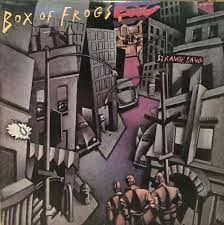
(recorded for Strange Land by Box of Frogs, 1986)
Throughout his career, Rory made no secret of the fact that he was a big fan of the Yardbirds. He often described them as his favourite group of the mid 1960s, while in a 1991 interview with Stephen Roche, he shared his fond memories of going to see the band at the Marquee Club when playing in London with the Fontana showband. In fact, Rory stated that getting the opportunity to see the Yardbirds made his showband days worthwhile.
So, when three of the Yardbirds – Chris Dreja, Paul Samwell-Smith and Jim McCarty – joined forces with John Fiddler to form Box of Frogs in 1983, Rory was delighted at the offer to guest on their albums. Speaking to Dmitry M. Epstein in 2014, Jim McCarty said that Rory was an obvious first choice for them as he was “always good” and they “always liked what he did,” plus they knew that he was a big fan of the Yardbirds.
The eponymous debut Box of Frogs came in 1984 and featured guest performances from Jeff Beck, Mark Feltham, Earl Slick and, of course, Rory himself who played slide on ‘The Edge’ and sitar on ‘Into the Dark’. However, it is the 1986 follow-up Strange Land that we will talk about here for which he contributed to four songs: ‘You Mix Me Up’, ‘Heart Full of Soul’, ‘House on Fire’ and ‘Hanging from the Wreckage’. This album featured an even bigger rollcall of guest stars from Graham Parker, Ian Dury and Steve Hackett to Jimmy Page, Roger Chapman and Graham Gouldman.
Although neither Box of Frogs album was met with critical acclaim and was seen more as a “curiosity” that lacked the spark, sound or style” of the Yardbirds, Rory’s contributions are undoubtedly the strongest on the records. Like everything he did, Rory put his absolute heart and soul into the sessions, giving everything and above to the detriment of his own health. Writing in the sleeve notes to the 2006 rerelease, Chris Dreja describes Rory as a “complete perfectionist” and recalls him standing in the middle of the studio floor at 2am “simply refusing to listen to his body which was telling him ‘I can’t go on and we need to stop’.” He also praises Rory’s fine ear for music, noting how he dispatched a roadie to his garage to pick up his sitar to give an extra edge to one of the songs (‘Hanging from the Wreckage’).
And it’s to those songs which we turn now!
It is fair to say that all four of them have a strong 80s sound that one would most definitely not associate with Rory Gallagher! They are extremely catchy and radio friendly AOR tunes with fairly repetitive, somewhat superficial lyrics and heavy use of synthesisers. Nonetheless, Rory is able to, well, ‘Rorify’ them and bring his own unique edge that stops them from falling into the clichéd 1980s trap and keeps them fresh.
Take ‘You Mix Me Up’, for example, a track that begins with Huey Lewis style harmonies and a foot-tapping synthesiser. In any other circumstance, it would have me – Lauren – reaching for the off button, yet the way Rory bursts in with a beautiful guitar solo at the 1.40 mark is its saving grace. It’s just a shame that his unique sound is quickly replaced once again with the synthesisers!
Although a Yardbirds cover, this version of ‘Heart Full of Soul’ could have been taken from the Phil Collins’ 1980s soft rock songbook with its opening synthesisers and dance beat. Thankfully, this is saved somewhat by Roger Chapman’s powerful vocal performance and Rory’s expert guitar and sitar playing. After a shaky start, the song takes a turn for the better around the 1.24 mark when Roger unleashes his inner David Coverdale and Rory breaks into a breathtaking guitar solo that calls to mind ‘Overnight Bag’, moving the song firmly back into blues rock territory. He then effortlessly switches to the sitar, perfectly complementing Roger’s wailing vocals. If only the song didn’t then switch back to its Phil Collinesque heavy synthesisers in its final minute!
‘House on Fire’ fares much better from the get-go with its slick opening guitar riff by Rory and the honky tonk piano of Geraint Watkins (who some may remember from Rory’s 1990 Rockpalast appearance). John Fiddler’s vocals are also en pointe. Here, Rory gets the opportunity to play a much longer guitar solo – perhaps one of the best in his session work – as well as interweaving short bursts of slide into the playing of rhythm guitarist Dzal Martin. The album’s standout track for sure.
Finally, ‘Hanging from the Wreckage’ is an unusual song that begins with quasi-mystical chanting from John Fiddler and the other band members, before the haunting sounds of Rory’s sitar kick in. After the opening verse, the chanting resumes and Rory takes up a beautiful sitar solo that is arguably better than that of ‘Philby’ and even includes some expert string-pulling in the style of ‘Moonchild’ at Rockpalast 1982. After a brief interruption with more chanting, Rory resumes his solo, clearly improvised and full of so much emotion that it has us wishing that he had recorded more often with the sitar. Ravi Shankar, who?
As the reviewers said, Strange Land was fairly “uneven” and “undistinguished,” but “may appeal to fans of mainstream AOR.” While this is a fair comment, the album is definitely worth having in the collection for all Rory fans as he is the fabric that holds together the four songs on which he guests.

‘Tara Hill’ and ‘If You Should Go’
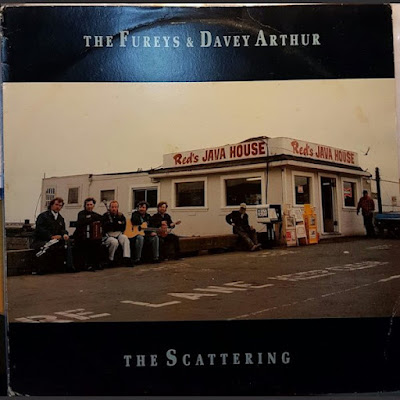
(recorded for The Scattering by the Fureys and Davey Arthur, 1988)
Although it was the blues that captivated Rory as a child, he often acknowledged in interviews that he had a great appreciation for traditional Irish music. Growing up above his family’s Modern Bar in Cork, Rory was never far from the sounds of accordions, fiddles and whistles. Plus, it was standard practice at any family gatherings to have a traditional singsong around the piano (both Rory’s mother Mona and uncle Jimmy were known for their beautiful singing voices).
In later years, Rory’s appreciation for traditional Irish music grew further, with him frequently expressing a desire to play more acoustic material and collaborate with other Irish folk artists. This desire seemed to stem from his increasing homesickness and yearning to return to Ireland. Rory often said that he was living as “an exile” in London, while in a 1992 interview with Liam Fay, he stated that he was “constantly thinking mentally about Ireland” and that he would love to go back and live there if he could “get [himself] together.” He also told Liam that he listened to RTÉ radio every night, read the Irish papers every Sunday and kept up with all the latest Irish album releases.
Rory’s longing for Ireland is apparent in the way that he tended to weave ‘She Moved Thro’ the Fair’ into later live performances of ‘Out on the Western Plain’ (a Lead Belly composition which Rory always gave his own Celtic twist) or burst into impromptu versions of ‘Dan O’Hara’, such as at Stuttgart ’94. We also see this Irish longing on the posthumous release Wheels Within Wheels with its many traditional-inspired tracks, including ‘Bratacha Dubha’ with Martin Carthy and ‘She Moved Thro’ the Fair /Ann Cran Ull’ with Bert Jansch.
Given Rory’s affinity for the music of his homeland, it may come as no surprise then that when the Fureys and Davey Arthur – a well-established Irish folk band – approached Rory about guesting on their 1988 album The Scattering, he was keen to do so. This marked the first of a series of guest appearances that Rory did around this time that put him in touch with Irish folk and traditional music (see sections below for more).
The Scattering is often described as the Fureys’ best album, bringing together a collection of melancholy folk songs that romanticise Ireland and reflect the experiences of the Irish immigrant who yearns for home. Given these themes, it is understandable that Rory was so taken by the idea of contributing to the album, appearing on two songs: ‘Tara Hill’ and ‘If You Should Go.’ The album also featured guest performances from Ralph McTell, Dave Stewart and Siobhan Fahey-Stewart.
‘Tara Hill’ is an emotional ballad that personifies the famous hill in County Wexford as a beautiful female: “Tara’s on my mind, getting worse as time goes by… Thinkin’ of you Tara, Lord I’m drunk enough to fly.” Its chorus goes on to describe the hill as “a treasure,” praising its beauty and that how if the hill “were a dream,” the narrator would “stay asleep.” Accompanying these words is an exquisite, understated piece of slide guitar by Rory that heightens the emotional intensity of the song. He then leads into a short solo, reminiscent of ‘Tucson, Arizona’ à la Celtic as he is joined by the sounds of the uillean pipes and whistle, bringing this song of homesickness and love to a wonderful conclusion.
‘If You Should Go’, on the other hand, is a sweet little ditty in the popular Country and Irish style. It is essentially a tale of love, the narrator pleading anxiously with his darling never to leave him. In this song, Rory takes more of a backseat role, supporting the Fureys’ vocals with his solid rhythm guitar playing and occasional sweeps of slide that echo earlier songs like ‘If I Had a Reason’. Although seemingly simple, the song has so many layers to it – the female backing vocals, the beautiful uilleann pipes and whistle solo, the octave change towards the end – while its closing lyrics “since I first met you, life’s good again” are certainly something the two of us have felt from the moment we first discovered Rory.
These powerful songs showcase how perfectly Rory could fit in with any musical ensemble, yet firmly put his own stamp on the music.
*Unfortunately, neither track is available on YouTube (versions without Rory are), but they can be purchased from Amazon Music, iTunes and Spotify*
‘Litton Lane’, ‘The Road to Ballyalla’ and ‘One for Phil’
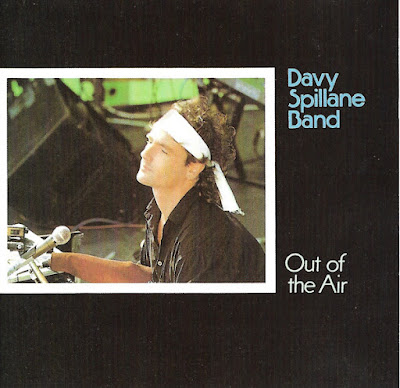
(recorded for Out of the Air by the Davy Spillane Band, 1988)
In the same year that Rory guested with The Fureys, he had another opportunity to get more involved in traditional Irish music when Davy Spillane – the renowned Irish uilleann pipes and low whistle player – asked him to guest on his new album Out of the Air.
Out of the Air was Davy’s follow-up album to his solo debut Atlantic Bridge and, in the same style, it blended Irish traditional music with bluegrass and country rock. The result of those meetings was new, creative musical dimensions, which we’re sure that Rory thrived on! The album was partially compiled from live recordings for BBC Radio One with Davy’s touring band (Anto Drennan on guitar, James Delaney on keyboards, Tony Molloy on bass and Paul Moran on drums), as well as additional studio sessions, which is where Rory came in.
Davy was recording in Windmill Lane Studios in Dublin and, as luck would have it, Rory also found himself in the fair city, playing four nights at the Olympia and appearing on both Borderline and The Late Late Show. Davy bumped into Rory and asked him if he would like to drop by to play on a few tracks and he was very excited to do so. The result of their meeting was guest performances on two Davy compositions – ‘Litton Lane’ and ‘The Road to Ballyalla’ and a joint penned new track – ‘One for Phil’ – written in memory of Thin Lizzy frontman Phil Lynott who had passed away two years before.
For the first track – ‘Litton Lane’ (dedicated to a small cobbled street in central Dublin) – Davy provided Rory with a guitar, which he described as a “thirty-year-old lady-size harmony guitar.” However, in true Rory style, he played it effortlessly. The song begins with the unmistakable sounds of Rory’s skilful acoustic slide – fully improvised – before breaking into some bluesy rhythm playing. Rory often said that he enjoyed playing rhythm as much as lead guitar and his seamless ability to move between the two is truly evident throughout the song. Around the forty-second mark, some honky-tonk piano kicks in, followed by the uillean pipes, the result being an unusual yet beautiful blend of Ireland meets the Mississippi, which is further accentuated by the fantastic harmonica solo by Brian Palm around 2.52. Rory switches from acoustic to electric to take the solo towards the end of the song, before all instrumentalists come together again for a big finish. Truly magnificent!
‘The Road to Ballyalla’ is an eight-minute forty-second dazzling and thought-provoking instrumental that takes the listener through an auditory journey to the village of Ballyalla in County Clare with its shifts in rhythm and tempo. Here, Rory swops his guitar for the electric sitar, bringing a touch of India that perfectly complements this otherwise traditional Irish song (Rory, in fact, often spoke in interviews about the surprising links between traditional Indian and Irish music). And having written earlier about the desire to hear more of Rory on the sitar, it is truly a pleasure to get the opportunity to listen once again, clearly demonstrating that he could efficiently play anything with strings. Davy’s mastery on the uillean pipes in this song must also be mentioned, starting slowly and hypnotically, before picking up the pace midway through and turning into a quasi-jig. The song takes another unique twist towards the end, the piano, bass and sitar interplay giving it a late-night jazz feel, before Davy steps in once again on the uillean pipes, bringing the song to a powerful end.
Finally, ‘One for Phil’ is a funky short number that begins with a guitar riff reminiscent of the live version of ‘In Your Town’, before Davy kicks in on the uillean pipes with a tune that calls to mind Darren Wharton’s keyboard opening to Thin Lizzy’s ‘Angel of Death’: a striking combination indeed. Although an instrumental, the song does feature short stretches of humming that perfectly integrate with the guitar and pipes, adding a layer of depth. The song came about in rehearsals when Rory and Davy were taking a break and started discussing Phil Lynott and how sad his death was. Within a few minutes, they had come up with ‘One for Phil’. Although not close friends, Rory and Phil often crossed paths and performed with each other on several occasions, including Cologne (1979) and Punchestown (1982). Speaking to Hot Press in 1987, Rory stated that Phil’s death had deeply “shocked” him and that he had noticed “something in his eyes” that had concerned him when watching a TV performance in late 1985.
In the 1995 Hot Press tribute to Rory, Davy spoke about the Out of the Air sessions, describing Rory as “very generous with his time, friendly and accessible” and noting how he “showed an interest” in traditional Irish music at a time when few people were focused on it. Rory, in turn, had described Davy several years earlier as “very pleasant” and felt the project had turned out “quite well,” especially as it was his first time working with uilleann pipes.
In short, three splendid tunes that demonstrate Rory’s musical virtuosity and hint at areas in which he may have dabbled more as he got older.
*Please note that only ‘One for Phil’ is available on YouTube; the other two tracks can be purchased from online music stores, however.

‘Will Ye Go Lassie Go’
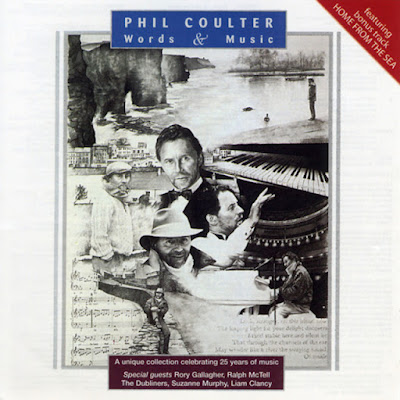
(recorded for Words and Music by Phil Coulter, 1989)
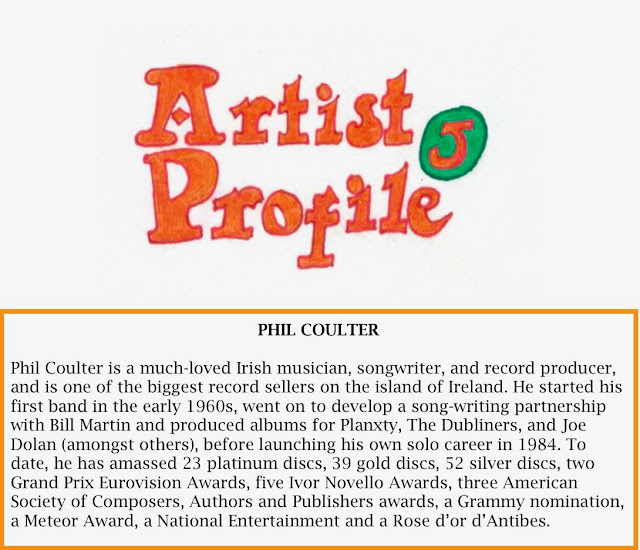
One year after his sessions with the Fureys and Davy Spillane, Rory was approached by Phil Coulter – the legendary Irish musician, songwriter and record producer – about featuring on his new album Words and Music. Rory’s response was a resounding yes for two reasons. Yes, because he was keen to continue his liaison with Irish traditional music, but yes, also because Phil hailed from Derry – the birthplace of Rory’s father – which made Rory feel an immediate warmth towards him. However, Rory being Rory, he worried that he wouldn’t “be able to pull it off” and asked Phil whether he was sure about his choice. In his 2019 autobiography Bruised, Never Broken, Phil Coulter revealed that the record company were also hesitant about Rory; in fact, “horrified” because they thought that his playing would not suit the style of the album. However, as a long-term Rory fan, Phil was adamant that he was perfect for the record and that “[he] would prove it.”
Words and Music was a collection of fifteen traditional Irish classics and popular melodies, arranged by Phil Coulter and featuring “the best” of the folk world: Ralph McTell, The Dubliners, Liam Clancy… Once again, it speaks volumes about Rory’s talent as a musician that he was included when he was predominantly associated with blues and rock (although his music, of course, always carried folk influences).
In his autobiography, Phil describes Rory as “the humblest of men… quiet, self-effacing and even shy.” He explains that Rory arrived at the session and they decided together which track he would play on, eventually selecting an instrumental version of ‘Will Ye Go Lassie Go’(also known as ‘Wild Mountain Thyme’). The lyrics and melody of the song are a variant of the 18th-century Scottish poem ‘The Braes of Balquhither’, which was adapted by the Belfast musician Francis McPeake in the 1950s.
According to Phil, he played Rory the orchestral track and then “a big smile spread over [Rory’s] face” as he concentrated on where to fit in his guitar playing. Rory asked politely to listen again and then he nodded and said, “Mmm, the red lad, I think,” selecting his chosen guitar from the rack of instruments that Tom O’Driscoll had brought in. Already in the first runthrough, Phil was bowled over by Rory’s licks and melody lines and told him that there was no need for another take. Rory seemed “confused” and “a little reluctant,” asking Phil whether he was sure that he didn’t want him to try again. With a smile, Phil replied, “Rory, it’s fucking brilliant” and encouraged him into the control room to listen back. As Rory did, “a look of childish delight” spread across his face, which Phil describes as a “priceless… rare and precious” moment.
In the sleeve notes to Words and Music, Phil added further details about ‘Will Ye Go Lassie Go’, stating that it was the first song that he had ever learnt to play and that he never thought that he would record a version of the much-loved song with Rory. He also wrote that he was “lost in admiration” for the sensitivity of Rory’s playing on the track.
And it’s hard not to see why when you listen!
Hauntingly beautiful are the two words that perhaps best describe Rory’s version of the song. In fact, the first time I – Lauren – heard it, I was reduced to tears. ‘Will Ye Go Lassie Go’ has always held a special place in my heart because it was my great-aunt’s favourite song and she often sang it around the house, but it gained a whole new special meaning for me with Rory’s interpretation.
Here, Rory’s emotive playing truly encapsulates his own grace and gentleness as a person, while Phil’s piano (which kicks in around the one-minute mark) perfectly complements the soft tones of Rory’s guitar, strongly evoking the lush, green fields and rugged coastline of Ireland. The piano and drums momentarily stop around 2.48, leading into a stunning piece of weeping guitar by Rory, before the instruments resume and the song rises an octave and then gradually fades out, practically leaving you with the smell of “bloomin’ heather,” as mentioned in the original lyrics.
Overall, an absolutely fabulous rendition. If only Rory and Phil had made more recordings together!
‘Human Shield’
(recorded for Flags and Emblems by Stiff Little Fingers, 1991)
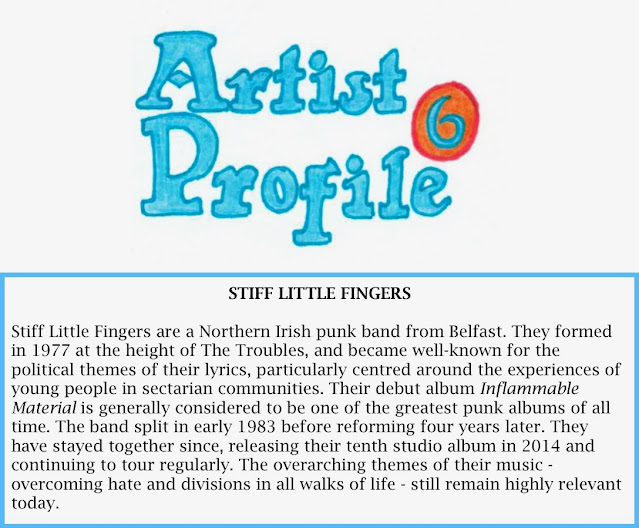
It may seem an unlikely combination, but, in 1991, Rory teamed up with Northern Irish punk band Stiff Little Fingers, guesting on the track ‘Human Shield’ for their Flags and Emblems album. Although from seemingly different musical traditions, Stiff Little Fingers were, in fact, long term admirers of Rory.
In a 2021 interview with Spin, frontman Jake Burns described Rory as his “initial inspiration” and discussed the life-changing experience of seeing Taste’s Ulster Hall farewell concert on TV in 1970:
Seeing, and more importantly ‘hearing’ Taste changed my world. That guitar tone literally stopped me in my tracks. I really mean that. I was walking out of the room when they started playing ‘Morning Sun’ and I froze. “What WAS that? And how is he doing it?” I sat back down and within ten minutes or so had decided that I wanted to ‘be’ Rory Gallagher!
Immediately, 12-year-old Jake went out and bought a guitar and began to teach himself a repertoire of Rory songs, including ‘Messin’ with the Kid’ and ‘Walk on Hot Coals’, which he described as “a bit above [his] pay grade at the time.” Flash forward to 1977, Jake and his schoolmates formed Highway Star and regularly performed Rory covers, before discovering punk and changing their name to Stiff Little Fingers. In 1979, Stiff Little Fingers released their first album Inflammable Material on the independent label Rigid Digits. However, its swift success led them to sign their label to Chrysalis Records who also happened to be Rory’s record company at the time. Through Chrysalis, the band were introduced to Rory who Jake describes as “charm and friendliness personified,” recalling that Rory looked “embarrassed” and said “oh, don’t be like that” when Jake mentioned that he was a huge fan.
Although Rory and Stiff Little Fingers didn’t move in the same circles, Jake kept in touch with Dónal. So, when guitarist Henry Cluney ran into trouble doing the guitar solo for ‘Human Shield’ on their 1987 comeback album Flags and Emblems, they decided the solution would be to get a “legend” in to complete it, and legends don’t come much bigger than Rory! In 2003’s Stiff Little Fingers Song by Song, Jake had the following to say:
I phoned Dónal Gallagher and said, “Look, we’re in the studio doing an album, we’ve got this track and I think it would sound fucking great with slide guitar on. For my money, the best slide guitar player on the planet is your brother – is there any chance he’d be interested?
Dónal relayed the message back to his brother and Rory, always keen to support artists from “the mainland”(as he often called Ireland), agreed immediately.
Jake recalls Rory arriving with a whole van full of equipment, plugging in his guitar and doing his solo in just one take, which he describes as “astonishing.” By all accounts, all Jake could do was stand and stare, thinking to himself, “Fuck me! That’s Rory Gallagher!” He at least managed to pull himself together for long enough to ask Rory if he could buy him a drink afterwards!
In many ways, Flags and Emblems is a typical Stiff Little Fingers album with its blend of personal and political lyrics mixed with punk energy and catchy riffs. And ‘Human Shield’ is characteristic of this. It opens with a punchy guitar hook by Henry, somewhat reminiscent of Living Colour’s ‘Cult of Personality’ released three years earlier, before bursting into powerful lyrics that reflect the need to come together to overcome fear and hate:
How do you propose to live your life in times like these
Growing up surrounded by the fear and hate disease?
I believe that we all need protection from the world,
And our friends enfold us like a barrier unfurled.
Although the situation in Northern Ireland had much improved since Stiff Little Finger’s 1978 release of ‘Alternative Ulster’ at the height of The Troubles, political unrest was still rife, with an attempted assassination of British prime minister John Major and his war cabinet by the IRA shortly before the release of Flags and Emblems. The topic of overcoming fear and hate was, therefore, still extremely relevant on a personal, Irish level and a view that Rory shared and was keen to advocate, even though he made it clear throughout his career that he never wrote political lyrics himself.
Around the two-minute mark of ‘Human Shield’, the catchy opening riff starts up again, before Rory’s unmistakable slide guitar breaks in, cranking the track up to a whole new level with his thirty-second solo. As Rory’s solo reaches a crescendo, Henry resumes the opening riff, before Jake takes up the final verse.
All in all, a solid heavy rock number accentuated by Rory’s magic fingers and a recording experience that still today Jake fondly recalls as “the thrill of a lifetime” for him.

Click on this link to read Part 2 of Rory’s session work (1992 – 1995).

 REWRITING RORY
Leave a reply to Anonymous Cancel reply