
“Doing Right by Rory”: Affective, Ritualized, and Ethical Practices at the 2024 Rory Gallagher Collection Auction
Published in Rock Music Studies (July 2026)
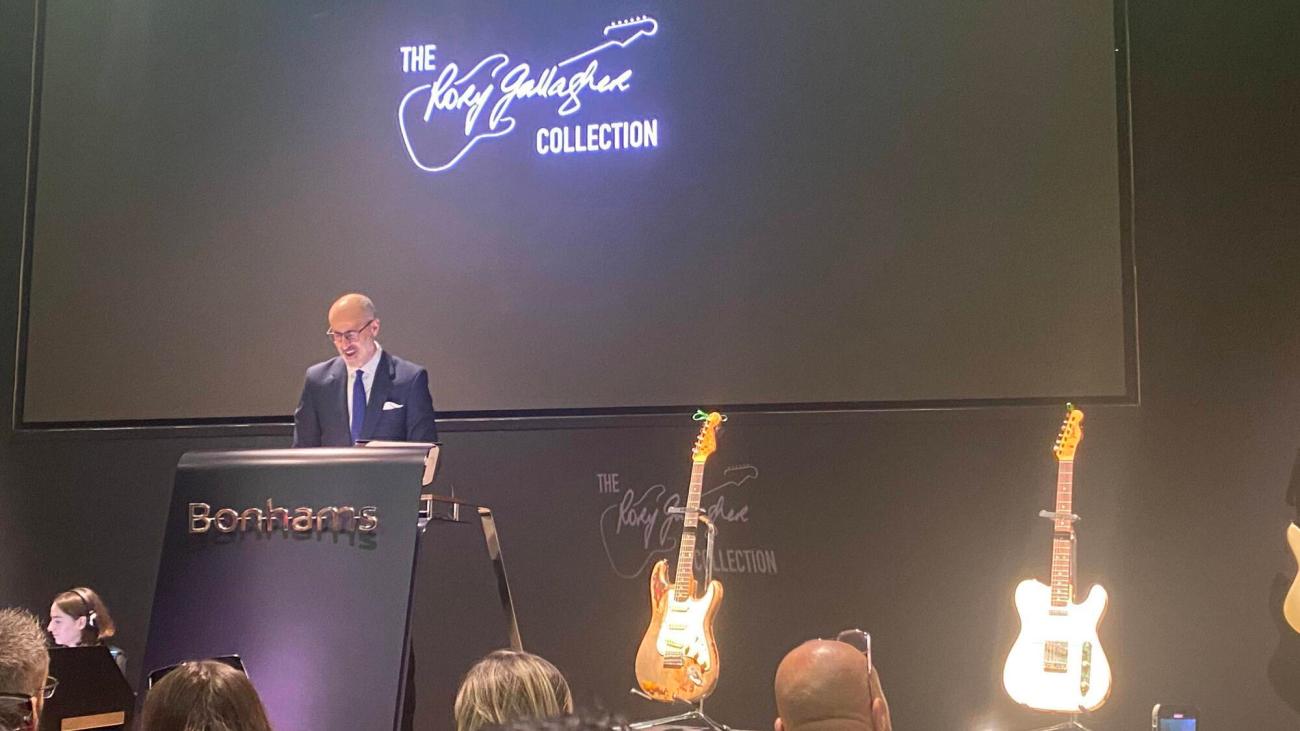
In 2024, the estate of the late Irish blues-rock musician Rory Gallagher announced that his personal instrument collection would be offered for sale at the London auction house Bonhams. As a site of highly charged fan engagement, auctions provide a unique lens through which to examine the intersection of music material objects with affective, ritualized, and ethical practices. Drawing on object-oriented interviews with auction participants and informed by frameworks from affect theory and material culture studies, this paper conceptualizes the auction as a collective rite of passage rather than a purely economic transaction. In doing so, it highlights how material artifacts function as morally weighted technologies of presence, sustaining Gallagher’s posthumous legacy, and how fans approach the instruments as stewards rather than collectors, participating in a fan-led moral economy of acquisition and preservation. The auction, thus, can be seen as a form of “heritage-as-praxis” in which the movement of objects generates new performances of community, ethical regimes of value, and collective responsibility..
Citation: O’Hagan, L.A. 2026. “Doing Right by Rory”: Affective, Ritualized, and Ethical Practices at the 2024 Rory Gallagher Collection Auction. Rock Music Studies. https://doi.org/10.1080/19401159.2026.2700980
Scrapbooking as Sanctuary: Embodied Music Fandom, Affective Attachment and Female Cultural Labour in Early 1970s Belfast
Published in Popular Communication (June 2026)
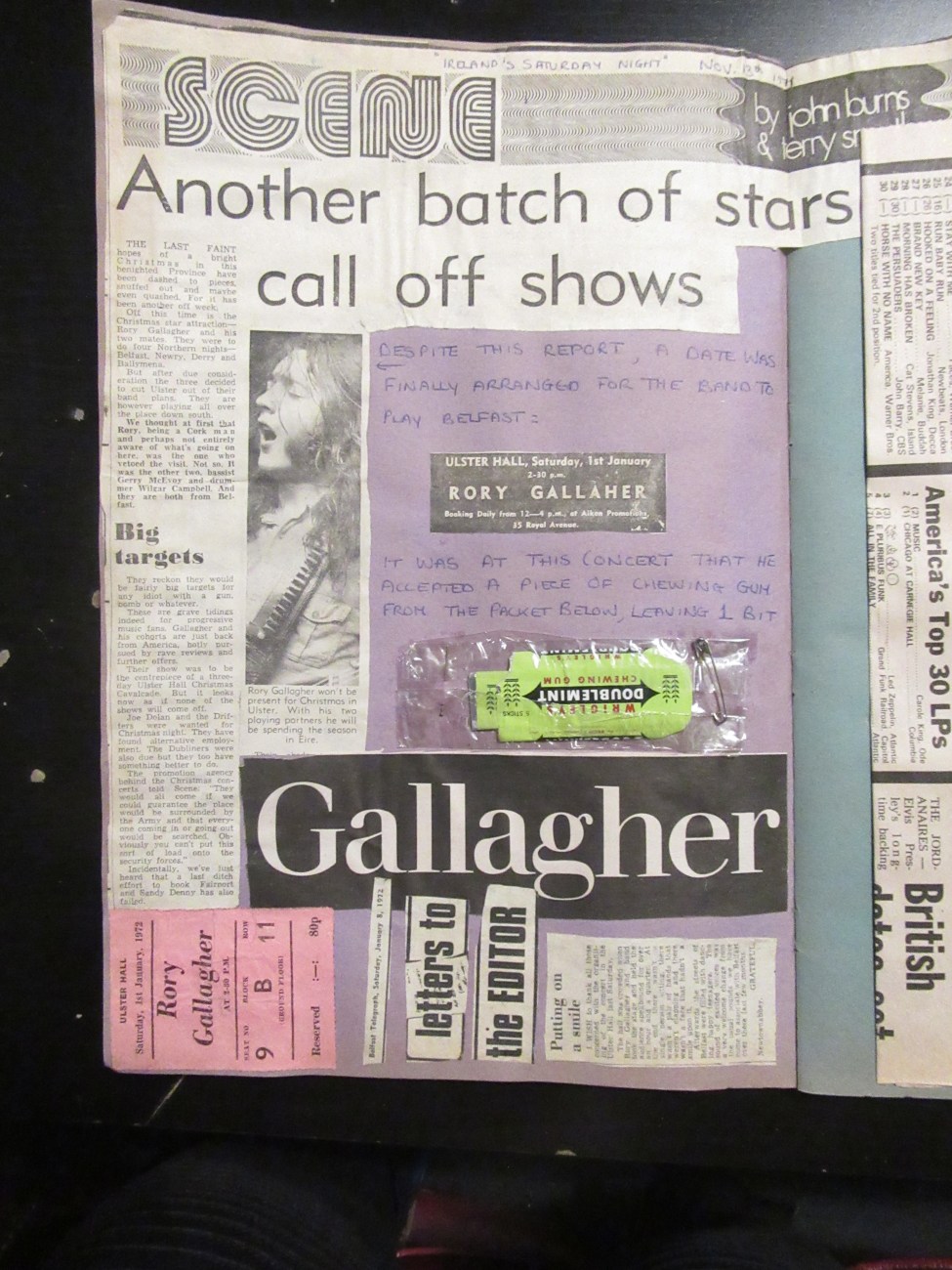
This article offers the first scholarly exploration of a set of scrapbooks about Irish blues-rock musician Rory Gallagher, created by Carol Clerk – a teenage girl growing up in 1970s Belfast who would later become a renowned music journalist. It examines how embodied music fandom, affective attachment and female cultural labor are conveyed through the scrapbooks’ layout, composition and sensory dimensions. Using textual, material and semiotic analysis, I argue that the scrapbooks function not only as expressions of music fandom but also as sites of refuge, resistance and self-fashioning for Clerk. In a conflict zone where live music was scarce, the scrapbooks became an alternative form of musical engagement, allowing Clerk to assert agency and identity beyond dominant religious and political frameworks. However, their strikingly professional tone suggests that they doubled as a practice space where Clerk honed skills that would shape her future career in music journalism.
Citation: O’Hagan, L.A. 2026. Scrapbooking as Sanctuary: Embodied Music Fandom, Affective Attachment and Female Cultural Labour in Early 1970s Belfast. Popular Communication. https://doi.org/10.1080/15405702.2026.2690287
Arranging and Displaying Music Keepsakes in the Home: Relational and Embodied Narratives of Memory and the Self
Published in Journal of Popular Music Studies (June 2026)
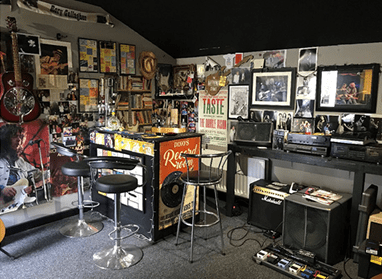
This paper offers a novel perspective on the materiality of fandom by exploring the relational and embodied material networks that connect people, music keepsakes, and domestic spaces. Drawing on object-oriented interviews with fans of Irish blues musician Rory Gallagher, analyzed through a multimodal ethnographic lens, it investigates the motivations behind the arrangement and display choices of keepsakes in the home and how these practices express narratives of memory and the self. Specifically, it examines how items were obtained, where they were initially placed and where they were moved following Gallagher’s death, as well as how they are compiled into material assemblages. The study puts forward a typology of micro-, meso-, and macro-displays of fandom to explore these assemblages and understand the logic governing their formation. In doing so, it highlights how such practices are shaped not only by personal memories but also by ongoing relationships—with Gallagher as a felt presence, with other fans through shared meanings, and with evolving selves anchored in past experiences. Ultimately, the paper underscores the vital role of fans in co-creating and sustaining musical heritage from below, showing how material objects enable the persistence of relational selves and collective memory even as living connections fade.
Citation: O’Hagan, L.A. 2026. Arranging and Displaying Music Keepsakes in the Home: Relational and Embodied Narratives of Memory and the Self. Journal of Popular Music Studies. https://doi.org/10.1525/jpms.2026.38.2.7
Material Encounters with Rory Gallagher: The Affective Power of Music Keepsakes
Published in Journal of Fandom Studies (June 2026)
This article presents a novel exploration of music keepsakes acquired by fans through direct encounters with Irish blues musician Rory Gallagher (1948–95). Drawing on findings from object-oriented interviews, it proposes the first typology of music keepsakes, categorizing them into four distinct types: stage-used items, fan-brought memorabilia, moment-captured souvenirs and opportunistic mementos. It also examines the embodied material networks these items constitute, along with their broader historical and sociocultural significance during Gallagher’s lifetime and since his passing. Four key themes emerge from this examination: personal memories and nostalgia, sacredness and reverence, authenticity and preservation, and legacy and symbolism. Ultimately, these keepsakes stand as enduring, affective testaments to Gallagher’s lasting influence in fans’ lives, fostering strong emotional bonds of connection that bridge the past, present and future. Beyond this specific case, the typology offers a systematic classification with broad applicability across fandom studies, providing a valuable tool for comparative analyses of material culture practices in diverse fan communities and contexts.
Citation: O’Hagan, L.A. 2026. Material Encounters with Rory Gallagher: The Affective Power of Music Keepsakes. Journal of Fandom Studies. https://doi.org/10.1386/jfs_00132_1
‘A Chink of Light’: Rory Gallagher, Youth Fandom and Musical Refuge in Early 1970s Belfast
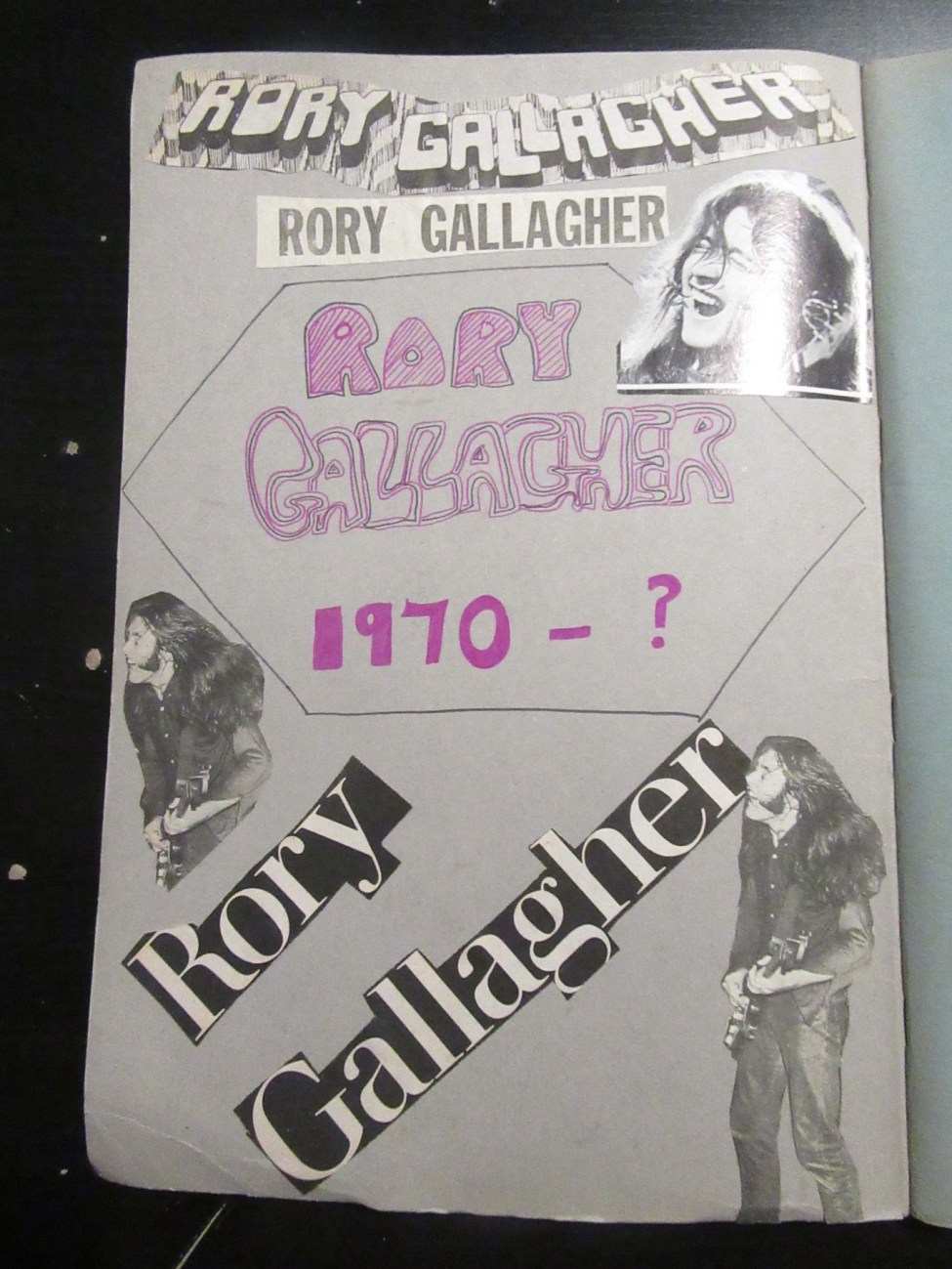
Published in Journal of the Society for Musicology in Ireland (April 2026)
While scholarship has emphasised Belfast’s punk scene as a key site of cross-community interaction during the Troubles, the concerts of Irish blues-rock musician Rory Gallagher also drew diverse audiences and created important moments of shared cultural identity and emotional solidarity across sectarian divides. Drawing on press coverage, fan testimony and archival materials, this paper demonstrates how Gallagher’s concerts offered a rare ‘chink of light’ for young people seeking connection, hope and cultural refuge amid conflict. Using de Certeau’s concept of ‘tactics’ and Williams’ notion of ‘structures of feeling’, the study interprets Gallagher’s performances and fans’ acts of creative refuge (e.g. scrapbooking) as embodied practices that tactically resisted dominant Troubles narratives and created alternative identities and shared affective experiences beyond political binaries. By foregrounding these underexplored facets of cross-community engagement in conflict-era Belfast, the paper contributes to a more nuanced understanding of youth experience during the Troubles beyond tropes of victimhood or delinquency, recovers Gallagher’s often forgotten role in peacebuilding and argues for the preservation of music memories as a vital component of Northern Ireland’s cultural heritage.
Citation: O’Hagan, L.A. 2026. A Chink of Light’: Rory Gallagher, Youth Fandom and Musical Refuge in Early 1970s Belfast. Journal of the Society for Musicology in Ireland. https://doi.org/10.1080/19401159.2025.2564609
“When Jimi Hendrix was Asked. . .” A Netnographic Study of a Contemporary Legend About Rory Gallagher
Published in Rock Music Studies (October 2025)
This paper examines the contemporary legend surrounding the quotation “Ask Rory Gallagher,” allegedly spoken by Jimi Hendrix when asked how it felt to be the world’s greatest guitarist. Long debated within Gallagher’s fan community, the statement’s origins and authenticity remain uncertain. Using a netnographic approach combining digital archival research and social media observation, the study traces the legend’s sources, circulation, and reception. It also reflects on why the legend remains contentious, particularly in relation to Gallagher’s musical legacy and Irish national identity. Overall, the study advances understanding of digital folklore, myth-making, and the cultural dynamics of fandom.
Citation: O’Hagan, L.A. 2025. “When Jimi Hendrix was Asked. . .” A Netnographic Study of a Contemporary Legend About Rory Gallagher. Rock Music Studies, https://doi.org/10.1080/19401159.2025.2564609
Materialising Music Worlds: Heritage-as-Praxis in Everyday Music Objects and Vernacular Memories
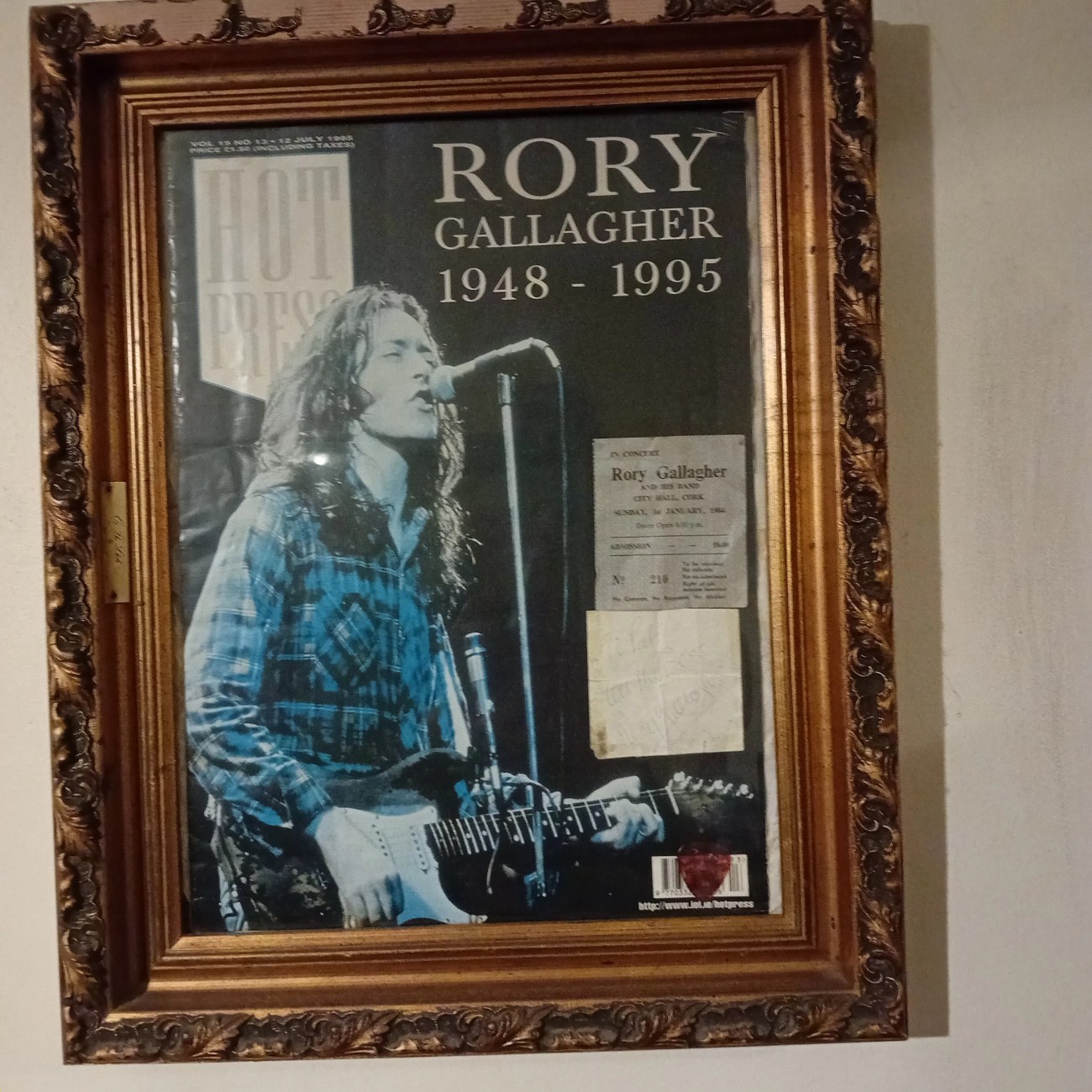
Published in Cogent Arts and Humanities (September 2025)
This paper extends Crossley’s concept of ‘music worlds’ by foregrounding the role of material assemblages in shaping collective memory, fan practices and vernacular heritage. Drawing on object-oriented interviews with fans of Irish blues-rock musician Rory Gallagher, it examines how everyday music-related keepsakes mediate four sequential rites of passage in the fan experience: discovering Gallagher’s music, seeing him in concert, meeting him and hearing the news of his death. By situating these objects at the centre of analysis, the study shows how they act as vessels of memory and emotion, sustaining heritage-as-praxis through everyday sociocultural practices. In doing so, it demonstrates that studies of music worlds would benefit from a material culture approach, which captures how fragile, unofficial and ageing collections of fan objects complicate their inclusion within authorised heritage frameworks yet remain vital to the construction of alternative, community-based histories of popular music. The paper, therefore, advances theoretical debates on music worlds and heritage-as-praxis while signalling the urgent need to recognise, preserve and critically revalue the overlooked material traces through which fans actively shape and sustain popular music heritage.
Citation: O’Hagan, L.A. 2025. Materialising Music Worlds: Heritage-as-Praxis in Everyday Music Objects and Vernacular Memories. Cogent Arts & Humanities 12(1).
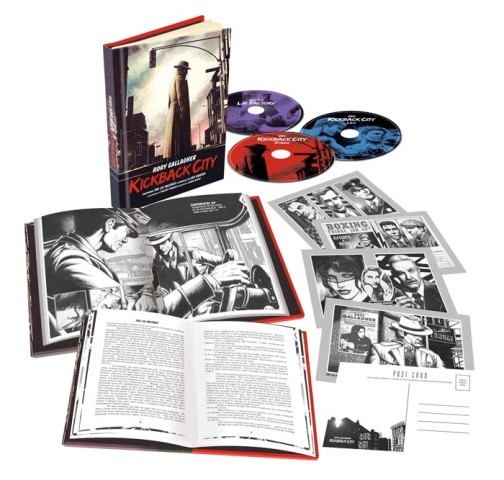
Hardboiled Blues: Exploring Ian Rankin’s ‘Novel’ Approach to the Music of Rory Gallagher
Published in Crime Fiction Studies (August 2025)
In 2013, the estate of the late blues musician Rory Gallagher released Kickback City. Described as a ‘unique immersive album’ inspired by Gallagher’s passion for crime noir, it sought to draw attention to the guitarist’s oft-overlooked songwriting ability and featured a 40-page novella, The Lie Factory, written by Ian Rankin in the hardboiled style of Gallagher’s favourite authors, Dashiell Hammett and Raymond Chandler. This paper is the first to explore Rankin’s ‘novel’ approach to the music of Gallagher through a detailed examination of the Kickback City box set. Using textual and multimodal analysis, it seeks to showcase the complexity of Gallagher’s lyrics and how Rankin’s masterful incorporation of the songs brings additional perspectives to The Lie Factory that extend the typical first-person narrative offered by hardboiled fiction. In doing so, it demonstrates how distinct features of Gallagher’s songcraft contribute to a hardboiled blues subgenre. Overall, it argues that the fruitful cross-pollination of two seemingly distinct genres – blues music and hardboiled fiction – has the potential to reframe how both Gallagher and Rankin are viewed and understood within their respective fields, and how crime media is diffused in the twenty-first century.
Citation: O’Hagan, L.A. 2025. Hardboiled Blues: Exploring Ian Rankin’s ‘Novel’ Approach to the Music of Rory Gallagher. Crime Fiction Studies.
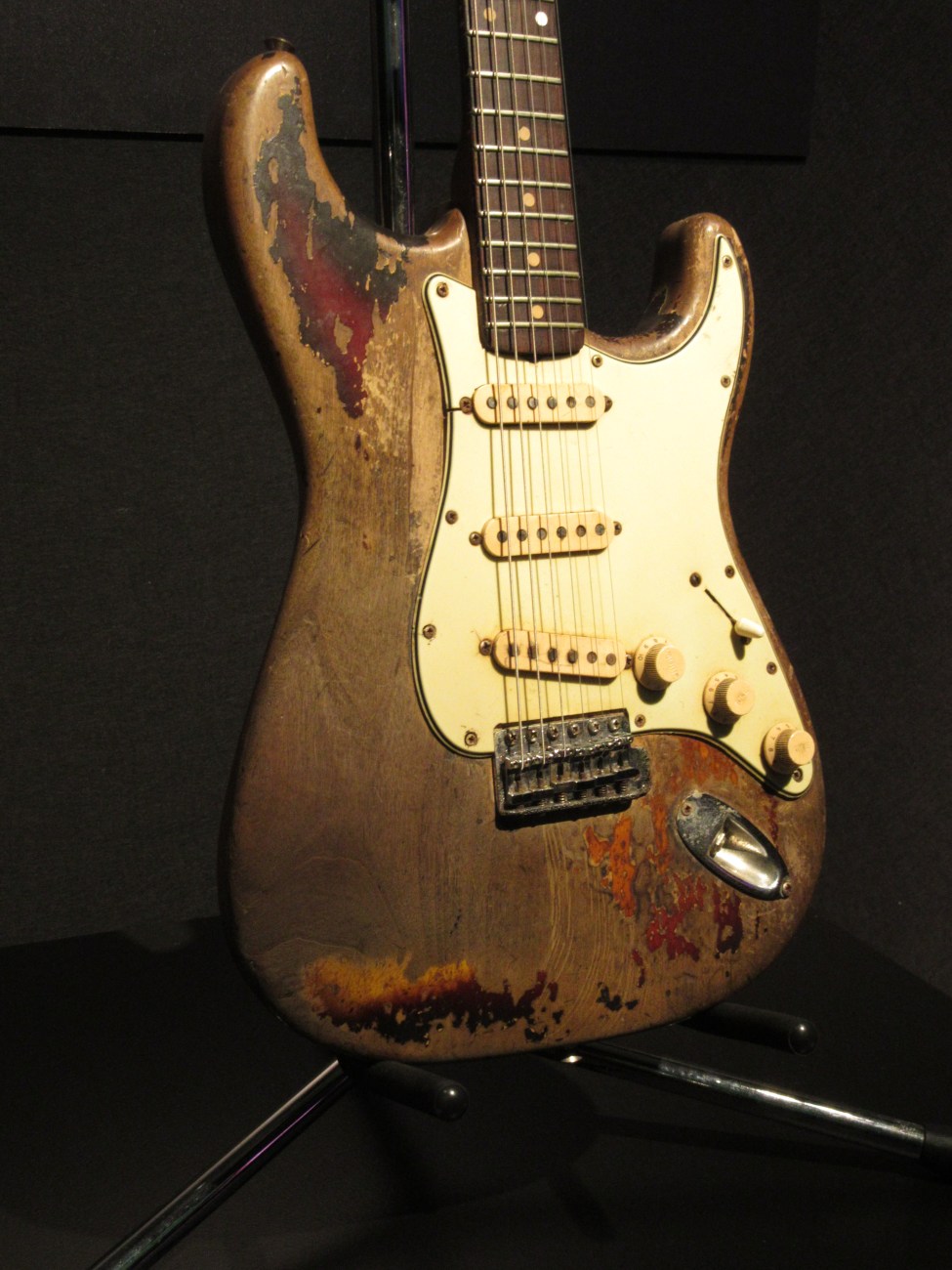
From Extension of Self to National Treasure: The Transformative Materiality of Rory Gallagher’s 1961 Fender Stratocaster
Published in RIFFS: Experimental Writing on Popular Music (July 2025)
Drawing on autoethnographic methods, this visual essay explores the transformative materiality of Rory Gallagher’s 1961 Fender Stratocaster, the layered narratives embedded in its form, and the successful effort to recognise its status as a crucial part of Ireland’s material music heritage. Along the way, we reflect on our personal encounters with the guitar and the emotional responses it provoked, situating these within broader discussions of music, collective memories, and cultural identity.
Citation: O’Hagan, L.A. and Clarke, S. 2025. From Extension of Self to National Treasure: The Transformative Materiality of Rory Gallagher’s 1961 Fender Stratocaster. RIFFS: Experimental Writing on Popular Music, https://riffsjournal.org/lauren-alex-ohagan-and-steve-clarke-from-extension-of-self-to-national-treasure-july-2025/
Material Hauntings: The Emotional Residue of Absent and Lost Music Keepsakes
Published in Social Sciences and Humanities Open (May 2025)
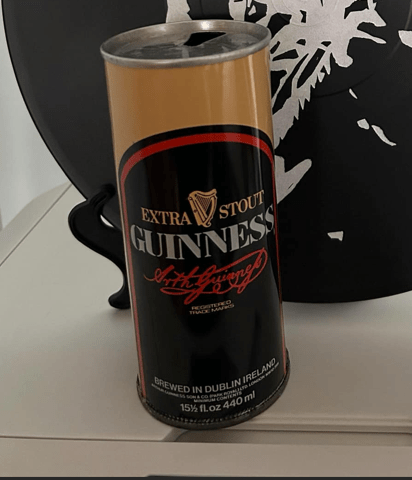
This Short Communication paper presents two case studies of absent and lost music keepsakes and the emotional and spatial chasms they leave behind. Focusing on a misplaced watch and a lost Guinness can that once belonged to Irish blues musician Rory Gallagher, it examines how these objects endure as material hauntings, evoking Gallagher’s aura and eliciting feelings of mystery and unease. It argues that their absence foregrounds their material qualities and shows how, even in loss, they function as heritage-as-praxis, accruing meaning through memory and storytelling. Ultimately, the paper reveals how such voids shape emotional landscapes and alternative music histories.
Citation: O’Hagan, L.A. 2025. Material Hauntings: The Emotional Residue of Absent and Lost Music Keepsakes. Social Sciences and Humanities Open, https://doi.org/10.1016/j.ssaho.2025.101603
Connections, Community, Creativity:
Transcript from a Podcast on Online Music Fandoms and Mental Health
Published in Participations (November 2024)
An extended version of the earlier publication with Journal of Popular Music Studies.
Citation: O’Hagan, L.A. and Lydon, M 2024. Connections, Community, Creativity: Transcript from a Podcast on Online Music Fandoms and Mental Health. Participations 20(2), https://www.participations.org/20-02-09-ohagan.pdf
Connections, Community, Creativity: Online Music Fandoms and Mental Health
Published in Journal of Popular Music Studies (September 2024)
The COVID-19 pandemic saw a 25% increase in global cases of anxiety and depression. For many, online music fandoms became an important way to combat loneliness and aid wellbeing. Interacting with others who shared an interest in a particular musician or music genre acted as a positive support mechanism, fostering a sense of community and feeling of belonging, as well as providing a renewed sense of identity and purpose at a time of great uncertainty. Dr. Lauren Alex O’Hagan, research fellow at the Open University, is one such example. Struggling with her mental health, she found comfort in the Rory Gallagher Instagram community. In her own words, her decision to join was “life-changing” not just in cultivating new friendships, but also in developing new areas of academic research and the internationally acclaimed music blog Rewriting Rory, aimed at shining a positive light on the last ten years in Gallagher’s career. In October 2024, O’Hagan took part in a podcast with Dr. Michael Lydon to discuss online music fandoms and mental health, drawing on her own autoethnographic study. An edited transcript of their conversation is published.
Citation: O’Hagan, L.A. and Lydon, M. 2024. Connections, Community, Creativity: Online Music Fandoms and Mental Health. Journal of Popular Music Studies 36(3), 30-38.
Walkin’ Blues: Exploring the Semiotic Musicscape of Rory Gallagher’s Cork City
Published in Ethnomusicology Forum (April 2024)
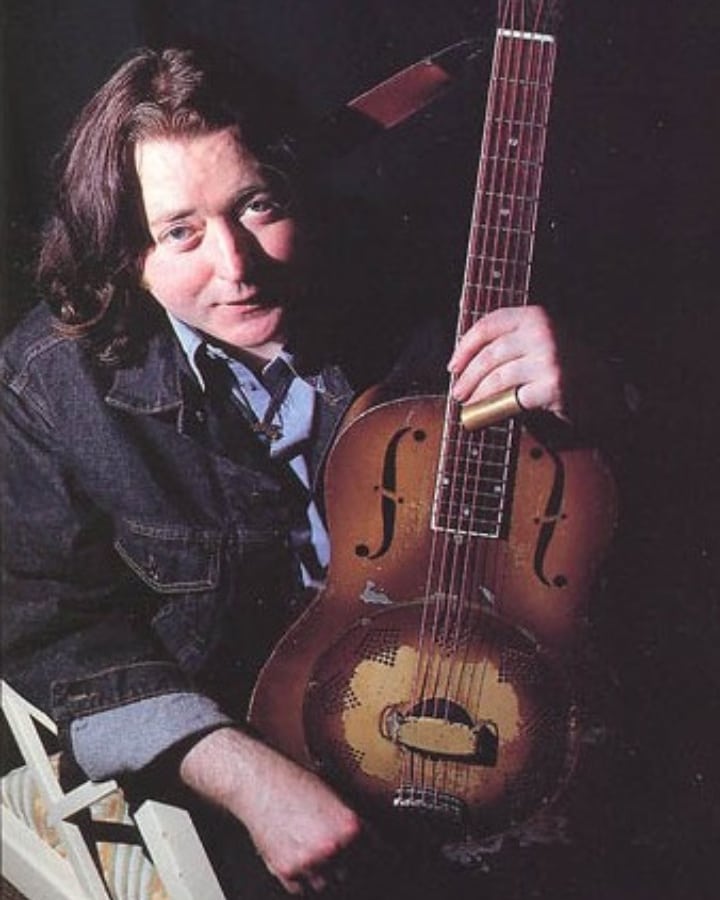
This paper traces a walking tour of Cork City that I recently undertook, using an autoethnographic perspective to tap into the linguistic and semiotic features of places and spaces associated with the blues musician Rory Gallagher and how they are tied to specific music memories. To do this, I draw on the theory of semiotic landscapes, yet put forward the term semiotic musicscapes to account for the imagined, embodied and emotional aspects of the visual linguistic environment that such music walks entail. I argue that these forms of secular pilgrimage turn the ‘ordinary’ into the ‘extraordinary’, relying on both specialised music knowledge and the imaginarium to make true meaning from visual and verbal signs. The paper, thus, offers a new way for ethnomusicologists to explore the cultural geography of music, as well as for (socio)linguists to approach the study of semiotic landscapes, particularly when tied up with musical heritage. It also extends current scholarship on Rory Gallagher whose life and work remain underresearched, despite his importance as a founding figure of Irish rock music.
Citation: O’Hagan, L.A. 2024. Walkin’ Blues: Exploring the Semiotic Musicscape of Rory Gallagher’s Cork City. Ethnomusicology Forum 33(1), 30-59.
Music for Mental Health: An Autoethnography of the Rory Gallagher Instagram Fan Community
Published in Journal of Contemporary Ethnography (March 2023)
Since the outbreak of COVID-19, there has been a major increase in anxiety and depression. For many, online music fandoms have offered an important platform to combat loneliness and aid well-being. In this study, I use autoethnography, supported by psychosocial theory on recovery and sociological theory on music fandoms, to track my personal journey of recovery (2020–2022) from a mental health crisis through the support of the Rory Gallagher Instagram fan community. Specifically, I investigate how the community acts as a positive support mechanism for well-being, how my relationship with Rory and his music has changed since joining the community, and how knowledge of Rory’s own personal struggles, coupled with my own experiences, have empowered me to become a mental health advocate. Overall, the study brings attention to the importance of online music communities as informal, holistic regulating agents for mental health conditions and offers alternative ways for health services to approach mental health care.
Citation: O’Hagan, L.A. 2023. Music for Mental Health: An Autoethnography of the Rory Gallagher Instagram Fan Community. Journal of Contemporary Ethnography 52(5), https://doi.org/10.1177/08912416231162077
‘Rory Gallagher’s Leprechaun Boogie’: Irish Stereotyping in the International Music Press
Published in Review of Irish Studies in Europe (January 2023)
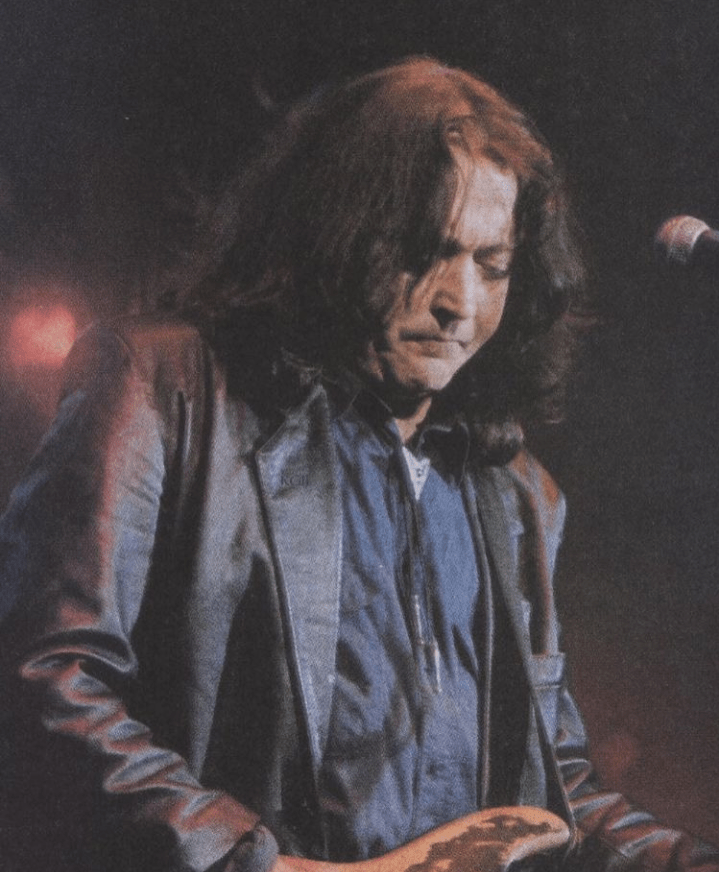
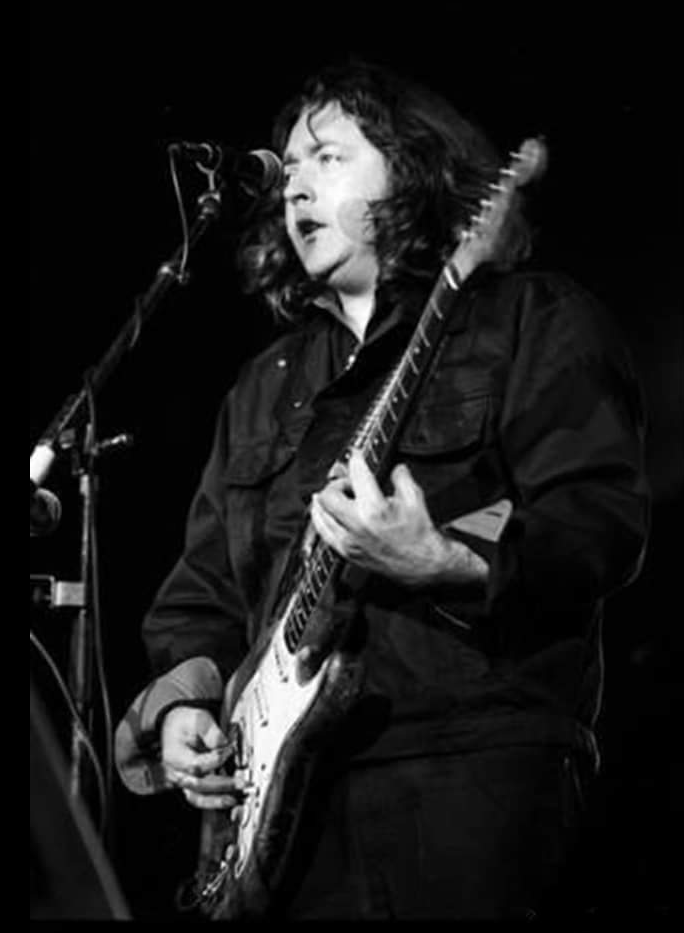
This paper seeks to explore the presence of Irish stereotyping in the international music press using a case study of the Irish blues rock musician Rory Gallagher. Using a dataset of 600 articles about Gallagher published between 1968 and 1998, it draws upon a combination of corpus and thematic analysis to identify frequently occurring Irish stereotypes and how they were used to describe him, embedding arguments in postcolonial theory, particularly the work of Homi K. Bhabha. The analysis identifies five major themes—the Irish as violent troublemakers; the Irish as heavy drinkers; the ‘Irish’ way of talking; the Irish as ‘dumb Paddys’; Irish folklore and traditional ways of life—highlighting the different roles into which Gallagher was unwillingly cast by the music press. These references often wrapped Irish prejudice in a cloak of fun and frivolity, which made it seem harmless and trivial. However, such disparagement humour fostered discrimination by moulding (negative) public opinion of what it meant to be Irish at a time when Anglo-Irish tensions were already high and ignored the deeply emotional impact of the Northern Irish conflict on Gallagher. It also took attention away from Gallagher’s music and, in doing so, downplayed the important contribution he made to the world of blues and rock.
Citation: O’Hagan, L.A. 2023. ‘Rory Gallagher’s Leprechaun Boogie’: Irish Stereotyping in the International Music Press. Review of Irish Studies in Europe 5(2), 38-72.
Music-Making, Sense of Place, and Corkonian Identity in the Rory Gallagher Irish Tour ’74 Documentary
Published in the Journal of the Society for Musicology in Ireland (May 2022)
This paper builds upon the work of Hogan (2016, 2021) by casting a historical lens on the importance of emotional connectivity to place in Cork through a case study of the city’s most famous musician: the blues/rock guitarist Rory Gallagher. Specifically, it investigates how sense of place and Corkonian values are narratively produced and depicted in the Irish Tour ’74 documentary. It argues that the documentary portrays County Cork as a close-knit place with a deep sense of community and Gallagher as the physical representation of these values. Analysis of specific scenes also highlights the significance of localist expressions of identity and localised forms of prestige for Gallagher, as well as the way in which his songs can be renarrativised to create new meanings that either accentuate his yearning for home or promote a form of hybridised parochialism that centres around Belfast as his ‘second home’.
Citation: O’Hagan, L.A. 2022. Music-Making, Sense of Place, and Corkonian Identity in the Rory Gallagher Irish Tour ’74 Documentary. Journal of the Society for Musicology in Ireland 17, 47-77.
Fashioning the “People’s Guitarist” The Mythologization of Rory Gallagher in the International Music Press
Published in Rock Music Studies, (March 2022)
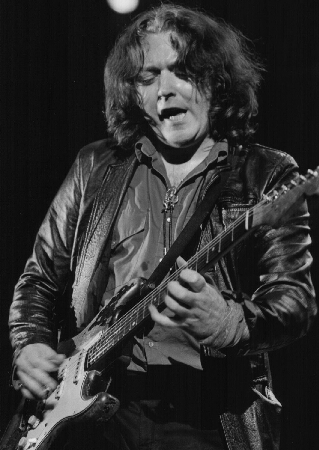
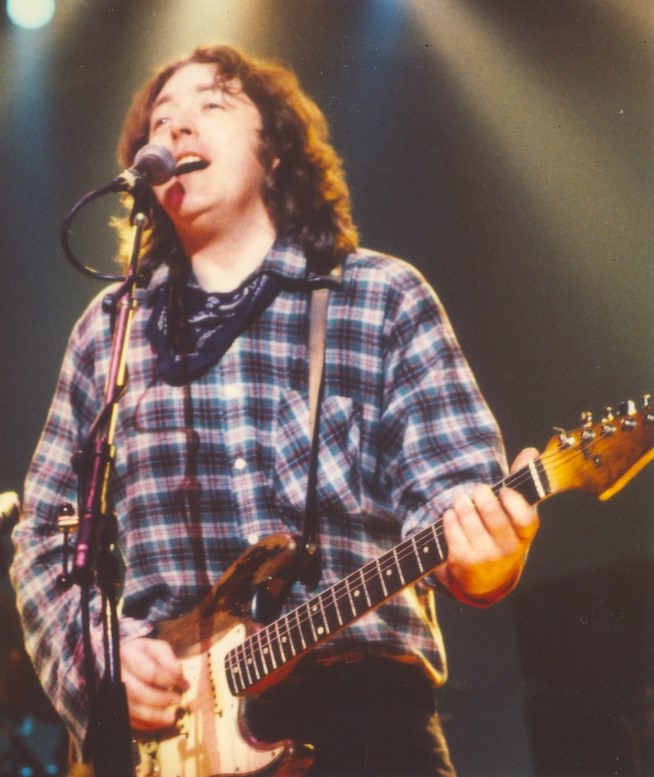
This paper traces how the international music press used the clothing and appearance of the Irish blues/rock musician Rory Gallagher to mythologize him as the “People’s Guitarist.” I explore how this image was constructed and developed over time, as well as Gallagher’s own response to this mythologization and how it has consolidated since his death in 1995. I argue that Gallagher’s unwillingness to compromise his integrity and shift his music or clothing to fit changing trends made him an anomaly in an image-conscious music industry. Thus, his appearance became an easy target for the music press who focused overwhelmingly on his clothing in interviews and articles. This focus unfairly drew attention away from his music and downplayed the important contribution he made to the world of blues and rock.
Citation: O’Hagan, L.A. 2022. Fashioning the “People’s Guitarist”: The Mythologization of Rory Gallagher in the International Music Press. Rock Music Studies 9(2), 174-198.
“Rory played the greens, not the blues”: expressions of Irishness on the Rory Gallagher YouTube channel
Published in Irish Studies Review (June 2021)
This study explores expressions of Irishness by fans on the official YouTube channel of the Irish blues/rock singer and guitarist Rory Gallagher. Drawing upon a dataset of some 500 comments, I note the various strategies that fans, both Irish and non-Irish, adopt to engage in public displays of Irishness and explore the personal links that they make with Ireland and Irish culture to situate themselves as “authentic.” I demonstrate how, for Rory Gallagher fans, Irishness is an unstable, malleable concept that can simultaneously express regionalist, nationalist and transnationalist identity, yet it tends to be non-sectarian and rooted in a shared love for music rather than any political/religious differences. Moreover, it is essential in determining internal hierarchies and status within the fan group, with those asserting the most Irishness seen as most authentic. Overall, its findings contribute to an important growing body of work on Irish musicology and national identity.
Citation: O’Hagan, L.A. 2021. “Rory played the greens, not the blues”: expressions of Irishness on the Rory Gallagher YouTube channel. Irish Studies Review 39(3), 348-369.


Leave a Reply