
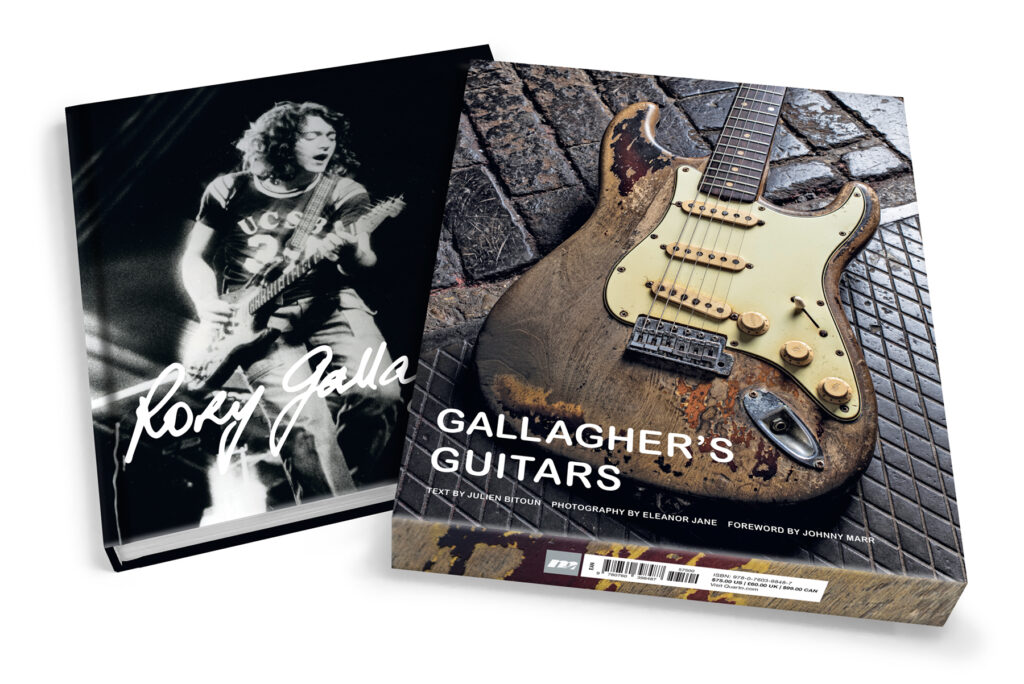
Over the years, I’ve often thought that a coffee table book documenting Rory’s vast guitar collection would make a treasured addition to any fan’s shelf. The chance to study the instruments that meant so much to him and learn about their provenance, accompanied by high-quality photography, always felt like a natural and fitting tribute.
When The Rory Gallagher Collection auction at Bonham’s was announced back in 2024, that idea suddenly felt more urgent. With the knowledge that this would be the last time all of these instruments would be together in one place, documenting them properly became more than a personal wish; it felt like a necessity.
Fortunately, the Gallagher estate clearly recognised this and granted acclaimed guitar photographer Eleanor Jane access to photograph the collection. She then teamed up with guitar historian Julien Bitoun to provide authoritative commentary. The result is Gallagher’s Guitars: The Rory Gallagher Collection – a beautifully produced 256-page slipcase volume arriving just in time for St Patrick’s Day.
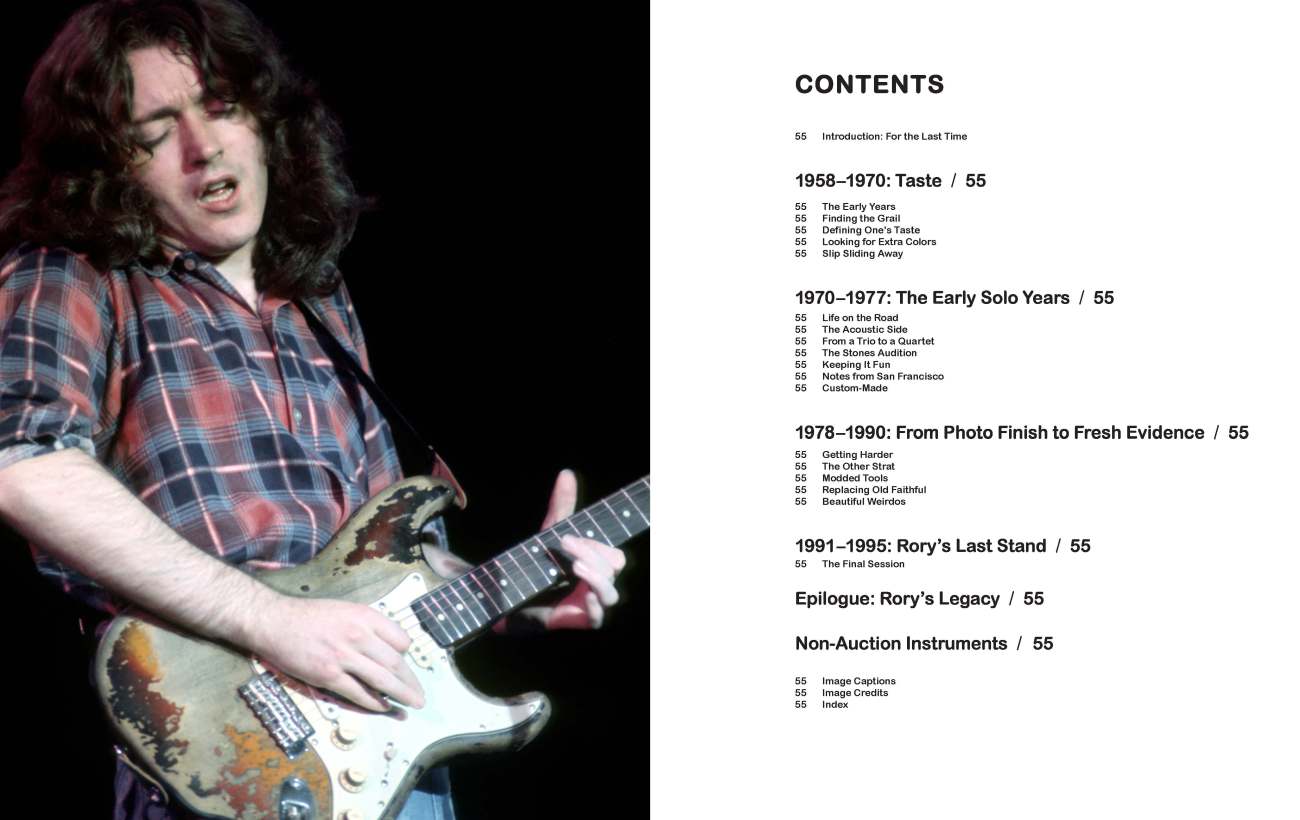
Whenever Rory is celebrated, you can be sure that Johnny Marr is always among the first to speak passionately about his influence, making him a natural first choice for the book’s introduction. Marr reflects on seeing Rory perform for the first time and the impression his equipment made on him. As he notes, “back in the days of giant shiny Marshall stacks and new wave keyboards, Rory’s choice of instruments and equipment was unusual – and something of an education.”
Marr also touches on something I – and many other fans – have long observed: Rory’s guitar collection was relatively modest by ‘rockstar’ standards. Yet the variety and oddities within it reveal a musician who collected not for status but out of curiosity, practicality and deep admiration for the history of blues and guitar craftsmanship.
Following this introduction is a short contextual section explaining the background to the auction and the reasons behind the sale. From there, the book moves into its main structure, dividing Rory’s career into four chronological sections:
- 1958–1970 – covering the early years and the Taste era
- 1970–1977 – the formative period of Rory’s solo career
- 1978–1990 – spanning Photo-Finish through to Fresh Evidence
- 1991–1995 – focusing on Rory’s final years
An epilogue rounds things off with reflections on Rory’s legacy.
Naturally, any book like this must be selective. So, rather than attempting to cover every single instrument Rory owned, Jane and Bitoun focus on 40 guitars and related pieces of equipment that best tell the story of his career. Given the constraints of space, this feels like the right decision, even if the diehard fan in me would happily read page after page about every obscure instrument that ever passed through Rory’s hands. Still, what we get here is a concise yet vivid snapshot that successfully balances the essential with the unusual.
It will come as little surprise that the instrument receiving the most attention is Rory’s lifelong companion: his legendary 1961 Fender Stratocaster, perhaps one of the most recognisable guitars in rock history. Bitoun tells the well-known story of its purchase, its subsequent loss and recovery, and Rory’s vow never to let it leave his side again – a promise he faithfully kept. Jane’s gorgeous accompanying photos showcase the guitar in all its glory, with close-ups capturing every exquisite detail of its wear.
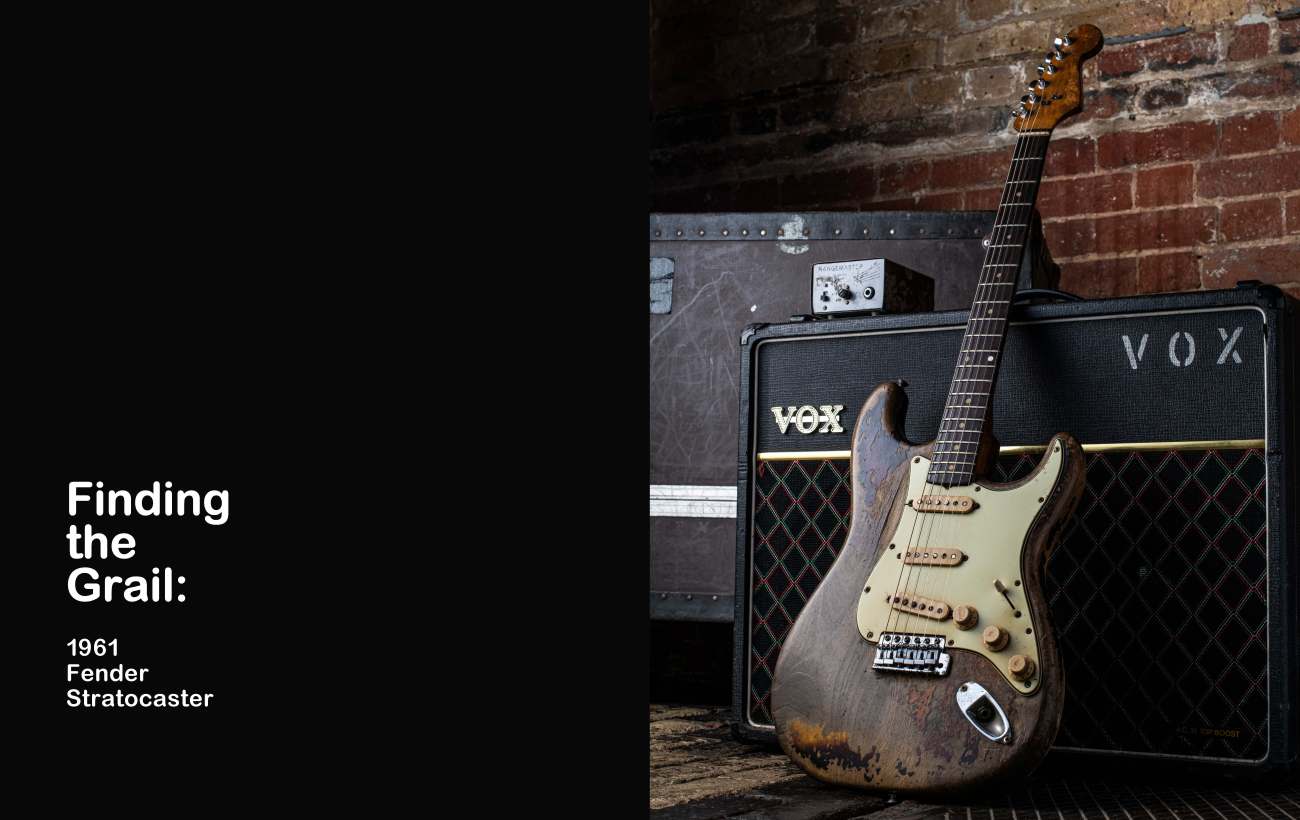
We are also treated to in-depth accounts and exclusive photos of Rory’s other core instruments: the 1966 Fender Telecaster, 1959 Fender Esquire, 1969 Martin D-35, 1930 National Triolian Resonator and 1958 backup Stratocaster. But the book doesn’t stop there, also showcasing lesser-known gems such as the 1959 Gretsch Chet Atkins, 1960s Bjarton acoustic, 1957 Supro Dual Tone, 1960 Kay K672 Swingmaster, 1964 Epiphone Coronet and my own personal favourite, the 1965 ‘JB Hutto’ Airline. The volume even stretches beyond guitars to include Rory’s sitar and some of his mandolins.
One particularly touching inclusion is Rory’s very first guitar – a simple flat-top acoustic he received when he was nine years old. Unlike most of the instruments in the book, it was not part of the 2024 auction and remains with the Gallagher family, making its presence here feel especially meaningful.
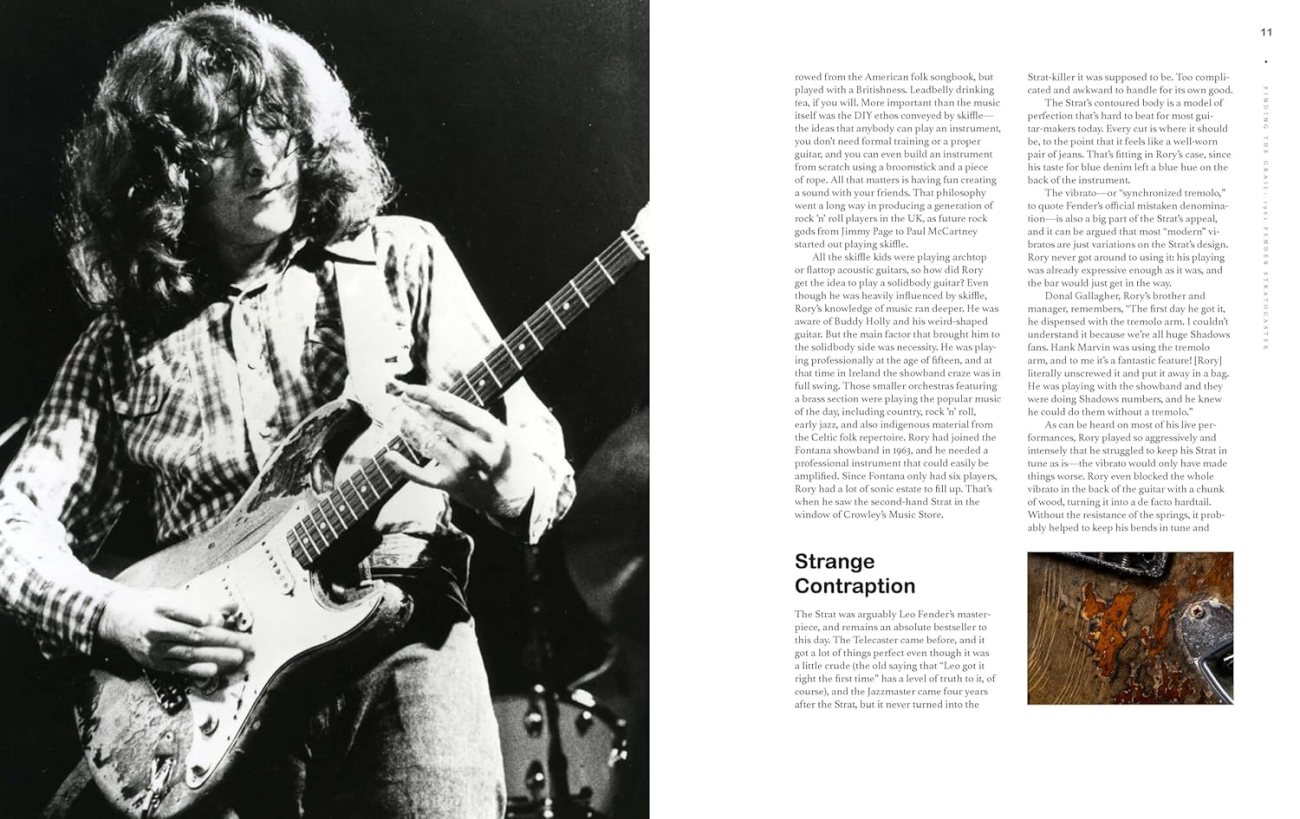
Visually, the book is stunning. Jane’s lens brings out the soul of each guitar with remarkable attention to detail. As a scholar of visual and material culture, I particularly value the close-up images of the instruments, their scuffs, scratches and faded wood all telling a story of their own. They serve as reminders that these guitars were working tools that travelled the world with Rory night after night. Accompanied by archival photos of Rory in action, they make him feel startlingly present and alive, as if the energy of his performances lingers on the page.
The text accompanying the images is equally engaging. Bitoun draws on interviews, archival material and commentary from Rory’s brother and long-time manager Dónal to trace the stories behind each instrument. I love the decision to present the narrative chronologically, telling Rory’s story through his guitars while also including, in smaller print alongside, the history and manufacture of each model. Importantly, the writing remains accessible: you don’t need to be a guitar obsessive to appreciate the book (of course, the photographs alone tell a powerful story), but those with a deeper interest in guitars will find plenty of detail to enjoy.
I also love the book’s decision to conclude with Shu Tomioka’s original photos of the guitars in Rory’s collection that were sold back in 2012-13 at New Kings Road Vintage Guitar Emporium in London. While space constraints mean that we don’t get any accompanying details on each instrument, this section serves as a valuable reminder of the missed opportunity to document those guitars in a similar volume when they were originally put up for sale.
If there is one small criticism, it’s that the section covering Rory’s final years – as usual – feels all too brief, focusing only on his Peter Green tribute album session (incorrectly labelled as his ‘Final Session’) and two guitars: the Stella Harmony H912 and 1965 Teisco TRE-100. So much more could have been said here to balance the otherwise top-heavy coverage of his earlier career. But this is a minor gripe in an otherwise excellent book.
Ultimately, Gallagher’s Guitars succeeds both as a visual showcase and as a piece of musical documentation. It captures not only the instruments themselves but also the personality behind them: a guitarist whose choices reflected practical musicianship, a keen instinct for expressive sound and a deep respect for musical heritage.
For long-time fans, it offers a beautifully produced tribute to one of rock’s most revered guitarists. And for anyone interested in the relationship between musicians and their instruments, it stands as a fitting record of the tools that helped Rory create his iconic sound.
Finally, on a personal note, you can read my own academic piece on Rory’s 1961 Fender Stratocaster here, co-authored with Steve Clarke, Bonham’s guitar technician. I’ve also just finished two papers on the auction, following a year-long research study speaking with winning bidders, which I hope will be published later this year or in 2027. These explore what made the auction so unique and how fans mobilised to save Rory’s instruments.
Gallagher’s Guitars can be purchased here


 REWRITING RORY
Leave a comment