
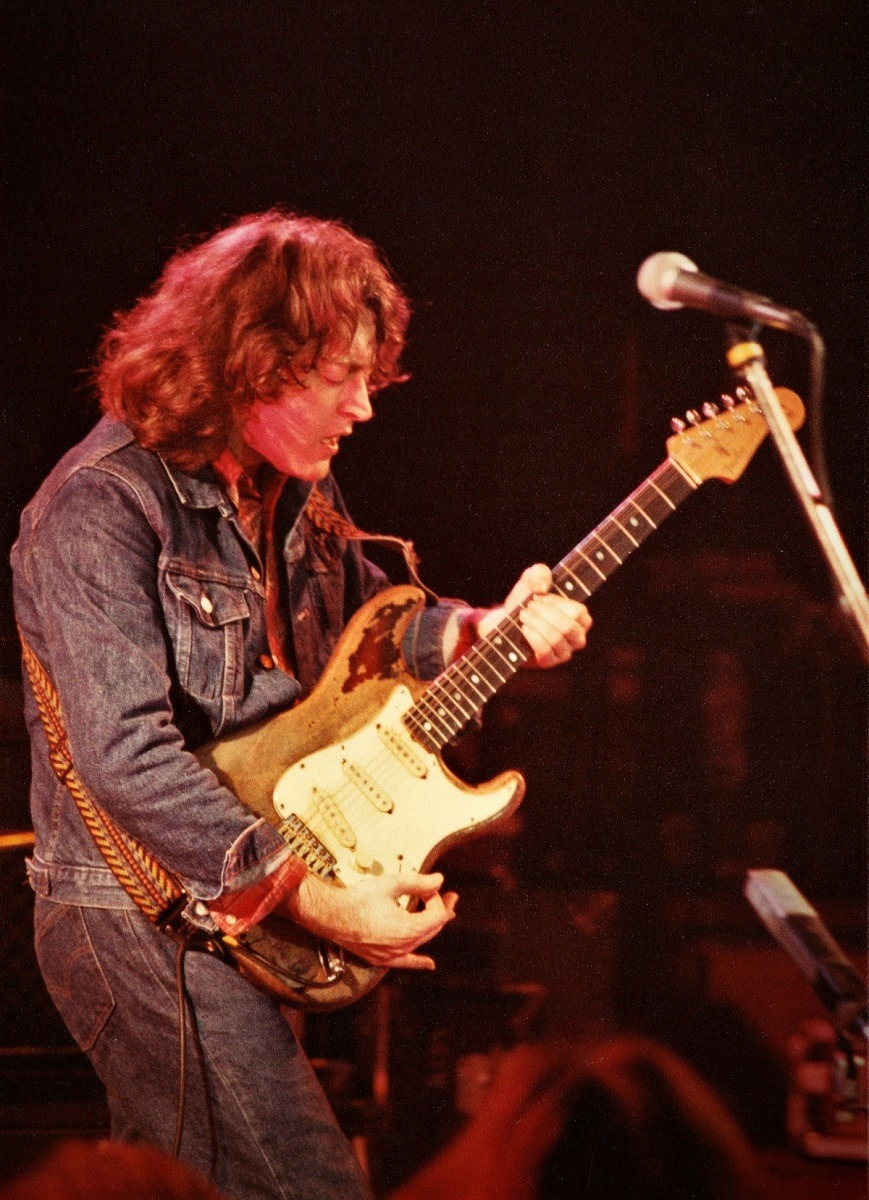
“There are certain nights that we all have, where you know that, ‘God, these hands will do anything tonight!’ You know, and you take yourself right to the edge, the limit.”
Rory Gallagher, 1991
When I first became enamoured by Rory’s music, one of the first things that struck me – as I’m sure it did many others – was his magical ability onstage to never play the same song twice. His improvisational skill, whether through his guitar playing, lyrical shifts or sheer stage presence, kept every performance exciting and left you on the edge of your seat, anticipating what might come next. I really could not take my eyes off him for one second, and that feeling has never faded, even after all these years. I can only imagine the euphoria of those of you lucky enough to have seen him live. I honestly don’t think I would have ever been able to sleep again!
Rory often spoke about his appreciation for the “free possibilities” of music and the idea of simply “taking a chance.” In a 1991 interview with Viv Campbell for Guitar for the Practicing Musician, he explained that he never used a setlist and that about 75% of what he played onstage was improvised. He made clear that he had no fixed pattern for this improvisation – some nights he might start a solo from an Irish jig position, other nights from a “pure Buddy Holly thing.”
Improvisation was also one of the reasons why the trio was his preferred format as it made spontaneity easier, allowed for on-the-fly arrangement changes and gave him the freedom to “hit unorthodox notes.” For Rory, the more the music changed, the less repetitive and uniform it became, which kept audiences fully absorbed.
But as Susan Whitall of Creem pointed out, it was more than simple improvisation. It was about Rory being “in total control of the guitar,” knowing every inch of it and how a single move could produce a distinctive sound. We see this again and again in his live shows: that amazing slide note he holds for so long in Karussell ‘80 on ‘Off the Handle’ or the string-pulling antics in ‘Moonchild’ from Rockpalast ’82. But this improvisational spirit also extended to his lyrical riffing, as heard in the many versions of ‘Seven Days’ captured on his 1985 North American tour or the countless twists in his vocal delivery on songs at his ‘94 festival performances.
In Rory Gallagher: The Later Years, I argue in one chapter that Rory’s live performances can only be fully appreciated by viewing them as a continuum rather than through essentialist labels like age, weight, health or other meaningless characteristics. Seeing his work as a continuum allows us to recognise the subtle differences and developments in his musicianship over time, acknowledging that while he was already a phenomenal musician in the 1970s, he constantly refined and expanded his craft through years of experience. I was delighted to find that Shawn Perry of Vintage Rock expressed a similar view in a 2013 article. Making a rare departure from typical journalistic opinion, he recommended that newcomers to Rory explore both Irish Tour ’74 and Montreux 1994 to gain a well-rounded understanding of the consummate musician he was.
To appreciate the evolution of Rory’s onstage alchemy, I thought I’d start this new ‘One Song, Many Lives’ series, which explores the subtle ways he reworked and reinvented the same song over the years. I thought I’d start with one of my personal favourites – ‘I Wonder Who’ – a song I often revisit by listening to several versions back-to-back. Given how often Rory performed it, I’ve chosen just a few standout versions from the available video and audio recordings. I’ll mostly let the music speak for itself, but I’ll share a few reflections along the way.
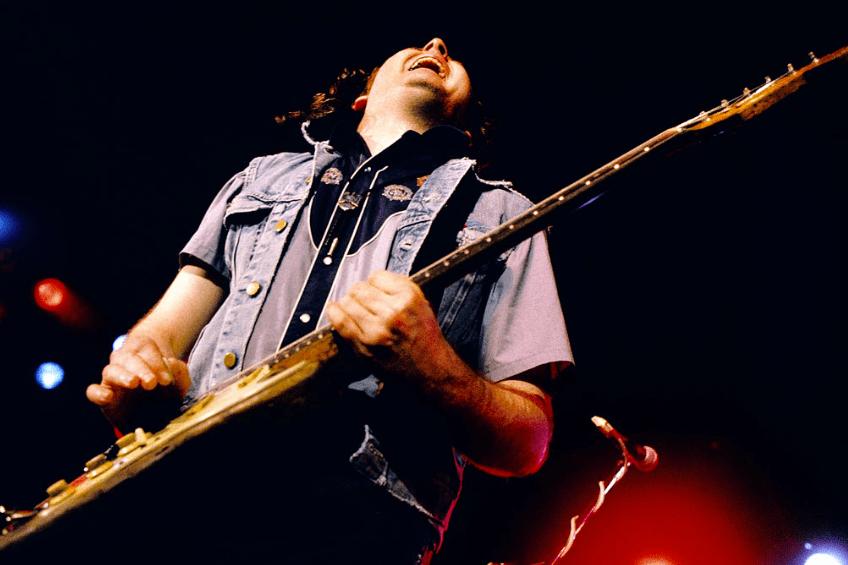
‘I Wonder Who’
‘I Wonder Who’s Gonna Be Your Sweet Man’ was first recorded by Muddy Waters and His Guitar on 17 September 1952 and released in May 1953 on Chess Records. This original version is quite different from the one we’d come to know with Rory, far slower in tempo. As you’d expect from Muddy, it showcases stunning slide work, with Little Walter on harp providing a beautiful complement to his vocals. Muddy later recorded it again for The London Muddy Water Sessions in 1972 – an album Rory played on (though not this particular song) and considered one of the best moments of his life. This later version is more up-tempo, with a stronger bass beat and a more extensive harmonica solo by Carey Bell Harrington. The track also features piano by George Fortune (Georgie Fame) and runs about two minutes longer than the original.
It was the year after The London Muddy Water Sessions that Rory began incorporating ‘I Wonder Who’ into his live shows. Critics often praised Rory for steering clear of the more predictable blues standards like ‘Dust My Broom’ or ‘Hoochie Coochie Man’ that were staples for bands like Fleetwood Mac and Savoy Brown. Instead, they saw him as offering “erudite versions of American blues originals” – a testament to his distinct and personal style. ‘I Wonder Who’ is a perfect example of that approach.
Irish Tour ’74 version
It only seems fitting to start with what many fans regard as the definitive version of ‘I Wonder Who’ from the original Irish Tour ’74 album. Rory introduces the song simply, “I’d like to go back to a tune you might like to hear. It’s called ‘I Wonder Who’,” before scaling the fretboard with deep feeling. Although clearly inspired by Muddy Waters, this version is unmistakably Rory’s own from the very first note.
His voice wails out the title line with raw emotion, while his guitar expertly fills the silence between, creating a kind of call-and-response with himself. As he repeats the verse a second time, the audience begins to clap along enthusiastically. Then, on the line “you see my pretty girl…” the rest of the band kick in, with Gerry laying down a solid bass groove.
From around the three-minute mark, the song really takes flight with Rory’s masterful soloing. His guitar tone is absolutely beautiful. Just when it seems he’s reached the peak, he adds volume swells, weaving soaring crescendos that heighten the song’s emotional intensity and showcase his technical finesse.
Then, the second half of the song gives way to a Lou Martin piano solo – a feature that distinguishes this version from the later trio performances. Rory also scats along with his guitar lines – something I always love as it’s just such an instinctive and joyous expression. As the song draws to a close, he repeats the question, “Who’s gonna carry your business on?” and the whole band unites in a soaring finale.
Vienna 1978 version
Just four years later, the song is utterly transformed in this stunning 1978 Vienna performance. Rory starts up on his Strat, but swiftly switches to harmonica, before playing both together. The notes on guitar and harmonica echo each other perfectly, a thrilling display of his multi-instrumental prowess. In this version, Rory delivers the opening line with a certain sultriness; he pouts and sways his body, fully inhabiting the moment. The crowd responds instantly, feeding off his energy, and Rory throws back his head with a delighted laugh.
It’s a joy to not just hear, but to see him here – to catch his little cues to the audience through nods, gestures and encouraging calls of “Yeah, you got it”. His playful mimicry of the walk of the “pretty girl” down the street also brings the song vividly to life. It’s hard to reconcile this confident, charismatic performer with the shy, nervous man glimpsed offstage earlier in the documentary in which this performance features. Rory’s raw and gritty vocals perfectly suit this style of blues. As one reviewer said of a similar 1978 performance, “This is Rory’s home turf, the stuff of his soul.”
He switches back to the harmonica for the first solo, continuing to keep rhythm on his Strat – no mean feat! Gradually, he layers in small licks and embellishments, building to a primal scream around the four-minute mark. Then he launches into a full guitar solo, eyes closed for much of it, fully immersed in every note. A wide smile spreads across his face. It’s rare to see anyone so utterly happy and free as Rory when he’s playing. “Rory’s fingers danced for all they were worth,” wrote one reviewer, and that couldn’t be more true. In this moment, nothing else exists but him and his instrument.
You can tell Rory is following where the feeling takes him: bending notes behind the nut, muting strings, using volume swells and string pulls – the whole spectrum of his expressive arsenal. Finally, he emerges from this musical trance to sing briefly again, before diving into yet another electrifying solo. Then, with a raised hand, he finally signals the end, leaving the audience breathless.
Ulster Hall 1984 version
Rory’s versions of ‘I Wonder Who’ got longer and longer over the years and this one from Belfast’s Ulster Hall at the 1984 ‘Rory at Midnight’ concert clocks in at just under 10 minutes! Rory begins with his usual exploratory runs up and down the fretboard, scatting along instinctively with what he plays, as if he’s having a conversation with his guitar. Then, much like the Vienna ‘78 version, he breaks into that teasing opening line, eliciting a huge response from the audience. Suddenly, an enthusiastic fan jumps on stage and throws an arm around him, but Rory takes it completely in his stride, smiling and playing on without missing a beat.
I love how he totally commands the audience here with his vocals and pointing gestures. His fills between lines are so playful and precise, and his constant smiles and laughter show he’s totally in his element – a beautiful glimpse into that magical, happy place he goes whenever he’s performing. His playing really seems to tell the story of the song. On the line “I would marry you…”, for example, he drops the volume of his chord to a whisper, before following it up with an exquisite guitar line that animates the sentiment.
There’s something distinctly Celtic in his first solo here. The phrasing feels different, more lyrical and flowing. Then, breaking from earlier versions, he moulds the song into a harder, heavier version, tapping notes and creating some really unorthodox sounds along the way that add texture and tension. I love the camera angle here, which captures Rory silhouetted by orange and red stage lights shaped like sunshine.
He pauses, letting Gerry fill in on bass before starting again, diving into intense string pulls and fully embodying the music as he drives the Strat like an extension of his own body. While all eyes are on Rory, I must also give a shoutout to Brendan on drums, who delivers a fantastic performance here.
I love the new lyrics Rory adds in the next verse – “If your love was honey, baby, you know I’d buzz ‘round like a bumblebee” – complete with buzzing guitar sounds that mimic the bees perfectly. Then: “If the whiskey was in the river, would you come and swim along with me?” He pulls another solo out of nowhere, raising his Strat vertically and squeezing the absolute life out of it! Rory always seemed to pull out all the stops at the Ulster Hall, and the crowd respond passionately.
“How can three men build paradise?” one YouTube commenter asked – and I totally agree.
Montreux Jazz Festival ‘85
Just one year later and ‘I Wonder Who’ takes a strikingly different turn once again – this time stretching out to a jawdropping 16 minutes, with Rory favouring his JB Hutto Airline over his Strat. This performance also features the brilliant new addition to the band: Mark Feltham on harmonica, whose presence brings a whole new texture to the sound.
Rory opens with a beautiful Muddy-esque slide line – such a crisp and clean sound, stripped of any of the rock aggression that defined some earlier versions. There’s a spacious two-minute instrumental before the vocals come in, this time far softer and more subdued. It’s melancholic even, with each vocal line pierced by emotive slide phrases, almost like sighs or gasps of feeling.
In the first verse, Rory adds the unexpected line, “Who you gonna have to love you when John McEnroe packs up his kit bag and goes on home!” – a topical nod to the tennis player’s dramatic Wimbledon exit the day before. “Sorry, John!” he wryly adds. As Dónal later noted, Rory strongly identified with McEnroe, admiring his fierce independence and refusal to compromise.
There’s an almost simmering tension to this whole version, a quiet storm beneath the surface. Mark’s harmonica weaves in out and out of Rory’s wistful slide, adding light to the shade. It’s like the whole performance feels poised on the edge of something – bubbling, unsettled, aching to break free. Rory’s mood at the time was rather low; he’d just completed a gruelling six-week US tour and signs of his worsening health were beginning to show. That heaviness seems to bleed into the performance. One line in particular always hits me particularly hard: “Who’s gonna kiss and hug you when all your so-called friends have packed up, sold your home, sold your car, stole your soul, but they can’t get this guitar.” He touches his chest, then clutches his guitar tightly. It’s a momentary touch of vulnerability, before he unleashes a slide solo, so sharp and plaintive it feels as if the guitar is weeping.
Unlike earlier versions, I confess that Rory doesn’t seem quite as immersed in the music here, nor does that effortless joy shine through as brightly. The second slide solo, for instance, can at times feel slightly meandering, although it’s not short of stunning moments, especially when he plays slide on the upper frets. Eventually, he hands the spotlight over to Mark, easing into rhythm guitar and offering an encouraging “Yeah!” from off-camera.
As the jam unfolds, the lyrics become looser, more improvised, as if we’re catching glimpses of passing thoughts: “Tell me do you… do you wanna go? Tell me, honey, do you wanna pick up your bag and go? I got one half an acre, we set ourselves a New Mexico.” Another solo follows, this time leaving the slide aside. Then, Rory begins to repeat, “The way you look tonight, honey, I think I’ll lay right down…” each line punctuated by a single drumbeat from Brendan. And finally: “I’m gonna kiss the world goodbye.” In that long, slow fade, you just somehow know that Rory is not just playing the blues, but living them.
Town & Country Club, 1990
It’s funny, whenever I hear these late ‘80s or early ‘90s versions of ‘I Wonder Who’, they often take me right back to Irish Tour ’74. There’s something in the way that Rory’s vocals and guitar lock together with that familiar intensity. But at the same time, you can really feel the evolution that’s taken place in the years in between. There’s maturity in the performance – an even deeper understanding of pacing, space and subtlety. The 1990 Town and Country Club version is a great example of that.
Unlike the sprawling openings that became common in Rory’s late ’70s onwards versions, here the intro is far tighter and more purposeful. Rory gets quickly into the lyrics, his voice carrying more texture and character now, which lends the song a raw, lived-in emotion. Geraint Watkins also adds something special here on piano. His tasteful tinkling comes in right alongside Rory’s guitar, complementing it beautifully.
Rory’s tone is as crisp and biting as ever, but it’s what he does with it that makes this version particularly shine. This is low-down, dirty blues at its very best – gritty but fluid, fierce but full of feel. The pace ebbs and flows constantly, rising and falling with precision. You can practically hear the band thinking and breathing as one.
The second solo section is a particular highlight. Rory, Gerry and Brendan lock in on a riff, then drop back to leave space for Mark’s harmonica to reply. Then Mark is given the freedom to let loose with a solo, before the same sequence plays out again, this time with Geraint stepping up to punctuate Rory’s phrases before launching into a solo of his own. That, for me, is one of the most beautiful aspects of these later shows: Rory gives everyone their moment to shine.
Rory’s lyric improvisation here is in full swing too, playful and sharp. A favourite of mine is the cheeky: “Give me back my money, honey, and I’ll say a few kind words about you.” He even breaks into scatting with his guitar again – something he hadn’t done much since the early days.
It all builds to the powerful, closing cry: “Who’s gonna carry all your business on?” Rory repeats it like a challenge, and with each pass, the band responds with sharper intensity. And as the song finally comes to an end, there’s a sense of release – the tension dissolving into a peaceful, haunting stillness.
Pistoia Blues Festival 1994
And now we come to my personal favourite rendition of ‘I Wonder Who’ from the Pistoia Blues Festival in 1994. I’ve spent so much time immersed in this phase of Rory’s career that I feel viscerally connected to his late-era performances. Describing them in mere words feels like an injustice, but I’ll attempt it, nonetheless. If you’ve never seen this performance, I urge you: watch it closely, listen intently. Something powerful is happening here.
Rory once said in an interview that he carried a lot of “angst,” and that it was the blues that gave him a voice for it. That emotional intensity is palpable in this rendition. From the opening moments, he scales the fretboard with aching precision, and without pause, launches into the first line, “I wonder who…” His voice is astonishing: gravelly, deep, but agile—weathered in just the right way to suit the blues. The sonic texture is enriched by Frank Mead’s harmonica and John Cooke’s piano. Together, they create a warm, midnight atmosphere that lets Rory’s vocal and guitar work cut right to the bone.
Throughout the song’s 12 minutes, Rory takes the listener on a rollercoaster of emotions, smiling as he places his hand on his hip and acts out the scene of his “little girl” walking on down the street. Then comes a more introspective turn with improvised, quasi-autobiographical lines: “Baby, I get nervous. I’ve gotta cry myself to sleep,” complete with gestures—head on an invisible pillow, mimed tears. Just as the mood darkens, he snaps it back with a flash of humour: “I think about divorcing you, honey, but even in Mexico the price ain’t so cheap.”
There’s a deep understanding of the blues tradition here, with Rory really letting the song breathe. He hands the spotlight to Frank for a harmonica solo as he shifts to rhythm guitar himself. Then it’s over to John Cooke for his own solo—restrained, atmospheric, like a jazz player in a smoky late-night bar. Next comes something rare for this period: Rory takes off his Strat, picks up a harmonica and steps into the spotlight himself for a solo. The band drops to a whisper, with just David Levy’s steady, grounding bassline beneath him. It’s a fragile, melancholy interlude.
Rory then teases the audience, altering between short lines of verse and punchy guitar solos. He begins with Bob Dylan’s ‘Just Like a Woman’, followed by a sparse, expressive solo that aches with emotion. Then comes an excerpt from Buddy Guy’s ‘The First Time I Met the Blues’ – his vocals rich, commanding and wounded. What follows is a ferocious slide solo, a wailing release of all the tension that had been slowly simmering. As the band falls back into the core groove of ‘I Wonder Who’, Rory plays yet another solo, this time unrestrained, letting mood and instinct guide him. The band supports him beautifully here, rising and falling with him, giving his guitar room to soar.
And the ending – God, I love this ending. Unlike earlier ‘90s versions where the whole band often came together on the repeated line, “Who’s gonna carry all your business on?”, here it ends more organically. Rory’s playing softens, grows more introspective, and when he finally raises the neck of his Strat as a cue, the band returns in perfect unison before gently dropping out. Then, in one final gesture, he climbs the frets while Richard’s drumming adds weight, driving the whole thing to a firm, emphatic close.
This isn’t just a performance. It’s a blues exorcism. Rory lays himself bare in this rendition—hurt, humour, mastery and vulnerability all wrapped into one. For me, it’s the definitive version.


 REWRITING RORY
Leave a comment