
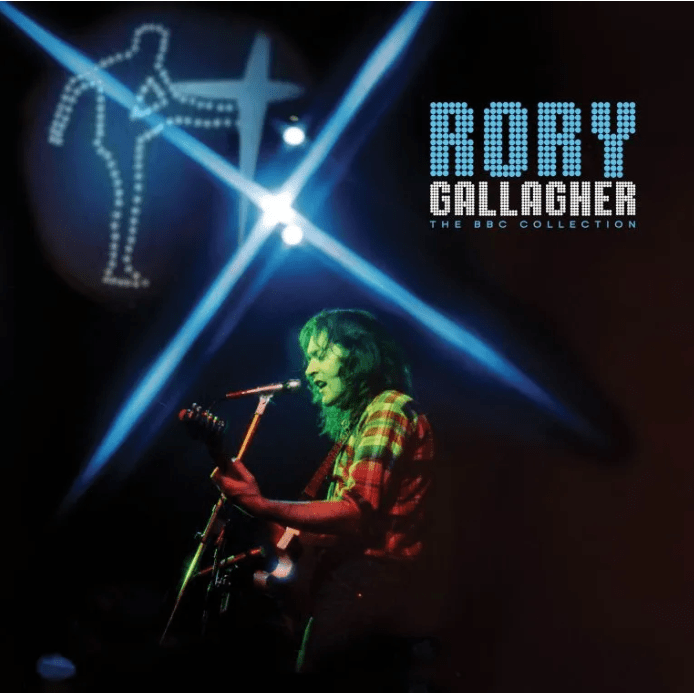
On 18 July 2024, I found myself in London for work purposes. While in Knightsbridge, I made my usual stop at the Brompton Oratory, where Rory used to attend mass, to light a candle in his memory. My quiet moment of reflection was interrupted by my phone vibrating insistently in my coat pocket. I stepped outside to check what had caused the notification and saw it was a post from the official Rory Gallagher Facebook page announcing a new release on 11 October: The BBC Collection.
The post described it as “the definitive collection of Rory Gallagher’s recorded performances at the BBC,” consisting of a massive 20-disc set (18 CDs and 2 Blu-rays). I punched the air with excitement and returned to the Oratory with a silly smile on my face, much to the bemusement of other visitors. It somehow felt special to receive this news on the steps of a place so significant to Rory.
And so, as always when a Rory release is announced, the waiting game began. This time, however, I had plenty to keep me occupied in the meantime between the auction announcement and the publication of Rory Gallagher: The Later Years.
Rory and the BBC
From an early age, the BBC played a crucial role in shaping Rory’s musical journey. As a child, he would often stay inside just to catch his favourite radio programmes, including Saturday Club, where live performances gave him a glimpse into the raw talent of bands beyond the studio. Rory viewed these live broadcasts as a true test of musicianship.
His connection to the BBC grew even stronger during his time with Taste, when he forged close ties with iconic radio disc jockeys like Mike Raven and John Peel. It was John Peel, in fact, who invited Rory to record many of his BBC sessions throughout the 1970s. Rory continued to perform for the BBC into the 1980s, recording both television concerts and radio performances that showcased his evolving sound and enduring genius. For an artist who resisted the conventional route of releasing singles, these recordings were essential in introducing his music to a wider audience.
Rory became one of the most recorded artists in BBC history. In recognition of his longstanding connection with the network, in 1999, the Gallagher estate released The BBC Sessions. The two-disc collection featured a mix of live recordings from various venues, including the Maida Vale Studios (1971, 1972, 1973), Paris Theatre (1972, 1973), Golders Green (1977), De Montfort Hall (1978), Hammersmith Odeon (1979), The Venue (1979) and BBC Manchester (1986).
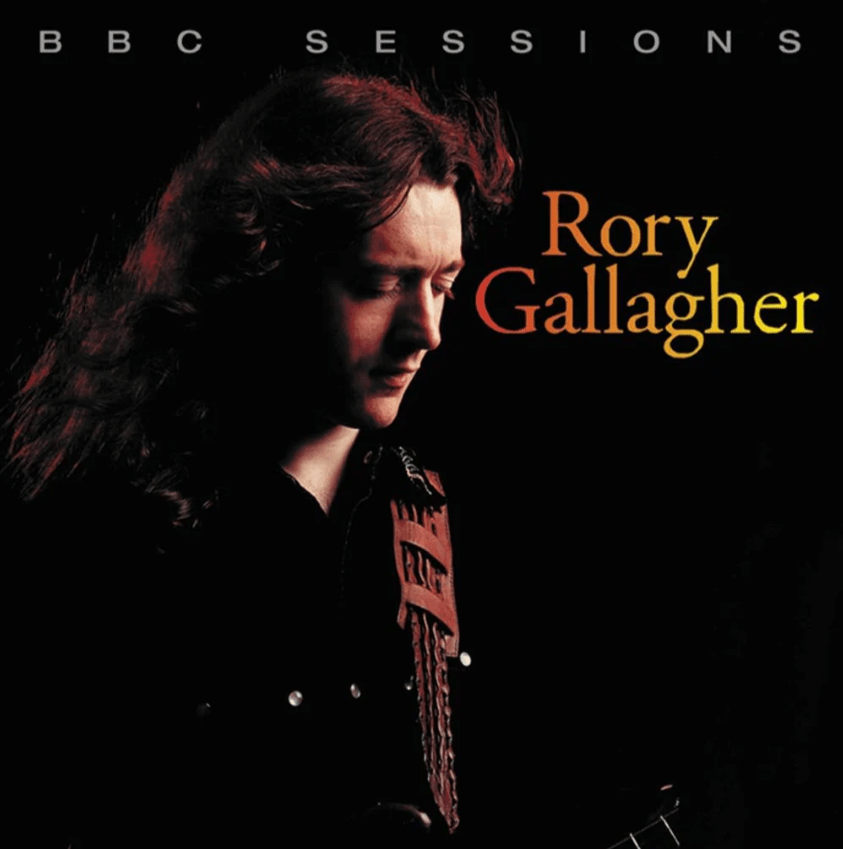
Unfortunately, the album had only moderate success and did not sell particularly well. Dónal expressed frustration at the time that the record company could have done more to promote it, echoing the challenges they constantly faced during Rory’s lifetime. Additionally, Dónal had to pay the BBC upfront based on estimated sales, which complicated matters.
Despite these challenges, Dónal felt that The BBC Sessions was “one of the best BBC records of its kind.” When putting together the album, he had used Led Zeppelin’s own BBC sessions as a benchmark, but set Rory’s Irish Tour ’74 as the standard for live tracks. He intentionally rearranged the album’s track order, choosing to open with the mellower ‘Calling Card’ instead of a heavier track like ‘Shinkicker’ so as to provide a “soft way to build it through the blues […] like a freight train picking up steam.”
Twenty-five years on, this 2024 BBC release expands on the earlier collection by compiling all sixteen years (1971-1986) of Rory’s performances at the network, sourced from tapes in the BBC’s archives, along with Rory’s own transcription discs and off-air cassette recordings. More than three-quarters of the material is previously unreleased, although much of it has circulated in bootleg form.
The comprehensive boxset includes a 5,000-word essay by journalist Colin Harper, which features new interviews with BBC producer Jeff Griffin, Rory’s longtime bassist Gerry McAvoy and fellow musicians from the 1970s, including Andy Roberts (Plainsong, Liverpool Scene), Barry Devlin (Horslips), Jake Burns (SLF) and Dave McLarnon (Shock Treatment). As well as the huge 20-disc set, the collection is also available in 2CD and 3LP formats.

As Rewriting Rory centres on the latter part of Rory’s career, and I haven’t yet had the opportunity to explore all the material in the boxset, this review will primarily focus on the 1980s content. That said, I’d like to begin by highlighting some of my personal favourites from the 1970s selections.
1970s Highlights
While I’m known for favouring Rory’s post-Jinx material, I also have a soft spot for the original three-piece with Wilgar Campbell and Gerry McAvoy. Rory’s debut solo album was my introduction to his music, and I was blown away by the versatility of the material and the seamless chemistry among the three musicians. So, naturally, I have to highlight the rich selection from this period in the boxset.
One standout track is ‘The Cuckoo’, recorded at Sounds of the Seventies in 1972; I get shivers every time I hear it, as Rory sings with such wisdom for a man of just 24. The opener of the entire box set, ‘For the Last Time’, is also exquisite, featuring stunning improvisation in the solo section, while ‘Hoodoo Man Blues’ showcases Rory’s exceptional flair and emotional depth. ‘Just the Smile’ from John Peel’s Sunday Concert in 1971 is also worthy of mention; the tenderness in Rory’s vocals and guitar work conveys the deep emotion of the song, making it a heartfelt tribute to his mother.
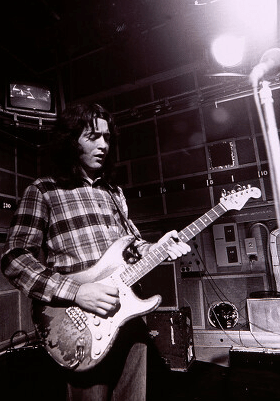
I confess, I may have screamed a little when I saw that the boxset would include not just the audio from Rory’s birthday concert at the Old Grey Whistle Test in 1976, but also the video footage itself. This 45-minute performance is a masterclass in musicianship from all four men on stage. There is just such energy and fire in Rory’s performance, and I can imagine that he couldn’t have asked for a better way to celebrate his 28th birthday than by being up there, fully immersed in the music.
The set’s highlight is undoubtedly ‘All Around Man’, where Rory effortlessly switches between his guitar and harmonica throughout the 11-minute song. Dónal has often described Rory’s performances as “making love to the audience” and it’s evident in the way he expertly raises and slows down the tempo here, before cueing the band for a powerful finale. The encores of ‘Souped Up Ford’ and ‘Bullfrog Blues’ are an electrifying way to close the set, leaving you with the feeling that Rory would happily play on all night if he could. What a powerhouse performance!
Rory’s 1977 Hammersmith concert and 1978 Rock Goes to College performance are also fine examples of his skills and showmanship (yes, I know he’d probably hate that word, but it’s true!) as a live performer. These concerts also highlight the band’s constantly evolving sound as they transitioned from a four-piece with Rod De’Ath and Lou Martin to a three-piece with Ted McKenna. Thankfully, we have both audio and video footage once again that allow us to truly immerse ourselves and feel like we’re right there in the venues.
The acoustic set at Hammersmith, featuring ‘Out on the Western Plain’, ‘Barley and Grape Rag’, ‘Pistol Slapper Blues’, ‘Too Much Alcohol’ and ‘Going to My Hometown’, is particularly strong. In the case of Rock Goes to College, the absence of an acoustic set is more than compensated by the stirring ‘Fuel to the Fire’ – a rare gem to hear Rory play live.

1980s Highlights
Throughout the 1970s, Rory was a regular headliner at the Reading Festival. When he came back again in 1980, he was presented with an award by festival founder, Chris Barber, and the Mayor of Reading, Charles Frederick Sage, in recognition of his many performances there. For years, I’ve cherished the bootleg of this 1980 concert, and I can genuinely say it’s one of the finest bootlegs I’ve ever encountered. Rory was always an exceptional live performer, but at this concert, he transcended into a whole new realm. To finally have the complete performance get an official release on discs 16 and 17 of the new boxset is worth the £120 on its own!
There are just so many epic moments in this set, but I’ll try to narrow it down to just a few. First and foremost is ‘Shadow Play’. While many rave about the 1979 Montreux Jazz Festival version—and rightly so!—this rendition is even better! Ted is pounding those drums as if they might explode, and Gerry is giving his all on the bass, keeping up a fast pace. And Rory… well, beyond his immense talent, his sheer joy is utterly palpable. There’s a moment halfway through the song when he releases a raw, heartfelt scream that never fails to send shivers down my spine.
And then there’s ‘Out on the Western Plain’. Sheer magic. The call and response with the audience always brings tears to my eyes. In ‘Going to My Hometown’, the audience is so enthused that Rory even has to pause at one point and hand over to them. What a connection! The same can be said for ‘Too Much Alcohol’. It’s astonishing how Rory captures that intimate club energy in a large outdoor setting. The audience is hanging on his every word and note here. Rory’s vocals, maturing beautifully at this stage in his career, have that rough bluesy edge that complements his guitar work perfectly. This performance is honestly one of the best I’ve ever heard from him!
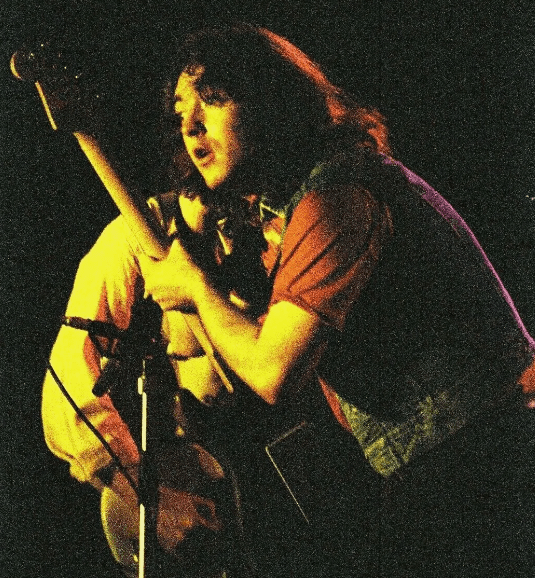
As if things couldn’t get any better than Reading 1980, the boxset also includes audio and video of Rory’s 1984 performance at the Ulster Hall. First broadcast on BBC Northern Ireland as Rory at Midnight, this concert has always been another go-to for me. Rory’s shows in Belfast were truly magical, quasi-spiritual experiences for those fortunate enough to attend. Although I wasn’t one of those lucky ones, listening from afar allows me to vicariously savour the atmosphere.
I mentioned earlier the Reading 1980 version of ‘Shadow Play’ is one of my very favourites, but the Ulster Hall 1984 rendition actually takes the ultimate crown for me. It’s fast-paced and bursting with high energy, before Rory masterfully brings the tempo down, even shushing the crowd, only to build it back up again. Video footage shows a group of fans invading the stage and Rory duckwalking after them. Oh, to have been there that night! ‘Big Guns’ is also hard-hitting, and the slide work is absolutely off the scale, proving that Rory is untouchable in this style of playing.
‘I Wonder Who’ is another high point of the concert. I’ve always loved this song and enjoy seeing how it developed throughout Rory’s career. This particular version features some beautiful, wailing guitar solos from Rory, totally immersed in his craft as he experiments and pushes the song to new heights. I love his improvised lyrics too, such as “If your love was honey, baby, you know I’d buzz round like a bumble bee.”
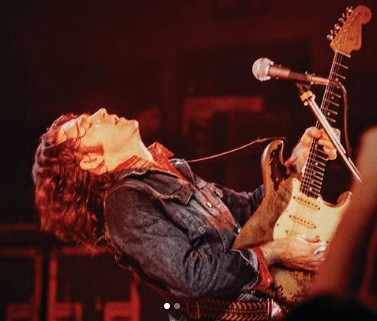
Rory’s performance of ‘Flight to Paradise’ and ‘Can’t Be Satisfied’ on BBC Radio 1 in 1984 with Spanish flamenco guitarist Juan Martín are also noteworthy. The two men met during the ‘Guitarists’ Night’ short tour organised by Northern Irish concert promoter Paul Charles, which also featured David Lindley and Richard Thompson. Rory bonded with Juan over their shared love for flamenco and experimented together with Juan’s song ‘Flight to Paradise’. Invited to perform on BBC Radio 1, they chose that song, with Rory on his National guitar and Juan on his 1972 Sobrinos de Esteso flamenco pegboard guitar. I’ve written about this performance in detail in Rory Gallagher: The Later Years, so I’ll share a segment to avoid repetition as it captures everything I want to convey:
“The song title ‘Flight to Paradise’ is fitting because the song does just that, taking the listener on a transcendent voyage that grows in magic and mysticism as the tempo increases. There is a certain sense of joy and freedom in the song as the two guitars splendidly combine and interact in a compelling call and response, sometimes giving the impression that a whole room of guitarists are playing. The result is a melting pot of sounds as Spanish and Celtic, flamenco and blues, come together to form a bold, unique and emotional piece of music, showcasing yet another string in Gallagher’s extremely versatile musical bow.”

It’s always a pleasure to watch Rory being interviewed, and the video portion of the boxset treats viewers to two such moments. The first is Rory’s January 1984 interview on BBC Northern Ireland’s Scene Around Six during his Irish tour. He reflects on his memories of playing in Belfast, the evolution of his music, the recent passing of Alexis Korner and his future plans. The second is a brief 1985 Whistle Test interview with Andy Kershaw, where Rory, holding his National, discusses how he got into the blues and whether young people are rediscovering it. He jokes, “Who’s your friend?” when asked to play something, then breaks into a beautiful rendition of ‘Can’t Be Satisfied’. Having had this footage in grainy quality for years, it’s wonderful to finally see it upgraded and officially released.
It was also music to my ears, both literally and metaphorically, when I heard that the boxset would include Rory’s 1986 appearance on the Paul Jones Blues Show on BBC Radio 2. Again, I’ve had this bootleg for years and have always been bowled over by it. It’s especially great because we know how poorly represented these years are in Rory’s official releases. The fact that this was his last appearance at the BBC makes it all the more poignant, yet it’s also upsetting to think he wasn’t invited back in the nine years that followed, especially considering how much he continued to evolve as an artist.
We get a lovely introduction from Paul Jones before Rory is invited to perform Sonny Boy Williamson’s ‘When My Baby She Left Me’. In a tribute show after Rory’s death, Paul mentioned that he would rank this performance among the top ten BBC sessions he’s ever heard, and I can totally understand why. Rory and his band are firing on all cylinders here, pushing the limits of their sound with a relentless intensity that fills the room. Rory then delivers a splendid rendition of ‘Continental Op’ from his forthcoming Defender album. This is followed by a brief interview segment where Rory reflects on his early days in showbands, his time with Taste and his approach to songwriting. He concludes the session with ‘Off the Handle’, his passionate vocals perfectly complementing the intense instrumentation and creating a thrilling experience for the listener.
The Rory Gallagher Story
It was a pleasant surprise to find the one-hour documentary The Rory Gallagher Story, first broadcast on BBC Radio 2 in 2005 and narrated by Gary Moore, also included in the boxset. I’ve had a copy for years, but it’s fantastic to see it now more widely available, as it’s beautifully put together. Gary respectfully tells Rory’s story, interweaving personal insights from their time together, like the early days in Belfast and later encounters at the Conrad Hotel.
The documentary features contributions from familiar faces like Brian May and Johnny Marr, but it’s especially wonderful to hear from friends such as Martin Carthy, Jack Bruce, and Ronnie Drew. There are also insights from Dónal, John Wilson, Gerry McAvoy and Lou Martin, adding depth to the narrative.
Naturally, we all know the sad end of Rory’s journey, but the documentary is filled with funny moments as well. There’s that time Rory got kicked out of the Troubadour for cheering too loudly for Martin Carthy, which he was disgusted by. And when Ronnie Drew failed to recognise Rory the first time they met in Hamburg, mistaking him for someone working on the building sites there.
In summary, The Rory Gallagher Story is a heartfelt and well-rounded documentary that provides a thoughtful overview of his life, shared through the memories and insights of those who knew him personally.
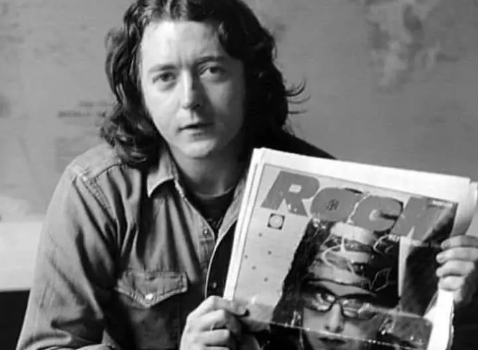
Overall, Rory Gallagher: The BBC Collection certainly delivers on its promise to be the “definitive” collection of Rory’s BBC performances. It beautifully captures his essence as a musical genius and exceptional live performer, making it a welcome addition to any fan’s collection.
In the future, I would love to see a similar boxset put together for Rory’s RTÉ appearances. Just think of all those outstanding TV and radio performances he did in Ireland, from the 1977 acoustic Valentine’s Day show and the 1980 Aspects of Rock profile to his 1988 performances on The Late Late Show and Borderline and his 1992 appearance on Marcus Connaughton’s Bluestime. What a treat that would be!
One can only hope!
LAO
Rory Gallagher: The BBC Collection is out now and available in the following formats:


 REWRITING RORY
Leave a comment