

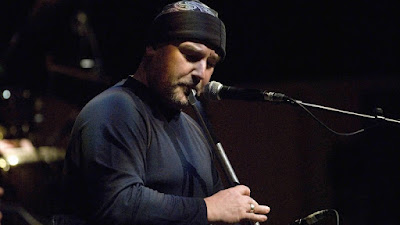
I was delighted to recently make contact with renowned harmonica player and artist, Brian Palm, who shared some fantastic memories of Rory with me. Born in Hartford, CT (USA) in 1957, Brian moved to Dublin in 1977 to study at the National College of Art and Design. After graduating, he stayed in Ireland and developed a successful career as an artist, exhibiting his work at such prestigious institutions and galleries as the Royal Hibernian Academy and Royal Ulster Academy. He currently exhibits with the Duke Street Gallery in Dublin. In addition to his artwork, Brian has long been regarded as one of Ireland’s greatest harmonica players, performing and recording for over three decades, most notably as part of the Mary Stokes Band. Brian is an accomplished diatonic and chromatic harmonica player and favours the Hohner Deluxe Marine Band model. At present, he plays harmonica for Whole Lotta Zepp, a music collective dedicated to authentically recreating Led Zeppelin’s music.
1. When was the first time you met Rory? Were you a fan of his before you met?
Growing up in America in the 1960’s and ‘70’s, I was steeped in American Rock and Blues music, but unfortunately Rory’s work hadn’t broken through as much then as it has now. To find albums of his in record stores or collections which I perused was a rarity, and at that time radio was dominated by Top 40 hits. Oddly enough, at the time the American ‘Hit Parade’ included some great music sprinkled in among the hours of dross. Very occasionally a Rory Gallagher song would feature; equally the only Thin Lizzy song I remember ever hearing on radio in America was ‘The Boys Are Back in Town’. Van Morrison songs were of course commonplace on AM radio. FM station s and college radio leaned towards Jazz, Bluegrass or Jazz/Rock Fusion. My record collection was heavily Blues laden, with an emphasis on harmonica players. It was on the Muddy Waters London Sessions album (1972) that I first took note of Rory’s distinctive sound, then again on Muddy’s follow up record a few years later. I heard him on a Johnny Winter bootleg record belonging to a friend’s older brother, which I unsuccessfully tried to buy a number of times. When I got to Ireland in 1977, I brought my education up to speed in a hurry and engrossed myself in his albums. Incidentally, around that time he made a guest appearance on one of Albert King’s albums, and a pal made me a tape cassette copy which was scrutinized until it wore out. It was only a few years later that I was to actually meet Rory Gallagher in ‘real life’.
In 1981 I was attending a Rock Music industry event in the Hibernian Hotel in Dublin, long since demolished. It was an awards ceremony hosted by the newly established Hot Press Magazine, and Rory Gallagher was the guest of honour. Perhaps to say ‘we met’ that night is somewhat inaccurate: his arrival was greeted by much excitement and the room was immediately divided into those who knew him and approached him, and those who were starstruck and just watched. I was hurriedly introduced to him as a harmonica player and we nodded to each other very briefly. We didn’t exchange any conversation, as he was receiving an award and was escorted briskly elsewhere. However, when he heard the word ‘harmonica’ we definitely made very firm eye contact, if for only a moment!
A couple of years later I met him again in a trendy bar called ‘The Bailey’ which I used to often frequent. I went there specifically because it was a bar where well known Rock musicians hung out. The drinks were quite a bit more expensive than elsewhere, so most people avoided the place unless they really wanted to make the scene. Personally, I felt that the opportunity to sit and quietly chat with Phil Lynott and Brian Downey of Thin Lizzy, or members of Folk Rock supergroups Clannad, Moving Hearts, Horslips etc. was worth the few extra pence you had to pay for a pint. Many top session players and record company scouts also drank there, and I knew it was a place where anything could happen. I had my first conversation with Rory Gallagher there one afternoon. He was taciturn to the point of near silence, but not in an unfriendly way; he smiled and laughed but didn’t say much. Rather than attempting to interrogate him with the usual questions about his career, I talked mostly about myself and my work as a fledgling harp player! I was aware that I should keep my chat with him informal and brief, so I did.

Photograph from RTÉ Archives
2. What was your first impression of Rory?
My first impression of Rory seeing him in the Hibernian Hotel was coloured by the fact that he was the main celebrity of the evening, so he was whisked past most people surrounded by ‘minders’. To have greeted him at all was exciting in itself, but I was in essence a spectator. Meeting him in the pub was different, we were in a calm, relaxed atmosphere where he wasn’t the centre of attention, he wasn’t performing. I enjoyed chatting with him so much, albeit briefly, that I was completely at peace when I decided to excuse myself and return to my little one room flat. When I told my pals that I’d been chatting with Rory Gallagher a few hours earlier they didn’t believe me!
3. Was the Davy Spillane session [Out of the Air, 1988] the only time that you ever worked/performed with Rory?
Unfortunately, that was the only time we ever recorded together, and although it was mooted that he might record something with my partner Mary Stokes, it never materialized. He did however jam with us one memorable night in Dublin at one of our gigs in a place called The Waterfront, which no longer exists. It was a newly opened nightclub, with a good stage and live bands at the weekend performing ‘til very late. We played there a couple of times a month, and during an otherwise uneventful show, Rory walked in the door and quietly sat down. None of us was exactly sure what to do, but being the harp player, I was able to leave the stage easier than anyone else, so I ‘casually’ invited him to jam. We took a break and Mary Stokes, who knew Rory through her two older brothers, Dermot and Niall, discussed what song we might do. Dermot and Rory knew each other well and they greeted each other warmly. We decided on doing Little Walter’s ‘Can’t Hold Out Much Longer’ which we had souped up into one of our signature tunes. It was a great jam with Rory using Dermot’s Telecaster which was always on stage with us. Dermot played piano in our band but he usually did several songs on guitar as well. Having it handy enabled us to keep our own guitarist Beki Brindle on stage for an extended jam with two guitars, piano and harmonica. Mary sang passionately and offered the microphone to Rory who declined, clearly wanting to play guitar instead.
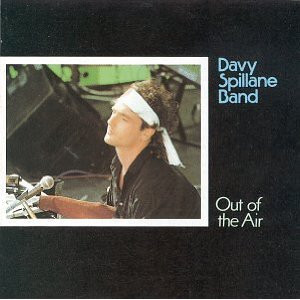
4. How did your collaboration with Rory on the record come about?
I got the opportunity to play harmonica on a track on Davy Spillane’s album ‘Out of the Air’ when I got a call from record producer and radio presenter P.J. Curtis, from County Clare. P.J. was producing the album, and there was a Blues instrumental on it called ‘Litton Lane’ which might benefit from a bit of harp. Litton Lane is a tiny cobblestone lane near Dublin’s O’Connell Bridge. For a while it was an epicenter for the Irish Rock music scene because Litton Lane rehearsal studio and equipment hire was located there, as well as an old pub called ‘The White House’ which was hidden down the lane and in which musicians smoked hashish openly.
Needless to say the recording session for ‘Litton Lane’ was exceptionally exciting for me, as it included many of Ireland’s top session players including James Delaney, Tony Molloy, Paul Moran, Anto Drennan and of course Rory. It took place in U2’s Windmill Lane studio, and I brought along a small amp and a crazy old microphone I had which provided a beautifully distorted but manageable sound. It had originally been in an Irish police car in the 1960’s, which delighted me! After that it had been used for years in the pulpit of a church, which also amused me. Then it was built into a home made loudspeaker system in a van used by a sound equipment hire company we worked with. They eventually sold it to me. I’ve never had a tone like the one it provided through a small amp. Through a powerful amp it was absolutely uncontrollable, nothing but howling feedback; but with the right combination amp it sounded great. It disappeared from the stage one night and I never saw it again, but the sound of it is immortalized on that recording of ‘Litton Lane’.
The recording session for ‘Litton Lane’ was going great, except for one problem. Whenever Davy Spillane went to solo or do fills on the uilleann pipes, he inevitably modulated into a series of notes which would be fine in Traditional music, but which were outside of the Blues scale. As a result, much of his improvised playing became discordant. He was frustrated because what came naturally to him kept making him play out of tune. I’m not certain but I think he was modulating into ninths, which just kept sounding weird. I could hardly believe it when the producer suggested that I might be able to help Davy with some arrangements for his solo! I came up with the idea that if we played some phrases in unison, with him following my lead, he wouldn’t be able to stray. I knew that my playing would remain in tune if I kept it simple. Then I thought if we traded lines back and forth like a musical dialogue it would also keep him from accidentally modulating. The lines we play together in unison on the record came about just as I’ve described, and the same is true for when we trade licks back and forth later. When it came to my turn to solo I remember closing my eyes and just flooring it! I know that I ‘skied completely off piste’ and at one point I remember wondering if I was going to make it out of the solo intact! Fortunately it worked and the song stormed to a big crescendo and ended beautifully. I laughed and said “We nailed it!” which can faintly be heard when the track ends. I went back and overdubbed a little part where the piano started a fill then abruptly stopped. To me it sounded like eccentric phrasing rather than a mistake, but I was asked to fill the space. It was an awkward little thing to get right, the timing is strange and I needed to blast in hard and get out fast. Luckily I got it in one take, more by good fortune rather than by design!
I was paid £160 by cheque for the session, a very respectable fee in those days. The cheque was drawn on the account of Principle Management (U2) and it was signed by Paul McGuinness, Adam Clayton and I think maybe even Larry Mullen Jr., all from U2. When I took it to the bank to have it cashed, the cashier looked at it very carefully and said nothing. I laughed and explained that yes it actually was from U2, and I told him about the session. He asked if rather than have it cashed, would I be willing to sell it to him? Inquiring how much he was prepared to pay for it, I was pleasantly surprised by his offer of £500, which I immediately accepted. Six months later I got a letter from Principle Management saying that they noticed that I hadn’t cashed the cheque. The letter clearly explained that they took a very dim view of any misuse of professional items such as a signed cheque, and would I please refrain from keeping them as souvenirs in the future. I took the letter to the bank to try to sell it to the cashier, but he had moved on.
Photographer unknown
5. We’ve heard that you met Rory again at the Temple Bar Blues Festival in 1992. Do you have any particular memories of this occasion?
Several more years were to pass before I saw Rory again. My partner Mary Stokes and I bumped into him in Bloom’s Hotel during the Temple Bar Blues Festival in Dublin, 1992. That year as part of the festival I hung several of my Blues music inspired paintings in each of the pubs participating in the festival. The main collection of twelve pictures were to be hung in the bar of Bloom’s, and Mary and I were carrying them in in preparation for hanging. I didn’t even notice the man sitting quietly at the bar until Mary greeted him warmly and drew my attention to who it was. Rory said “Who else but Mary Stokes would walk into a bar carrying a picture of Sonnyboy Williamson under her arm!?” We had a good laugh together and Rory bought us both a pint. We chatted for a while and Rory admitted that he was nervous about the reaction he might get. He hadn’t played in Ireland for several years and he was not pretending to be nervous, he clearly was. Amazingly, as I began to sort through the paintings and lay them out for hanging I could hear Mary encouraging Rory, and assuring him that everyone was going to love seeing and hearing him again, and that his gig “was going to be great!”. I must honestly admit that I became engrossed in my work and left Mary and Rory chatting while I began to hang the show. I can remember that we said goodbye as he went up to his room to get prepared. We were also gigging that night in the festival, so we had to get ready as well. Before we went on to play, we caught about a half hour of Rory’s gig on the main stage in College Green. He was absolutely ripping it up, with the crowd going wild in a sea of bodies crammed right up to the stage. It was a brilliant atmosphere and a triumphant return from exile. It put us in a great mood forour own show, and I was quietly pleased to see that Rory’s new band prominently featured harmonica player Mark Feltham.

Photography by Independent Archives
We never saw Rory again after that, but we have a lasting image of him absolutely shredding it in his element on stage, outdoors in one of Dublin’s main thoroughfares before a massive, happy crowd. Mary and I were in the States visiting my Mom when one morning we heard the dreadful news. Mary was particularly distraught and she immediately looked into flying back to Dublin but the cost was prohibitive. My Mom was incredulous that we even considered leaving after we had just arrived, and she was a bit miffed about it. The following morning she knocked at our door very gently and brought us a copy of the New York Times with nearly a full page obituary about Rory. We were devastated as we read it at breakfast, feeling a lot, lot more than 1,000 miles away.
6. Finally, if you had to summarise Rory in three words, what would you say?
IRISH BLUES KING!
To find out more on Brian Palm’s fantastic work, visit his Facebook page.


 REWRITING RORY
Leave a comment